sharmaanubhav6660@gmail.com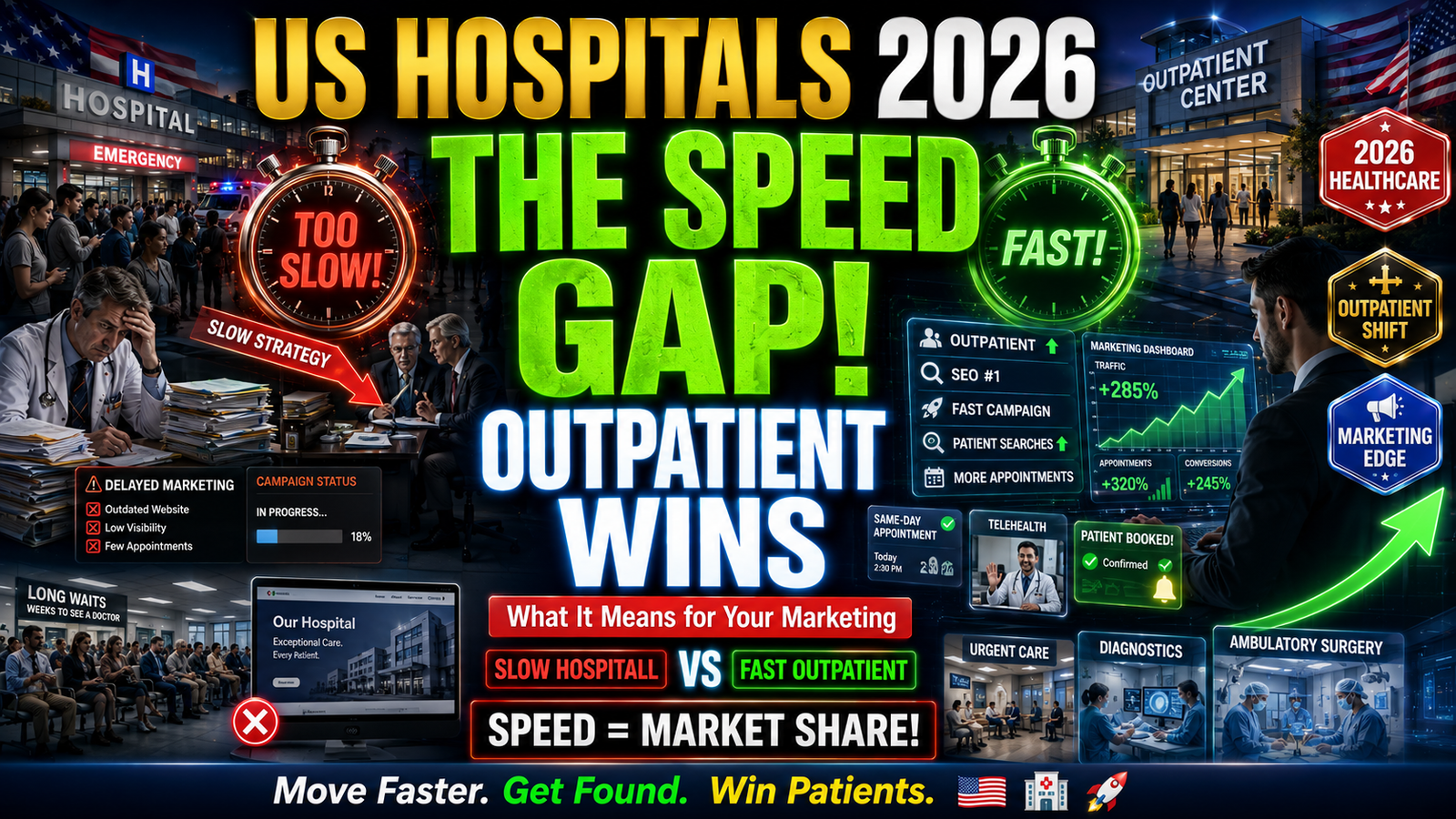
The Economic Divide: K-Shaped Recovery
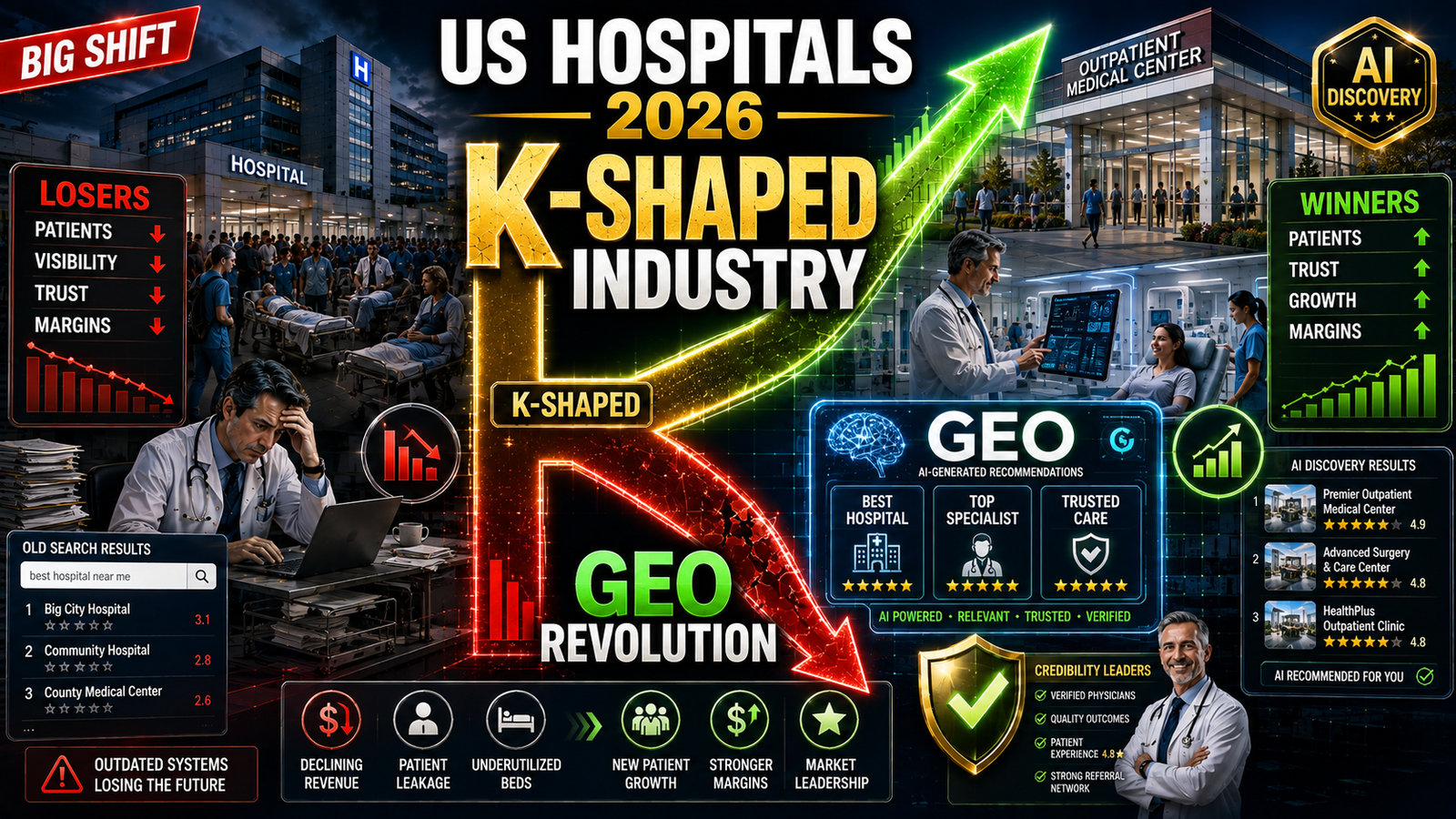
The US hospital industry in 2026 is experiencing a divergence that investment analysts describe as a “K-shaped” recovery. AA-rated hospital systems saw median operating margins improve to 2.8% in fiscal 2025, while junk-rated hospitals saw margins fall to -2.8% from -1.6% the prior year. Record cash-to-debt ratios were driven by investment gains that “were almost entirely an upper-tier phenomenon” .
This financial divergence is visible in the first-quarter 2026 revenue data. U.S. hospital net operating revenue rose 5% per calendar day compared to the previous year, with gross operating revenue growing 7% . But beneath these averages lies a more complicated picture.
Hospitals in the 200–299 bed range led all size segments, posting net operating revenue up 8%, gross operating revenue up 9%, inpatient revenue up 7%, and outpatient revenue up 10% . Meanwhile, the smallest hospitals (0–25 beds) saw inpatient revenue decline 2% even as outpatient revenue grew 4% . The largest hospitals (500+ beds) posted the widest gap between net operating revenue growth (4%) and gross operating revenue growth (8%), suggesting payer mix or contractual factors are compressing net revenue relative to charges .
The Outpatient Surge: 8% Growth and the Cannibalization Debate
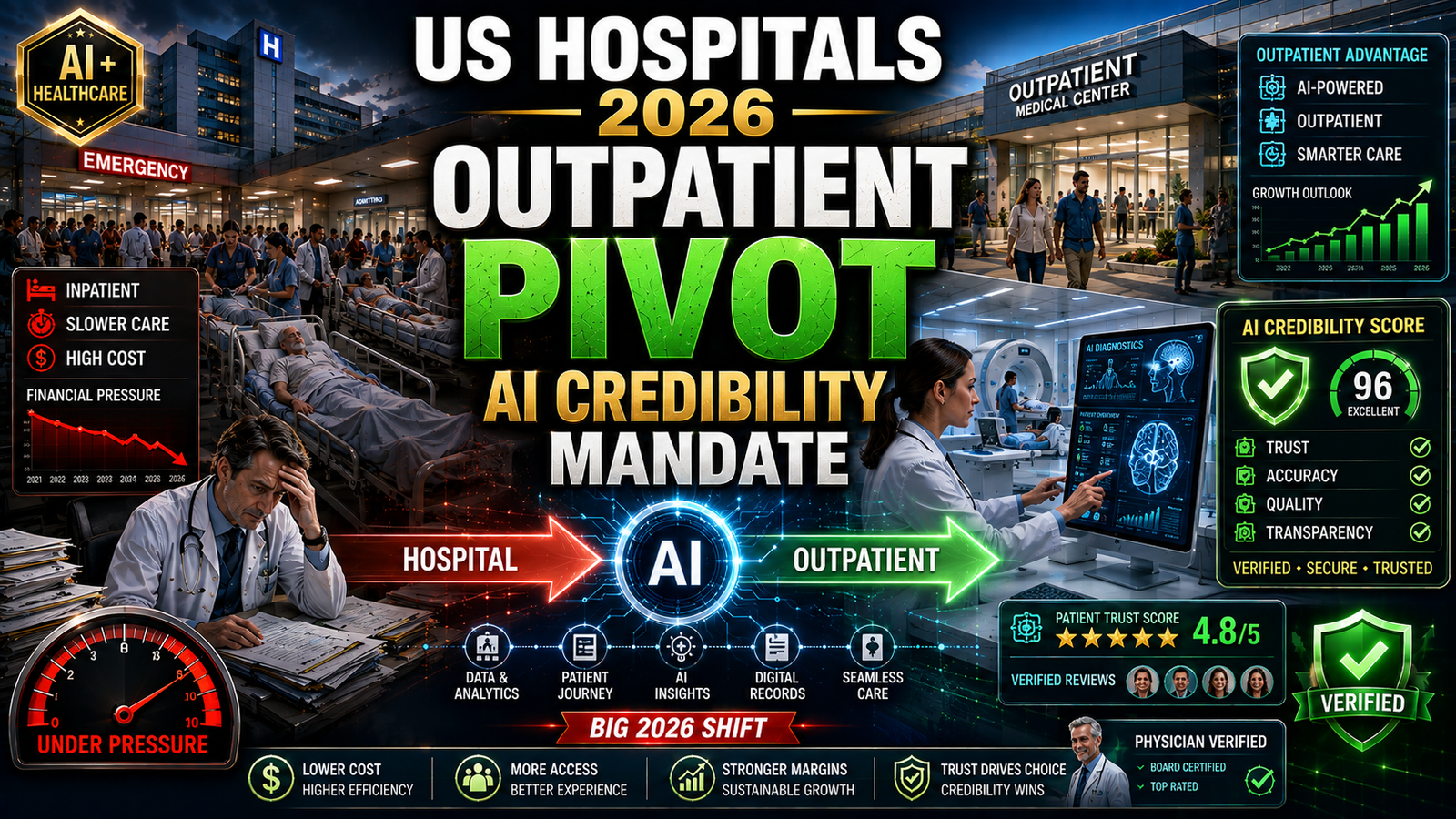
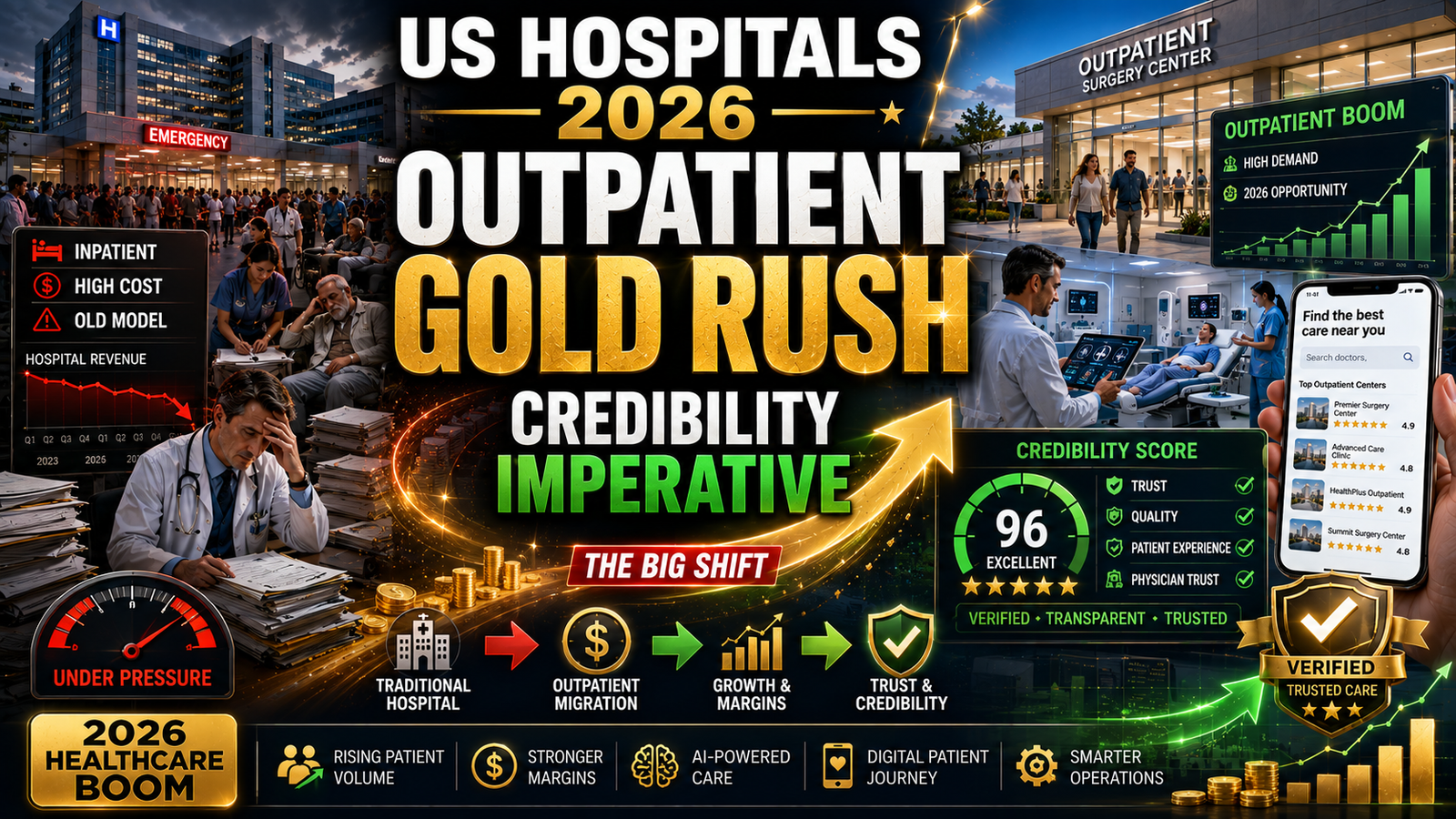
The clear driver of revenue growth in early 2026 was outpatient care. Outpatient revenue grew 8% nationally, outpacing inpatient revenue (4%) in every region and every bed-size category except hospitals with 0–25 beds . Western hospitals led all regions, with outpatient revenue surging 13% . Southern hospitals posted 9% outpatient growth, while Midwest hospitals posted the most modest gains at just 5% .
However, at the Becker’s 16th Annual Meeting in April, hospital leaders debated whether expanding outpatient and ambulatory access grows the overall revenue pie or cannibalizes inpatient volume—a strategic question with real financial consequences as systems decide where to invest .
The data shows the complexity of this question. Volume trends in February 2026 revealed that discharges per calendar day fell 2%, adjusted discharges rose 2%, adjusted patient days declined 1%, average length of stay dropped 4%, and emergency department visits decreased 5% . Erik Swanson, managing director at Kaufman Hall, summarized: “Hospitals are off to a relatively soft start in 2026. Outpatient care strategies offer a potential path forward, though hospitals must manage both revenue dilution and a greater concentration of high-acuity patients as a result” .
The For-Profit Speed Gap: What Q1 Earnings Reveal
The four largest publicly traded hospital companies—HCA, Tenet, UHS, and Community Health Systems—reported Q1 earnings that reveal a massive outpatient capital deployment moving faster than most not-for-profit systems can match .
Tenet Healthcare: The ASC Powerhouse
Tenet’s USPI outpatient surgery subsidiary delivered a 36.7% adjusted EBITDA margin driven by double-digit same-store growth in total joint replacements across its 533 ASCs. Tenet has deployed $125 million (half its annual M&A target) to acquire seven additional ASCs and opened three de novos in Q1 alone .
Community Health Systems: Accelerating Acquisition
CHS is purchasing a majority stake in an ASC operator in Anchorage, opening two de novo ASCs in Alabama, and acquiring the Surgical Institute of Alabama—an 8,000+ annual case facility and its largest acquisition since 2016 .
HCA: Continued Outpatient Expansion
HCA cited continued outpatient acquisitions in urgent care, ASC, and freestanding ED platforms .
UHS: The AI Exception
UHS was unique among the four in quantifying policy impact, estimating $432 million to $480 million in annual Medicaid revenue reductions by 2032, while simultaneously deploying eight enterprise AI use cases in revenue cycle alone .
The takeaway is clear: high-acuity surgical work is migrating outpatient at scale, and multispecialty ASCs in growth markets are the highest-margin growth vehicle available .
The Policy Storm: $1 Trillion in Medicaid Cuts
The dominant near-term threat to hospital credit profiles is the One Big Beautiful Bill Act (H.R. 1). The bill is expected to cut nearly $1 trillion from Medicaid, the Children’s Health Insurance Program, and the Affordable Care Act over the next decade . Direct revenue impacts in Medicaid will stem from reductions starting in FY28 to provider tax contributions and state-directed payments (SDPs) .
CMS has proposed rule changes implementing provisions of the OBBBA that go beyond the statutory language Congress approved . AAP leaders have warned that the changes will have “an especially devastating impact on children’s hospitals, clinicians and hospitals in rural areas, and pediatricians already operating on razor-thin margins” . SDPs, used by children’s hospitals, rural hospitals, and other facilities to address low base Medicaid payment rates, are directly targeted .
Credit rating agencies are asking health systems to quantify their exposure: “What’s your hit, what’s your exposure? It’s $10 million, it’s $100 million, it’s a billion dollars. Give me a number, and then give me those mitigants” .
The impact could be devastating. National Nurses United projects that 602 financially vulnerable hospitals could see their combined deficit grow 50% to 75% under the combined weight of Medicare sequestration, Medicaid cuts, and the expiration of enhanced ACA marketplace subsidies . Those 602 hospitals already carry a combined $10.16 billion deficit, and the new cuts could add $5.21 billion to $7.72 billion in a single year once fully phased in .
The AI Paradox: Everywhere but Unquantified
Across all four for-profit hospital operators, AI is everywhere, but savings are disclosed nowhere . UHS has eight enterprise AI use cases in revenue cycle alone. Tenet described doubling the productivity of its Conifer analytics team through AI-driven back-office automation. HCA named ambient documentation, patient safety, and nurse engagement initiatives. CHS is deploying ambient listening to reduce administrative burden on physicians .
But no operator quantified savings or EBITDA contribution from AI deployment . The investment commitments are real and accelerating, but NFP systems struggling with their own AI deployments may find some comfort in the for-profits not yet having much to show in hard numbers .
Hospital SEO and GEO in 2026: A Strategic Framework
Content Clusters and Topical Authority
Google’s March 2026 core update further penalized thin content spread across disconnected topics. Hospitals with coherent content clusters have held or improved their positions, while those publishing broadly without a content architecture have not .
Content clusters—a pillar page supported by related subtopic pages—mirror how Google’s AI systems understand conditions, treatments, and patient journeys . A joint replacement cluster might include the pillar page, then branch into preparation, surgery types, recovery timelines, physical therapy, and long-term outcomes, all interconnected and demonstrating comprehensive expertise .
Siteimprove emphasizes mapping clusters and authority pathways before publishing another article. Hospitals need a content map: which specialty areas do you want to own in search? Which patient questions are you equipped to answer better than anyone else in your market?
Technical SEO: The Non-Negotiable Foundation
Siteimprove identifies three technical priority areas :
Accessibility: Pages must meet heading hierarchy, color contrast, alt text, and keyboard navigation standards. Older adults (a huge portion of healthcare searchers) abandon sites that don’t work with screen readers or keyboard controls. Google penalizes inaccessible pages .
Technical SEO validation: Broken links, orphaned pages, missing meta descriptions, canonical tags, crawlability, and mobile usability must be checked before publishing .
Brand consistency: Consistent tone, legal disclaimers, and brand terminology must be maintained across departments .
GEO: Generative Engine Optimization
AI search visits grew 42.8% year-over-year, rising from 15.6 billion in Q1 2025 to 27.4 billion in Q1 2026 . Health systems that rely only on classic SEO are now optimizing for a channel that grows far slower than the one patients are adopting .
Why healthcare needs GEO: Patients increasingly start health research inside AI assistants rather than a search results page. When an AI engine answers a symptom or treatment query, it pulls from a small set of trusted sources. A health system absent from that set loses visibility at the exact moment a patient is choosing where to seek care .
How AI engines pick sources: AI engines reward content that is structured, sourced, and verifiable. Evidence matters more than tone. Adding statistics increased AI visibility by 22%, and adding quotations raised it by 37% . Definitive phrasing also helps—cited text is nearly twice as likely to contain definitive language, 36.2% versus 20.3% .
Key GEO tactics :
- Expert-reviewed content: Every clinical page should name the reviewing physician, list credentials, show a review date, and link to current medical literature.
- Place answers high: 44.2% of ChatGPT citations come from the first 30% of page text.
- Use structured tables: Tables get extracted by LLMs at 81% versus 23% for prose.
- Freshness matters: 65% of AI bot hits target content published within the past year.
- Schema markup: Add medical schema so engines can parse authorship, conditions, and procedures without guessing.
Real-world GEO results: A medical case study showed AI visibility improved from 18% to 44% (+26%), SOV increased 133%, brand citations rose 157%, and hallucination rates dropped from 22% to 9% over a 5-month optimization period .
Entity and Authority Signals
Relevance’s 2026 Healthcare SEO & GEO Playbook recommends strengthening brand, clinician, and location entities so answer engines pull the right facts and attribute them to you . This includes schema markup, clean HTML that AI models can parse, fact highlights, and structured links and references .
Key Takeaways for Hospital Marketing Leaders
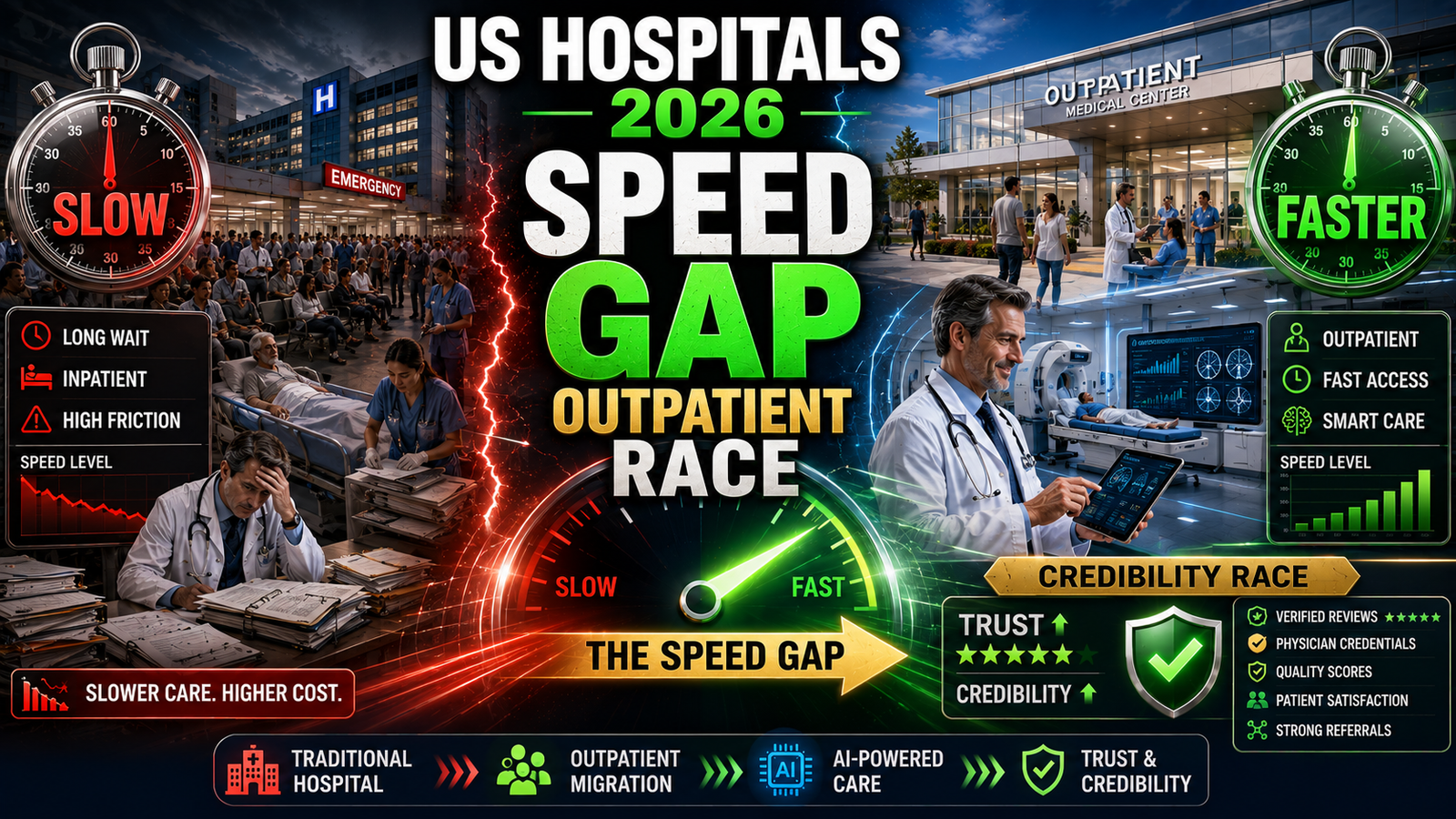
- The speed gap matters. For-profit operators are deploying outpatient capital at pace. If your NFP system is still in the planning phase while for-profits like Tenet are acquiring multiple facilities in a single quarter, your marketing strategy must address that gap .
- Build comprehensive content clusters. Cardiology, oncology, and orthopedics require 15-25+ pages each, not one-page overviews .
- Optimize for GEO, not just SEO. AI search visits grew 42.8% year-over-year. Your content must be referenced and summarized accurately by AI answer engines .
- Invest in technical SEO. Accessibility, schema markup, and internal linking are non-negotiable. Google penalizes inaccessible pages .
- Quantify your policy exposure. Rating agencies are asking for numbers: What’s your Medicaid hit? What’s your mitigation plan?
- Diversify your content portfolio. Don’t rely on one high-performing article. Build multiple traffic drivers across different topics and keyword clusters .
Conclusion: Visibility Is Survival
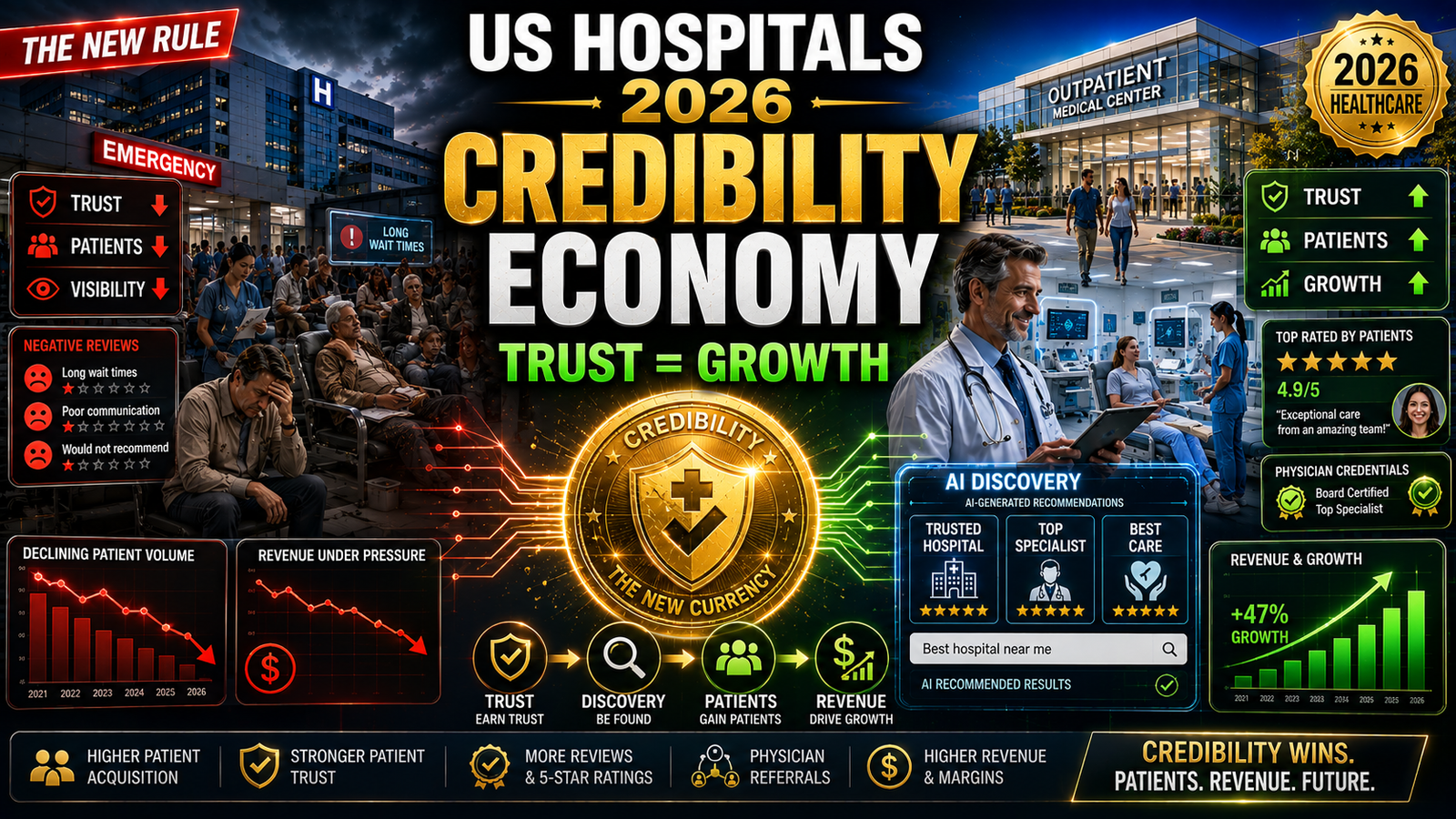
The US hospital industry in 2026 is navigating structural pressures that are reshaping the competitive landscape: $1 trillion in Medicaid cuts, a K-shaped recovery that widens the gap between winners and losers, a for-profit outpatient deployment moving faster than most NFPs can match, and a patient discovery layer increasingly dominated by AI answer engines.
For hospital marketing and SEO professionals, the mandate is clear: every patient who finds you online is a patient your competitors cannot see. In a system where 602 hospitals already carry a combined $10 billion deficit and policy cuts loom, visibility is not just a growth tactic—it is a survival strategy .