sharmaanubhav6660@gmail.com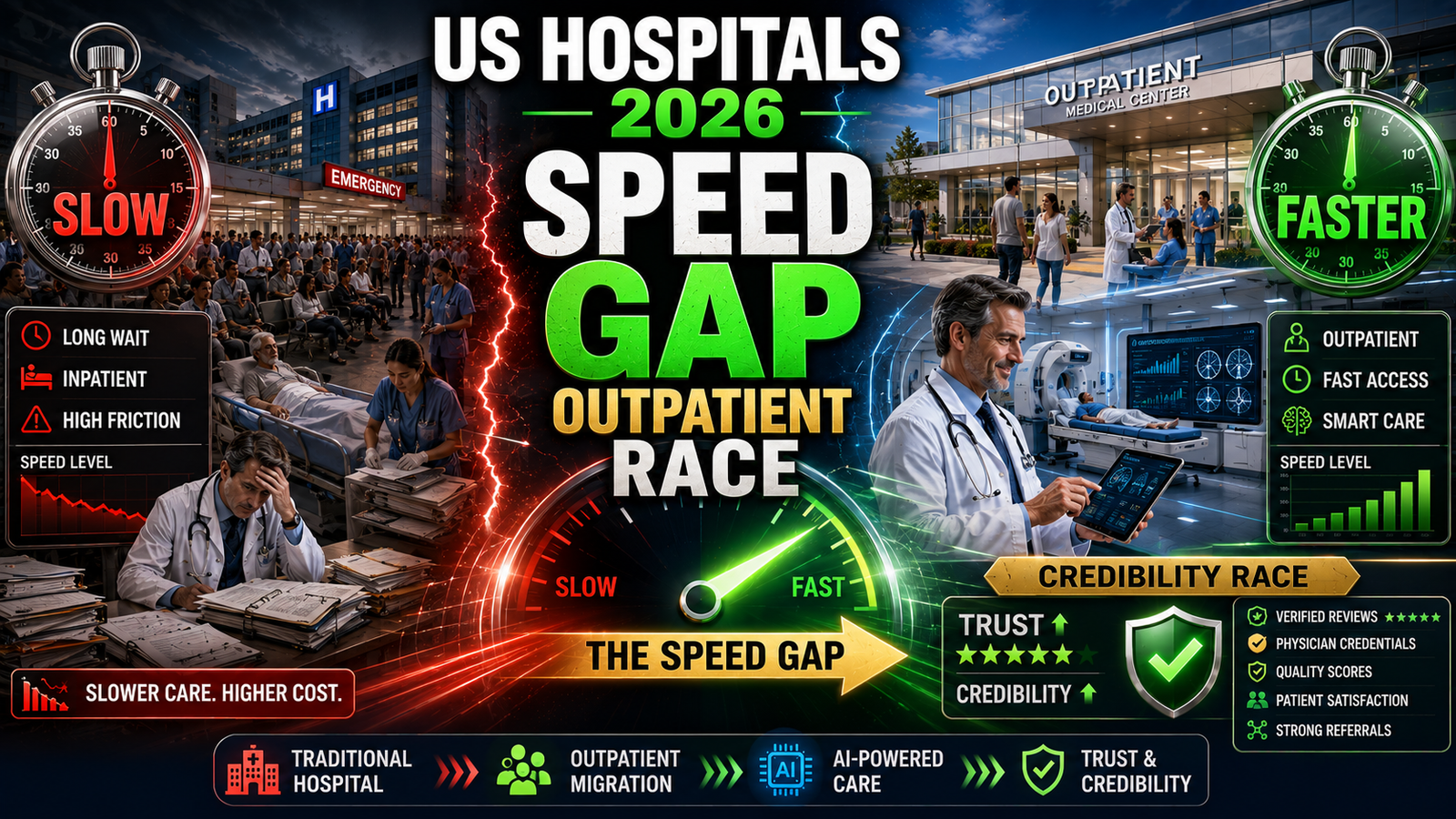
The Q2 Volume Reality
The second quarter of 2026 confirmed what the first quarter suggested: outpatient and ASC volumes softened across the for-profit hospital sector, with pricing and acuity mix largely offsetting the decline. Tenet Healthcare’s USPI posted net operating revenues of $1.39 billion, up 9.3% year over year, with adjusted EBITDA of $542 million, up 8.8%, though margin slipped slightly to 39% from 39.2% . Same-facility system-wide surgical cases fell 1.2%, but revenue per case rose 6.3%, which Tenet attributed to higher acuity and a more favorable service mix .
HCA Healthcare saw outpatient surgery volumes decline 3.4% on a same-facility basis, alongside a 2.3% drop in inpatient surgeries, continuing a softening trend in elective procedures . The bright spot was the emergency department, where ER visits rose 3.6% for the quarter. As at USPI, pricing offset volume softness with revenue per equivalent admission growing 6.4% .
Community Health Systems saw the most pronounced shift in site of care. CEO Kevin Hammons said procedural softness is concentrated in elective specialties, citing orthopedics — “being the largest decline” — and cardiac surgery, which “is following the same path, though the underlying care is less discretionary” . CHS is seeing bigger declines on the inpatient side while its surgery centers pick up volume, though it’s “lower acuity surgeries and not the orthopedic and some of the cardiac procedures” the company would normally expect . Hammons also pointed to patients delaying follow-on procedures for economic reasons, tied to commercially insured patients’ copays and deductibles . Net revenue per adjusted admission slipped 0.5% for the quarter .
Universal Health Services remains the outlier of the group — not a major ASC operator, with outpatient growth centered on behavioral health rather than surgery . The company’s pending acquisition of Talkspace is intended to build what CEO Mark Miller called “the nation’s first end-to-end continuum of behavioral healthcare services,” spanning acute inpatient and residential care, in-person outpatient treatment, and national virtual services .
What these Q2 results reveal is consistent with the Q1 pattern: the for-profits are not letting soft volumes slow their outpatient acquisition strategy. Tenet deployed $125 million in the first quarter to acquire seven ASCs, representing half of its annual M&A target . CHS continues acquiring ASC operators, opening de novos, and expanding its ambulatory footprint . If your NFP system is still in the planning phase on ASC strategy while for-profits are acquiring multiple facilities in a single quarter, your marketing strategy must address that speed gap.
The Great Hospital Sell-Off
Major health systems are shedding hospitals and funneling the proceeds into ASCs . Tenet, Ascension, and Community Health Systems have collectively divested dozens of hospitals in recent years, redirecting billions toward outpatient growth .
Tenet Healthcare offers perhaps the clearest example of a health system fully committing to an ASC-first identity . In 2024, the parent company of USPI sold 14 hospitals across California, South Carolina, and Alabama for more than $4.8 billion, channeling the proceeds into ambulatory growth . CEO Saum Sutaria, MD, framed the move as a turning point, describing Tenet as entering “a new era” with a growing share of performance driven by its “highly efficient ambulatory surgical business” .
St. Louis-based Ascension is on track to become one of the largest ASC operators in the country . The system is acquiring AmSurg and its 250 ASCs for $3.9 billion, alongside an aggressive hospital divestiture strategy. Since 2022, Ascension has shrunk its hospital footprint from 139 facilities to 90, with recent divestitures including the transfer of four Michigan hospitals to Beacon Health System and the sale of nine hospitals in the Chicago area to Prime Healthcare Services . The system’s quarterly report described the shift: “Ascension is evolving alongside patient preferences, prioritizing the shift of select procedures to outpatient settings. The continued growth of ambulatory surgery center partnerships remains a pillar of this strategy” .
Community Health Systems has been executing a parallel playbook. In 2025, the company announced plans to divest seven hospitals while doubling down on ASC investment . In 2026, CHS opened new surgery centers in Birmingham and Foley, Alabama, and acquired a majority stake in an Anchorage, Alaska, ASC, bringing its total to 36 affiliated centers. A pending acquisition of Surgical Institute of Alabama would push that number to 37 .
The Outpatient Imperative
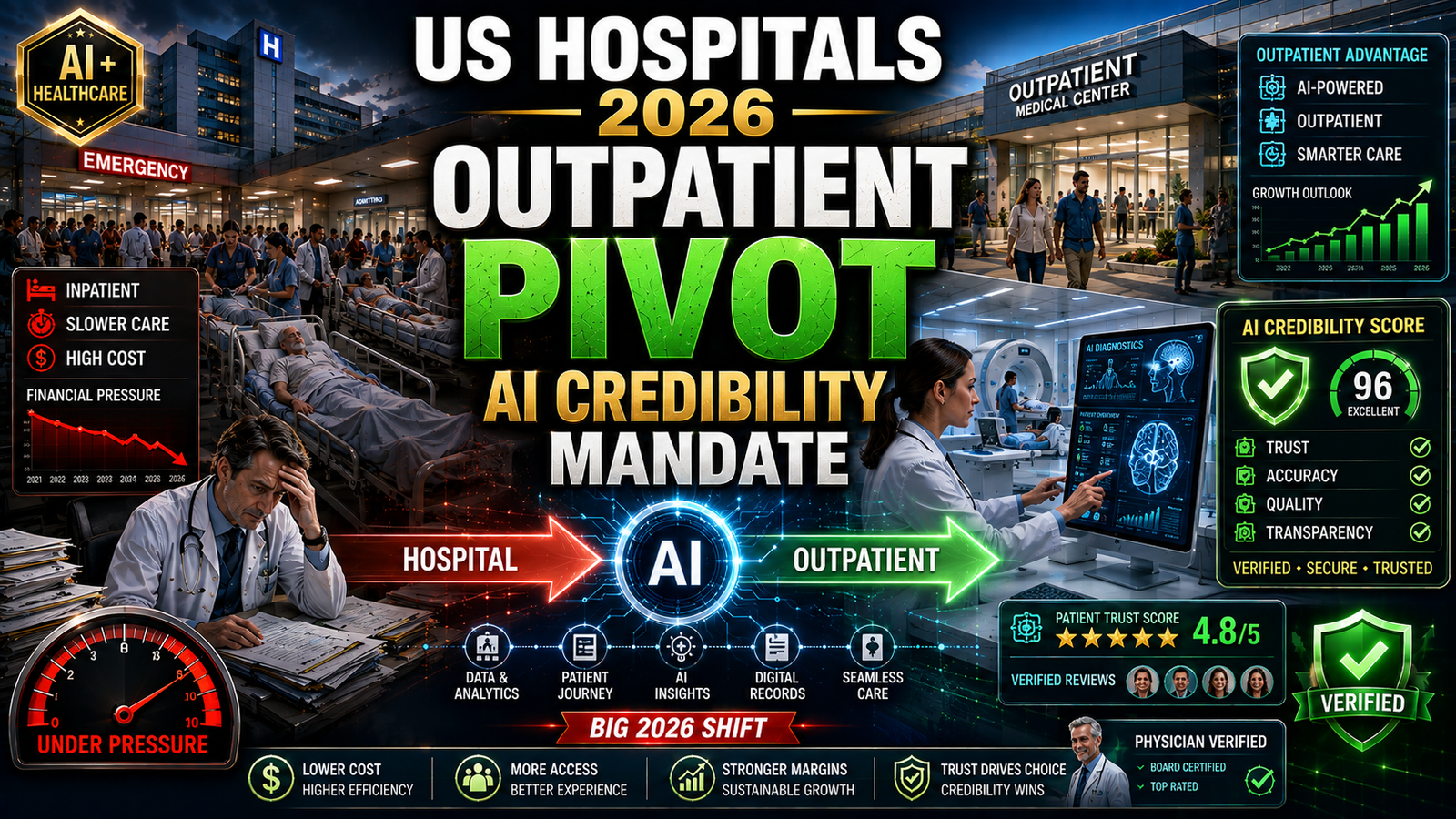
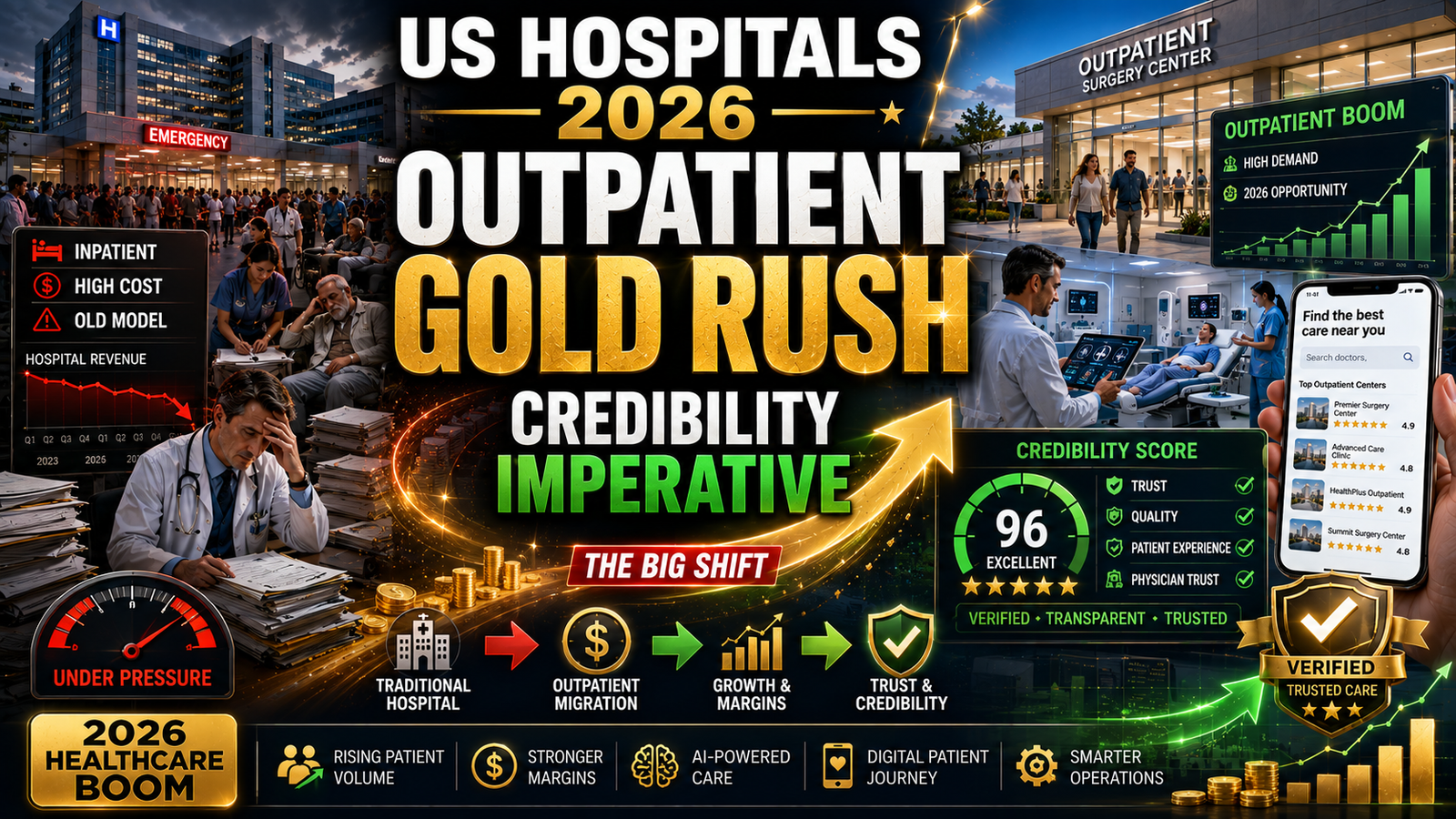
Outpatient revenue per calendar day increased 8% year over year through May, outpacing the 5% increase in inpatient revenue . At the same time, adjusted patient days rose 1% while inpatient discharges remained relatively flat, underscoring the industry’s steady shift away from traditional inpatient care .
The financial backdrop is challenging. Through May, operating revenue per calendar day increased 6% year over year, but total expense per calendar day climbed 7%. Labor expense rose 4%, while nonlabor expense increased 9%, reflecting continued inflationary pressures across hospital operations . “Traditional hospital care delivery is fundamentally shifting,” Kaufman Hall analysts wrote .
Those trends are already reshaping the healthcare transaction market. Health systems, private equity firms, and payers are racing to acquire outpatient assets, particularly ASCs. Physician medical groups accounted for a record 46% of all healthcare transactions in the first quarter of 2026, generating nearly three times as many deals as any other healthcare subsector .
A recent VMG Health survey found outpatient surgery ranked as health systems’ top service line for joint venture investment, with more than 60% of executives identifying ASCs as a primary growth priority. Separately, roughly 75% of hospitals structure ASC investments as physician joint ventures .
Erik Swanson, managing director at Kaufman Hall, warned: “Demand in outpatient services is on the rise, and hospitals without an outpatient footprint will struggle” .
The Policy Storm
The dominant threat to hospital credit profiles remains the One Big Beautiful Bill Act (OBBBA), enacted in 2025. The law cuts nearly $1 trillion from Medicaid over 10 years. While the law included SDP changes that would cut nearly $150 billion over 10 years, the rule implementing those provisions would increase federal funding cuts to $510 billion over 10 years — 3.4 times more than what Congress intended, according to CMS estimates .
“Specifically, CMS is proposing to cut 3.4 times more in federal funding for the healthcare system nationally than Congress intended,” wrote Melanie Landrum, interim CEO of the Kentucky Hospital Association . “Resource reductions of this magnitude could lead to service losses and hospital closures, which would impact everyone in our community, not just those individuals who are served by the Medicaid program” .
Common concerns raised by hospitals include :
- Benchmarking to Medicare rates: The rule would extend the statutory requirement to limit SDPs for certain services to either 100% or 110% of the Medicare rate to additional payment types.
- Per-service Medicare limit: The rule would apply the Medicare payment limit at the individual service level rather than the aggregate level.
- Phase-down: Beginning Jan. 1, 2028, OBBBA requires phasing down total funding for grandfathered SDPs by 10 percentage points annually until reaching the applicable Medicare rate. The rule would apply annual 10% cuts.
- Elimination of uniform increase SDPs: The rule would bar new uniform dollar or percentage increases to provider classes.
America’s Essential Hospitals estimated OBBBA will increase hospital uncompensated care costs by $466 billion over 10 years . “Cuts of this magnitude will devastate essential hospitals’ ability to provide high-quality care to the patients and communities they serve,” AEH wrote in comments to CMS .
State Impacts
Sweetwater Hospital in Tennessee said the rule’s SDP phase-down approach would cut more than $320 million annually from hospitals in the state . Louisiana, tied for sixth largest SDP ($4.3 billion), covers 30% of its population through Medicaid. Paul Salles, president and CEO of the Louisiana Hospital Association, wrote that the rule’s cuts would “inevitably force hospitals to reduce services, defer capital investments, delay workforce initiatives or reconsider access points that are already financially vulnerable” .
400+ Hospitals at Risk
Democratic-aligned advocacy group Protect Our Care reports tracking 1,000 hospitals, clinics, hospital wards, nursing homes, and providers that are closing, cutting services, or are at risk due to the cuts . They found over 400 hospitals are at risk of closure or cuts, and more than 80 hospital wards — including maternity and pediatric units — have already shuttered .
The Backloaded Cliff
The implementation timeline gives hospitals a limited window to adapt . Only 6% of total cuts take effect from 2025 to 2027 (the ramp-up period). The 80-hour monthly work requirement for Medicaid expansion adults ages 19 to 64 takes effect in January 2027 . From 2028 to 2034, the remaining 76% of funding reductions take effect, increasing pressure on states to fund programs from general revenues, reduce optional benefits, or narrow provider networks .
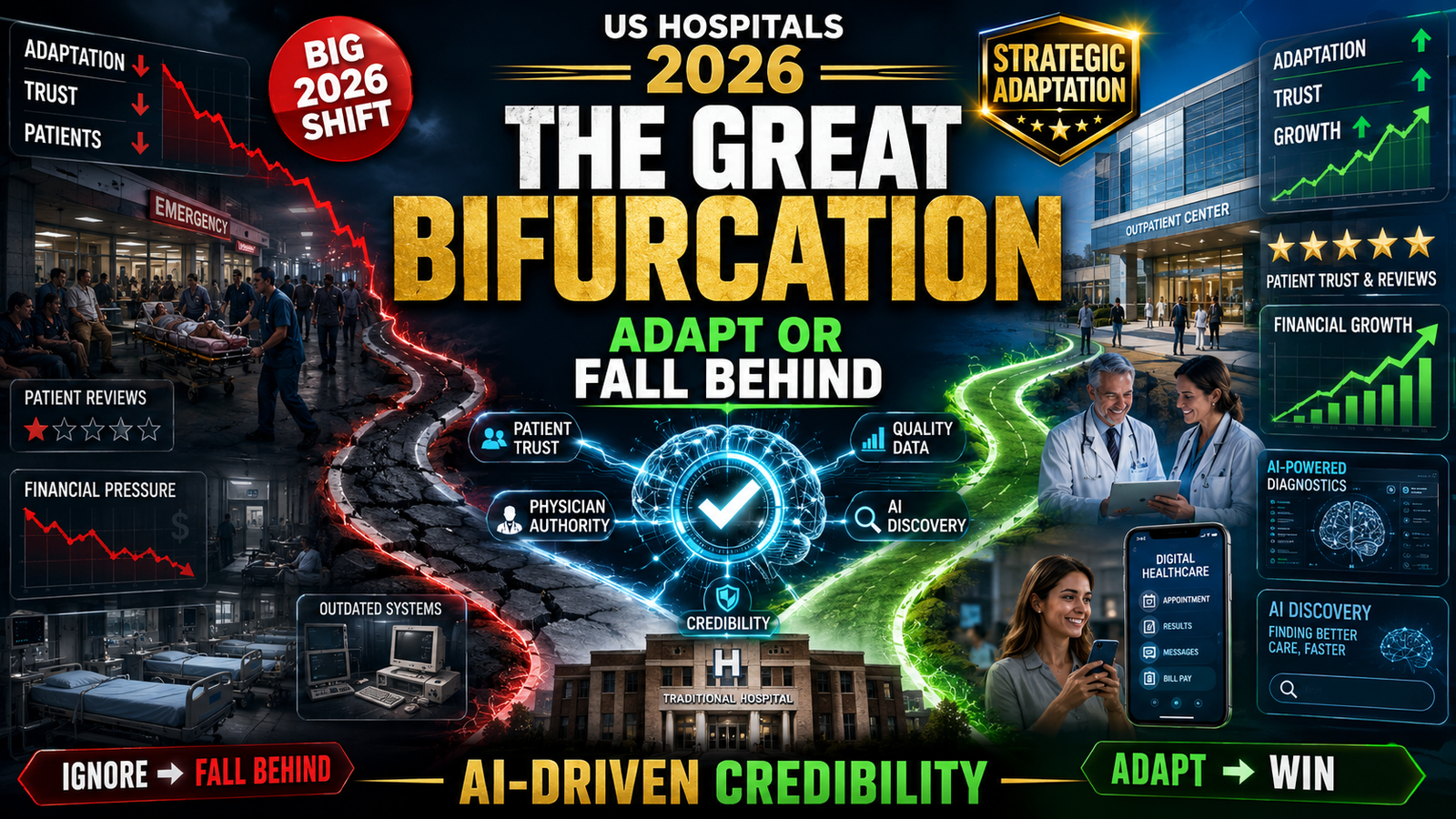
The Credibility Era: GEO for Healthcare
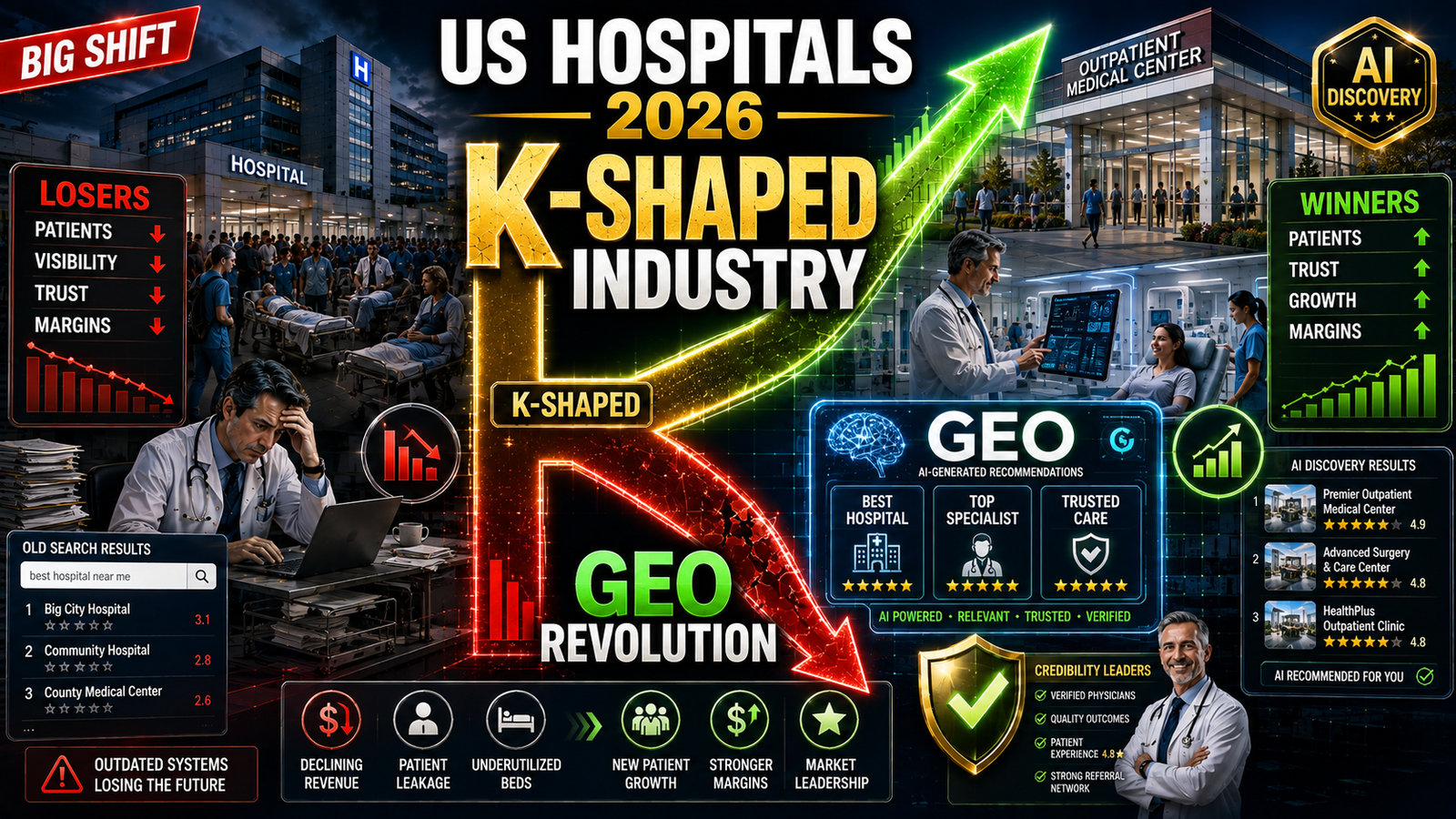
As patients increasingly use AI search and chatbots to find health information, health system marketers are pivoting from SEO to GEO — generative engine optimization . The shift is measurable: AI search visits grew 42.8% year over year, rising from 15.6 billion in Q1 2025 to 27.4 billion in Q1 2026 .
How AI Engines Pick Sources
AI engines reward content that is structured, sourced, and verifiable . Evidence matters more than tone: adding statistics increases AI visibility by 22%, and adding quotations raises it by 37% . Cited text is nearly twice as likely to contain definitive language: 36.2% versus 20.3% . 44.2% of ChatGPT citations come from the first 30% of page text, and 65% of AI bot hits target content published within the past year .
Build Expert-Reviewed Content
Expert review is the foundation of healthcare GEO . Every clinical page should name the reviewing physician, list credentials, show a review date, and link to current medical literature . These signals tell AI engines the content is accountable and protect patients from inheriting errors.
Structure Pages for Extraction
AI engines extract structured content far more reliably than prose. The format gap is large: tables get extracted by LLMs at 81% versus 23% for prose . Use clear question-style headings, short answer paragraphs, comparison tables, and FAQ blocks. Add medical schema markup so engines can parse authorship, conditions, and procedures without guessing .
Real-World GEO Results
A medical GEO case study showed AI visibility improved from 18% to 44% (+26%), SOV increased 133%, brand citations rose 157%, and semantic hallucination rates dropped from 22% to 9% over a 5-month optimization period . These gains are within a reasonable engineering optimization range — 30% to 80% — suggesting systematic improvements rather than statistical noise .
Key Takeaways for Hospital Marketing Leaders
1. The outpatient speed gap matters. Health systems are decoupling outpatient facilities from central hospital overhead. If your system is still planning while competitors execute, address that gap.
2. Build comprehensive content clusters with expert review. Specialized condition and treatment pages with named physician reviewers are required — not one-page overviews.
3. Optimize for GEO, not just SEO. AI search visits grew 42.8% year-over-year. Your content must be structured, sourced, and verifiable for AI extraction.
4. Technical foundations are non-negotiable. Schema markup, accessibility, internal linking, and AI crawler access are critical for both search and AI visibility.
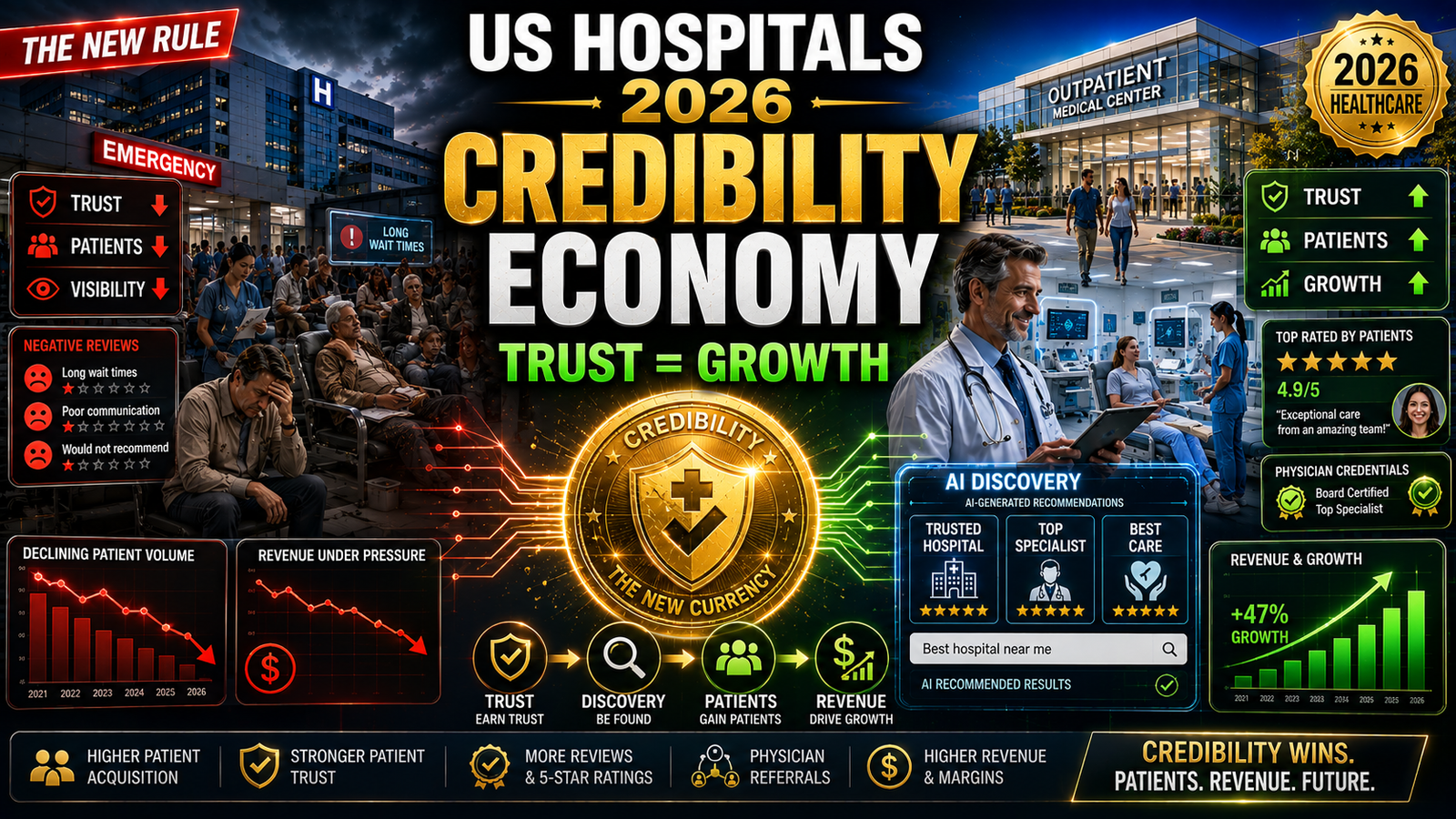
5. Credibility is the new currency. Systems investing in expert-reviewed, structured content earn AI citations and patient trust.
6. Quantify policy exposure. Rating agencies and boards are asking: What’s your Medicaid hit? What’s your mitigation plan?
Conclusion
The US hospital industry in 2026 is navigating structural pressures: a $3.9 billion ASC consolidation wave, $510 billion in Medicaid cuts beyond statutory intent, and a patient discovery layer increasingly dominated by AI answer engines.
The for-profit speed gap is clear. Tenet, CHS, and HCA are deploying outpatient capital at scale while many NFP systems remain in the planning phase. As Erik Swanson of Kaufman Hall warned: “Demand in outpatient services is on the rise, and hospitals without an outpatient footprint will struggle” .
For hospital marketing and SEO professionals, the mandate is clear: every patient who finds you online is a patient your competitors cannot see. The hospitals that invest in structured, expert-reviewed content, technical excellence, and AI-optimized visibility will capture patients in a system where demand outpaces supply. In an era of AI-mediated discovery, credibility is not just a marketing tactic — it is a survival strategy.