sharmaanubhav6660@gmail.com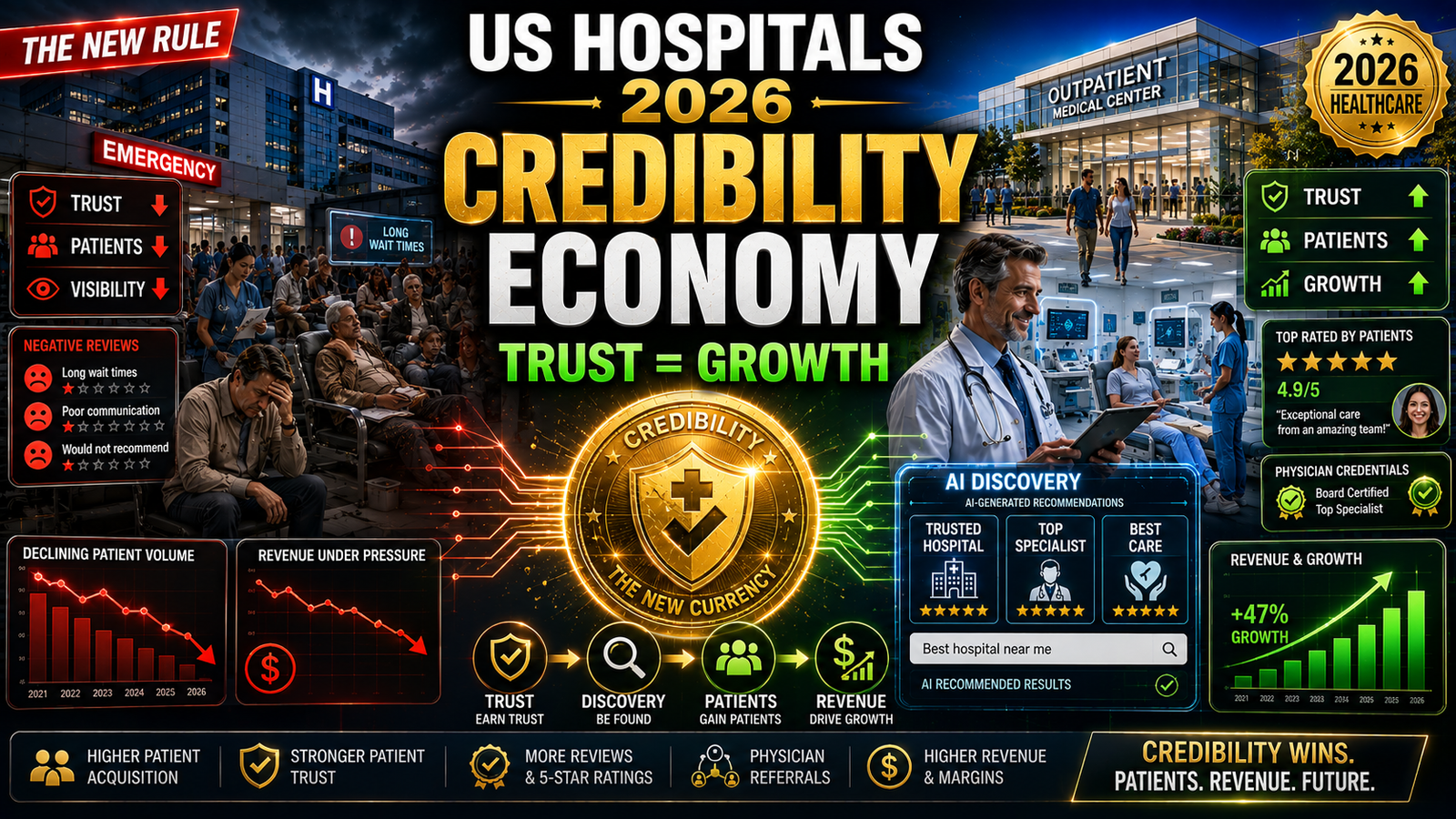
The K-Shaped Reality
The US hospital sector is approaching a critical turning point. After years of gradual improvement, “the tone for the sector has turned more cautious,” according to a Fitch Ratings analysis of 222 not-for-profit hospitals. “The current operational recovery may be at or very near a transition point” .
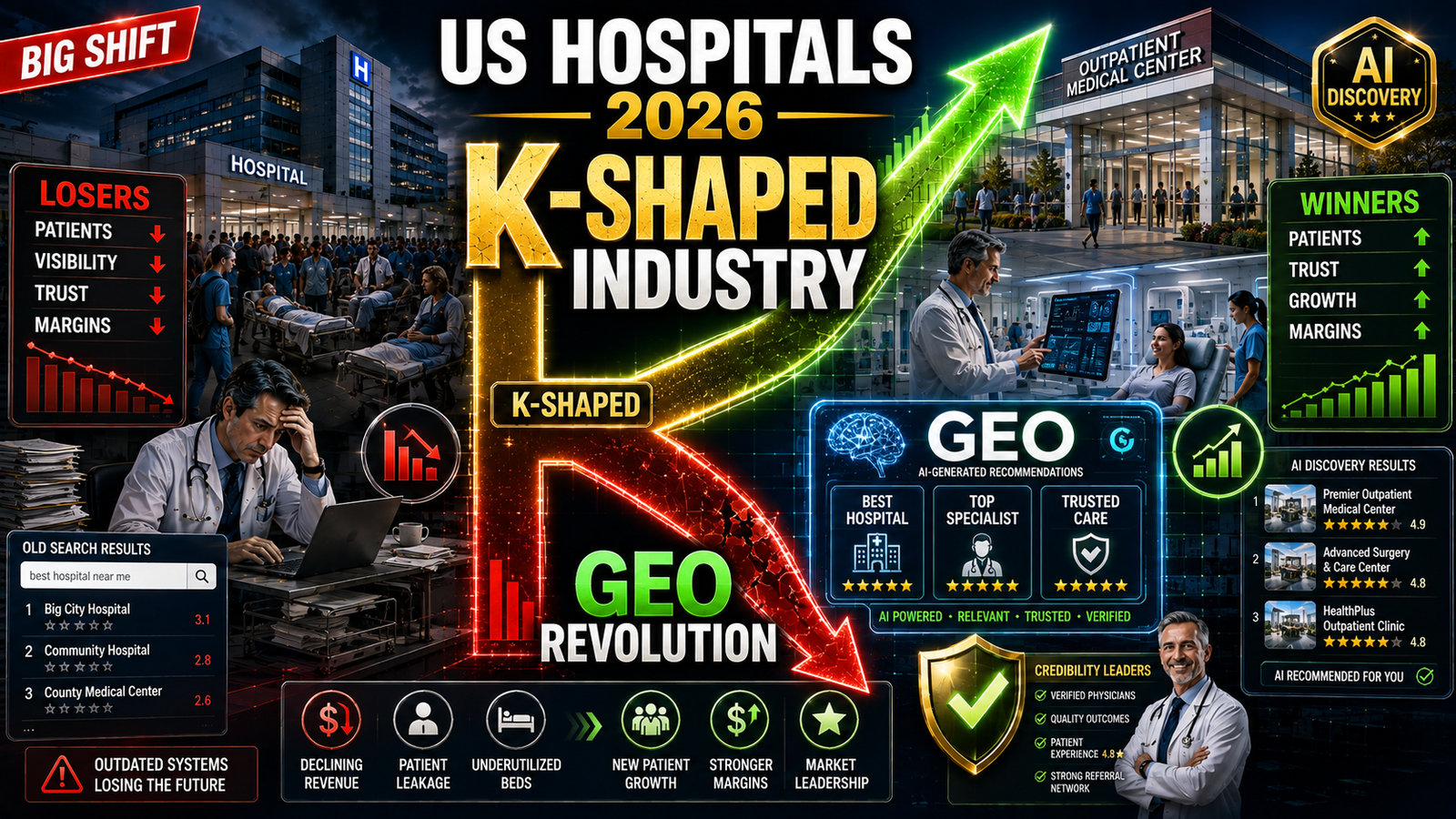
The divergence between winners and losers is widening into what analysts describe as a “K-shaped” recovery. AA-rated systems saw median operating margins improve to 2.8% in fiscal 2025, while junk-rated hospitals saw margins fall to -2.8% from -1.6% the prior year . Strong gains in investment portfolios were “almost entirely an upper-tier phenomenon” . BBB and junk-rated systems reported days cash on hand falling 22% and 31% respectively.
Most of Fitch’s rated portfolio is concentrated at the higher end, with over three-quarters in AA or A categories—a signal that weaker providers are being systematically filtered out through consolidation . Demographic pressures add to the strain: over the next four years, approximately 11,000 baby boomers will turn 65 each day, driving up demand while drawing skilled labor out of the workforce . Hospitals are responding with capital spending at the highest level since 2008, with about $29.2 billion in muni bonds issued year-to-date .
The Outpatient Pivot: Where Growth Lives
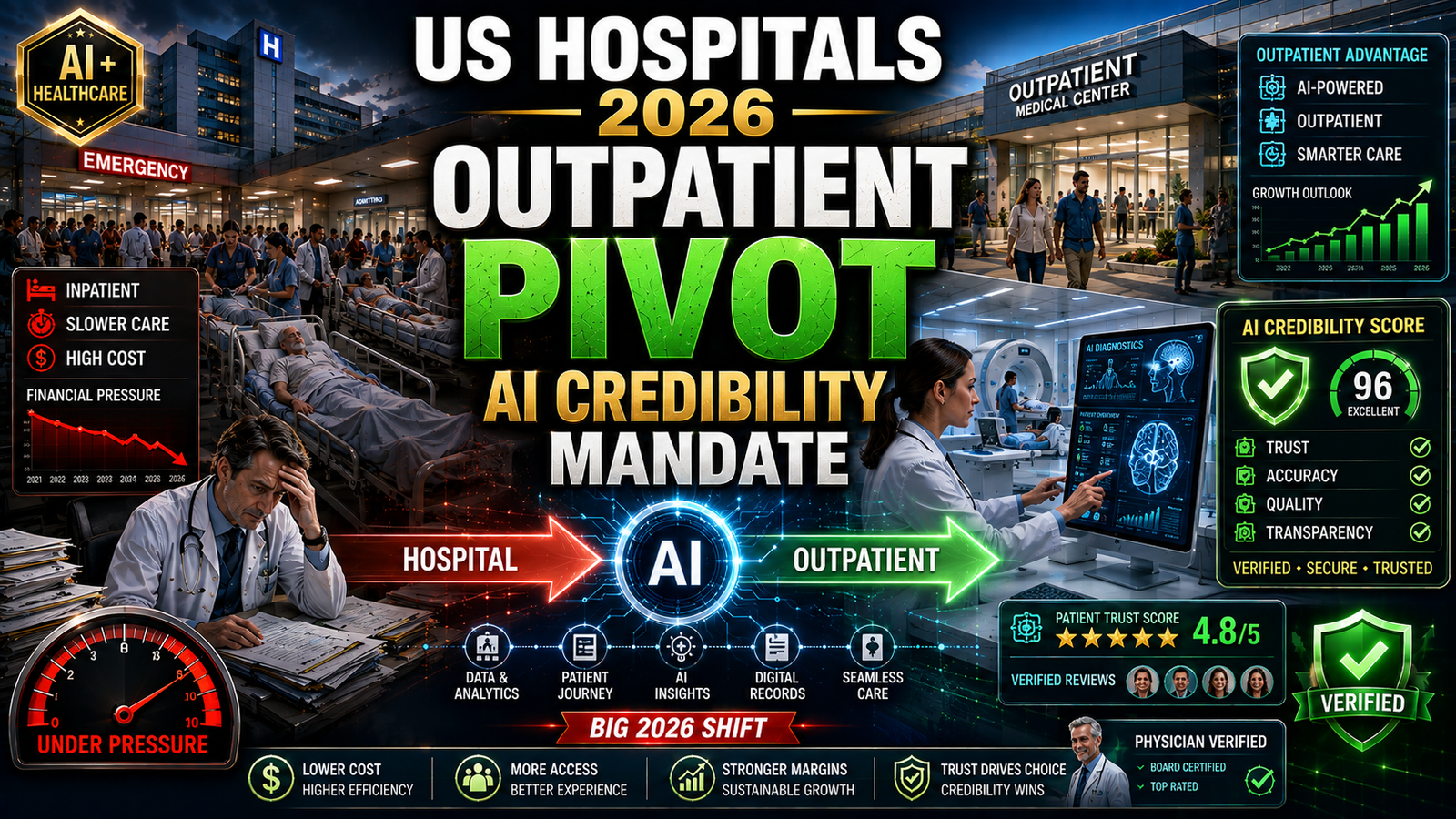
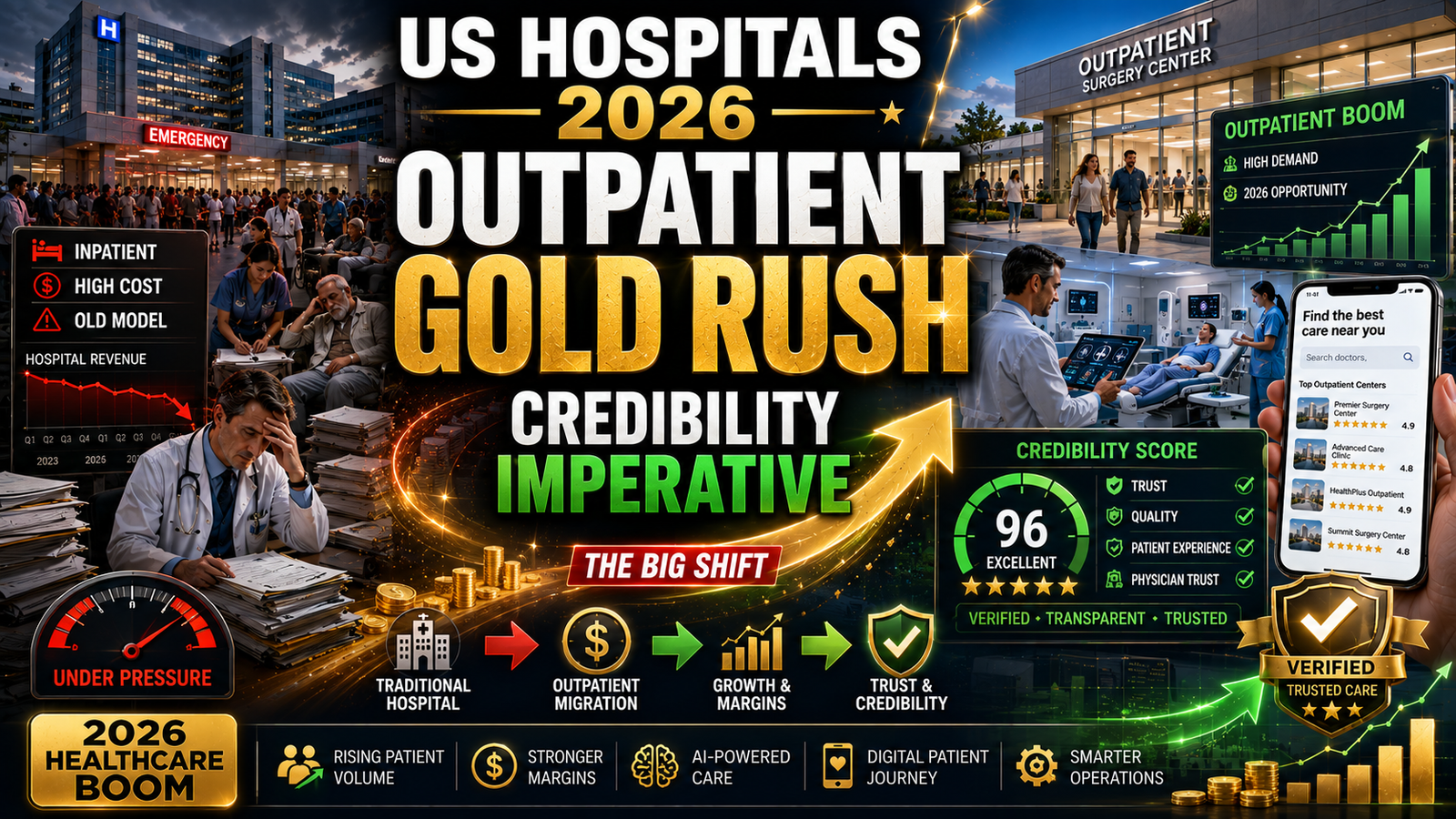
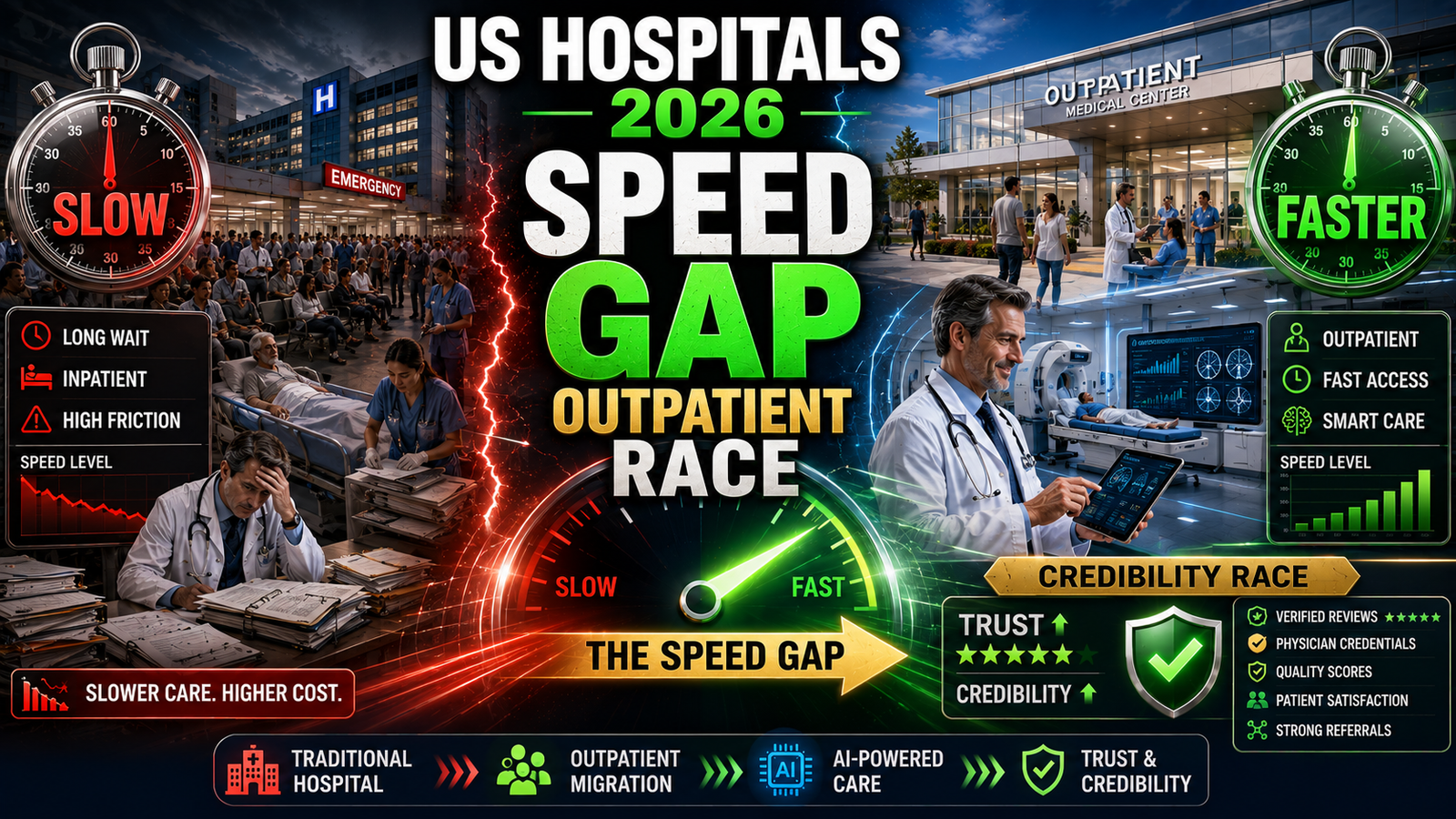
Outpatient care is the dominant revenue story. Year to date, daily outpatient revenue increased 8%, and compared with the same period three years ago, outpatient revenue has climbed 26%, underscoring the industry’s continued shift away from traditional inpatient care . Daily inpatient discharges remained relatively flat, and average length of stay declined by 2% .
CMS is accelerating this shift. The agency is in the second year of eliminating Medicare’s inpatient-only list, scheduled for full phase-out by 2028, giving hospitals and ASCs greater flexibility . CMS has also expanded the number of surgeries eligible for reimbursement in freestanding ASCs and implemented additional site-neutral payment policies .
Erik Swanson of Kaufman Hall noted: “Health systems must adapt their portfolios and operations to support the future of care delivery” .
The Financial Squeeze
Despite revenue growth, margins are under pressure. Hospital operating margins softened in May 2026, with a calendar year-to-date operating margin index of 2.9%, down from 3.6% in April . Labor costs and total expenses increased 5% year over year. Bad debt rose 16% per calendar day, while charity care increased 7% as a share of gross operating revenue .
The expiration of enhanced ACA premium tax credits has contributed to lower enrollment and higher premiums, leading some consumers to forgo comprehensive insurance . Hospital finance leaders are closely monitoring how coverage changes, along with Medicaid reforms, could affect uninsured rates .
The GEO Revolution: From SEO to Credibility
Healthcare marketing has changed more in the last twelve months than in the previous ten years. Artificial intelligence is rewriting how patients search, how Google ranks medical content, and how consumers choose hospitals. Most health systems are still running marketing playbooks built for 2020. That gap is costing patients, surgeries, and revenue .
The Digital Front Door Has Moved
Patients increasingly start health research inside AI assistants rather than a search results page. According to CapstonAI’s 2026 health survey, 67% of US patients aged 28-58 use ChatGPT, Perplexity, or Google AI Overviews for symptom research before booking appointments . Meanwhile, 31% of patients now use AI-powered Google searches to research providers, and 51% are willing to rely on AI tools over traditional search results .
When AI generates those overview summaries at the top of search results, 80% of people are reading them . A health system absent from AI-generated recommendations loses visibility at the exact moment a patient is choosing where to seek care.
How AI Engines Pick Sources
AI doesn’t just pull from Google. It aggregates data from Healthgrades, Vitals, WebMD, Facebook, Glassdoor, hospital websites, and verified review platforms . When information is inconsistent across those sources—different star ratings, conflicting photos, outdated bios—it creates confusion for both patients and AI algorithms .
AI engines reward content that is structured, sourced, and verifiable. Evidence matters more than tone: citing peer-reviewed journals like NEJM or JAMA drives Perplexity citations at 3.8 times the rate of editorial-only content .
The 7 GEO Tactics for Healthcare
Based on CapstonAI’s 2026 health cohort analysis, these tactics drive AI citations :
1. MedicalOrganization + Physician schema with NPI + state license. AI engines can’t recommend healthcare without verified credentials. This is foundational.
2. Author byline schema (Person + Physician) on every clinical page. AI engines weight authored content much higher than organizational pages.
3. Medical reviewer attribution (“Reviewed by Dr. X, MD, board-certified in Y”). This is the single highest trust-signal lift in the health cohort.
4. Citation density (NIH, NEJM, JAMA, peer-reviewed journals). Perplexity rewards source-dense health content 3.8 times over editorial-only.
5. FAQPage schema on condition + procedure pages. Patient AI prompts are question-shaped. FAQ schema is a direct match.
6. Wikipedia + Wikidata for institutions and notable physicians. Mayo Clinic, Cleveland Clinic, and Johns Hopkins are cited 12-30 times more than peers because of Wikipedia presence.
7. Compliance review on every AI-citation-targeted page. No PHI examples, FDA/MHRA medical claims rules, AdvaMed/PhRMA guidelines.
How Health Systems Are Responding
MHP Major Hospital: A Case Study in GEO
Major Health Partners (MHP), a community hospital in Shelbyville, Indiana, has a 4.8-star Google rating with more than 2,000 reviews . This didn’t happen by accident. The marketing department turned its attention toward GEO, implementing automated processes, consistent data management across platforms, and a commitment to building a verified, trusted online presence everywhere patients—and AI—might look .
The initiative was sparked by a surgeon who Googled himself and discovered he only had three Google reviews and a 2.1-star rating—not reflective of his high-quality care . His call to marketing started a trial program in April 2021. By the end of their first full year, MHP had increased online reviews by 6,618%, built 3,330+ new reviews (93% were 5 stars), and boosted their overall online rating from 3.60 to 4.87 stars .
Key Takeaways for Hospital Marketing Leaders
1. AI is the new search front door. 67% of patients use AI for symptom research . If your content isn’t structured for AI extraction, you’re invisible.
2. Schema markup is non-negotiable. Without MedicalOrganization and Physician schema, AI engines cannot verify or recommend your providers .
3. Reviews drive trust. Volume, ratings, recency, and responses all matter. AI algorithms look for verified, consistent feedback across platforms .
4. Consistency across platforms is critical. AI pulls from Healthgrades, Vitals, WebMD, Google, and more. Conflicting information lowers trust signals .
5. Credibility is the new currency. Generalist health sites are being penalized; systems investing in expert-reviewed, structured content earn AI citations .
Conclusion
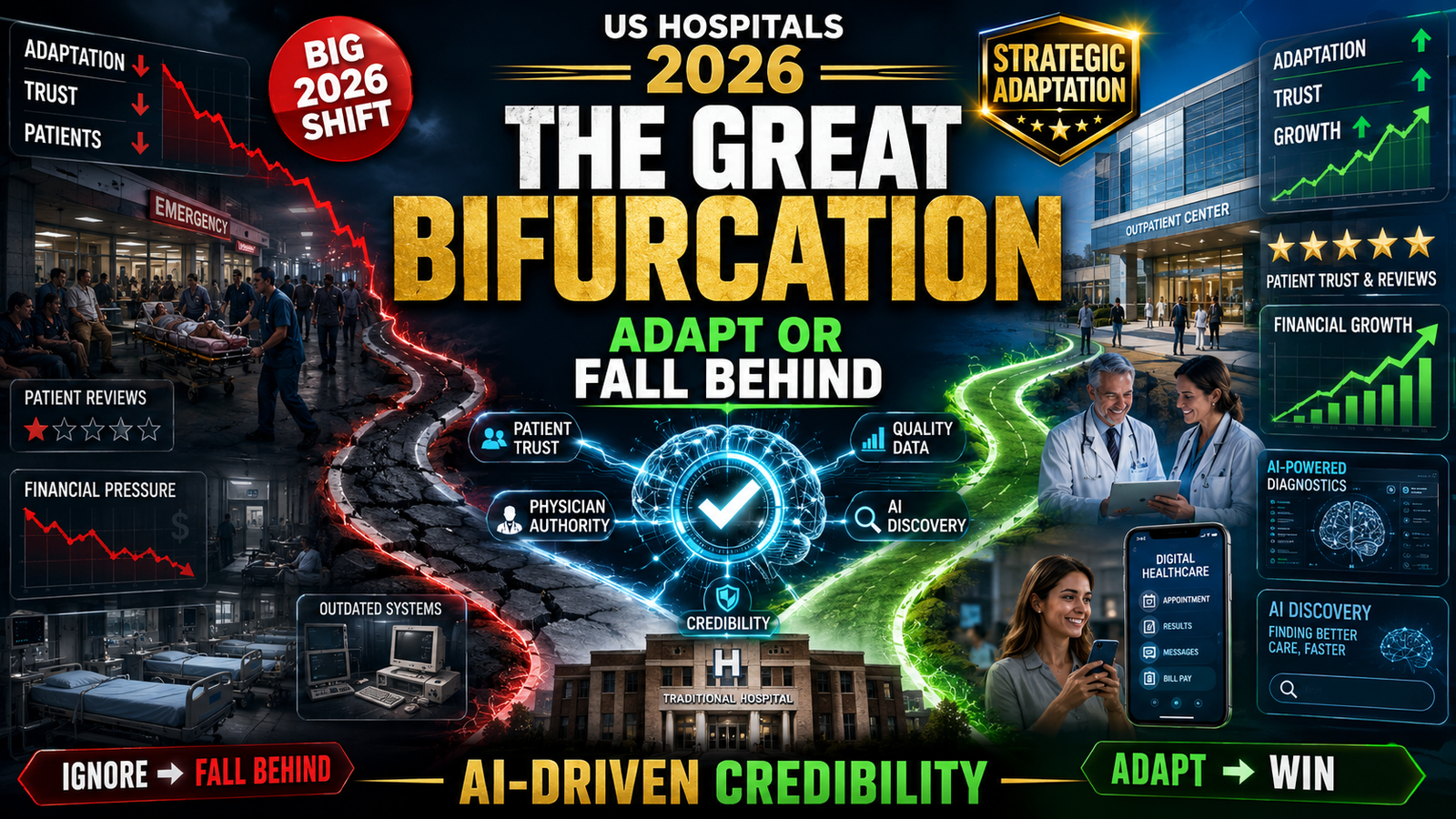
The US hospital industry in 2026 is navigating structural pressures: a K-shaped recovery, the shift to outpatient care, and a patient discovery layer increasingly dominated by AI answer engines. The hospitals that invest in structured, expert-reviewed content, technical excellence, and AI-optimized visibility will capture patients in a system where demand outpaces supply. In an era of AI-mediated discovery, credibility is not just a marketing tactic—it is a survival strategy.