sharmaanubhav6660@gmail.com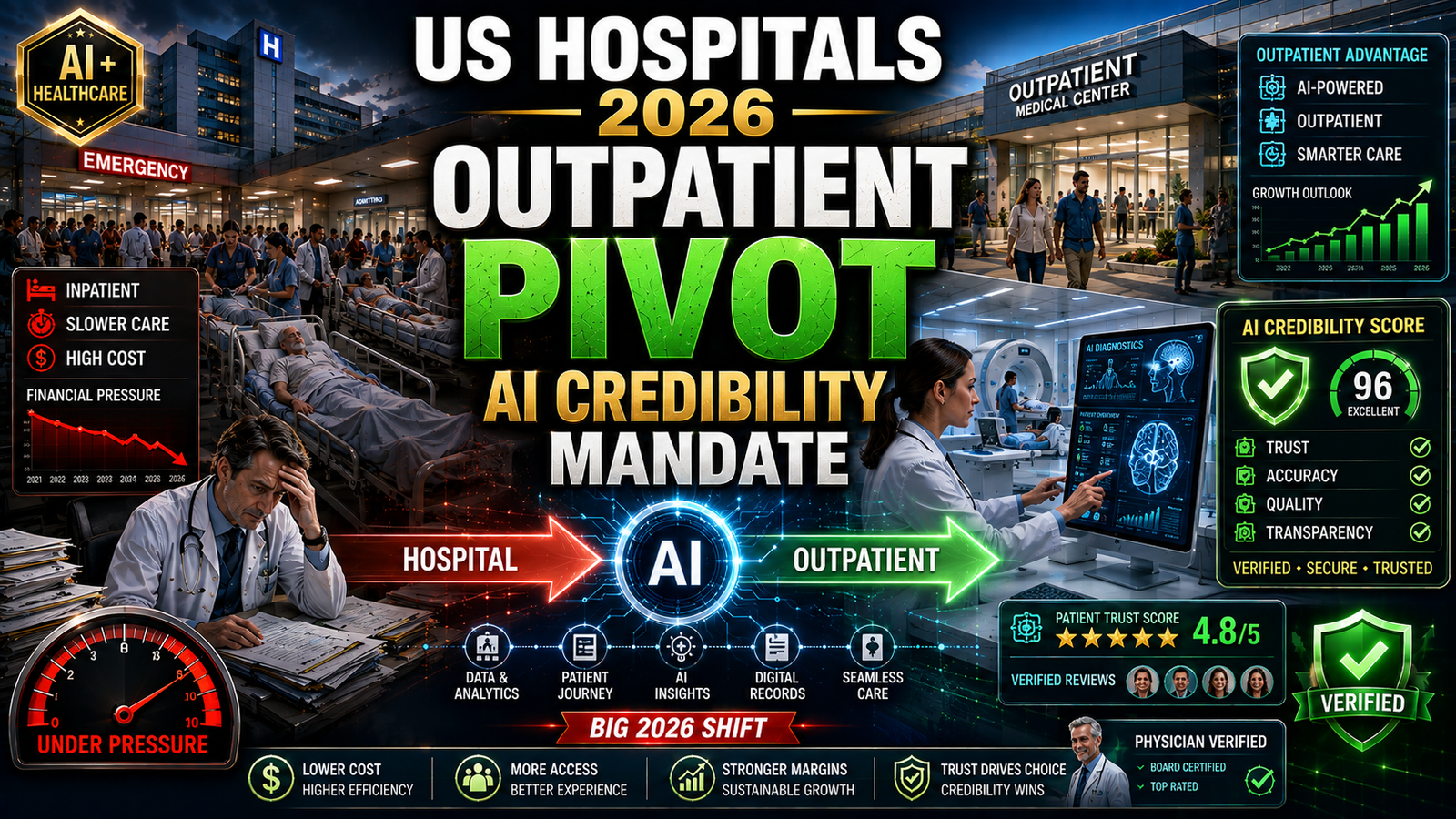
The Financial Recovery Reaches a Turning Point
A period of financial recovery for US hospitals is approaching its end as the industry braces for the full force of federal policy changes. After years of gradual improvement, “the tone for the sector has turned more cautious,” according to a Fitch Ratings analysis of 222 not-for-profit hospitals and health systems. “The current operational recovery may be at or very near a transition point” .
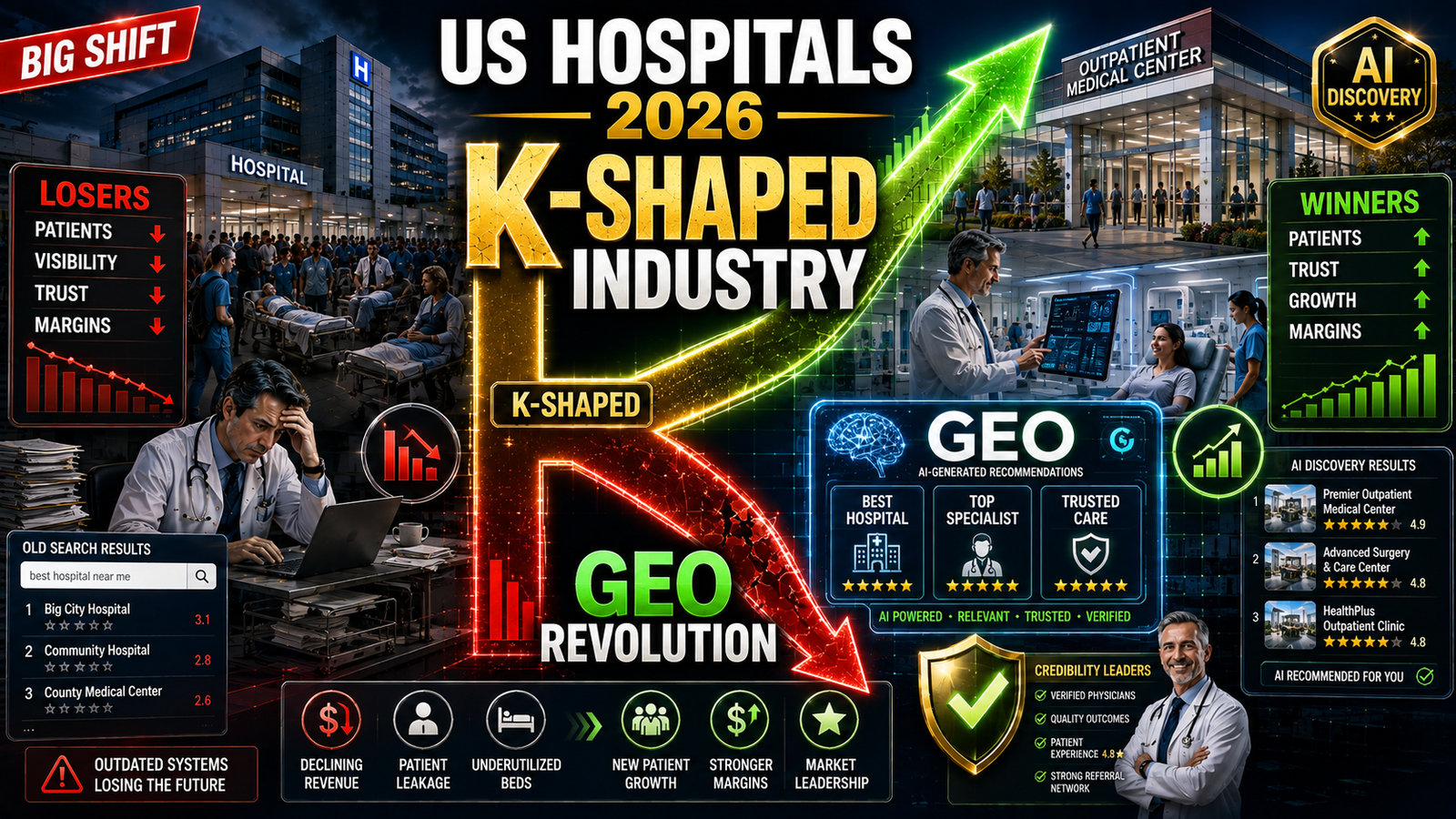
The divergence between winners and losers is widening into what analysts describe as a “K-shaped” recovery . AA-rated hospital systems saw median operating margins improve to 2.8% in fiscal 2025, near pre-pandemic levels, while junk-rated hospitals saw their margins fall to -2.8% from -1.6% the prior year . Strong gains in hospitals’ investment portfolios drove record cash-to-debt ratios, but this was “almost entirely an upper-tier phenomenon,” with BBB and junk-rated systems reporting sharp declines in cash holdings—days cash on hand falling 22% and 31% respectively .
Most of Fitch’s rated portfolio is concentrated in the higher end of the credit spectrum, with over three-quarters falling in either the AA or A rating category—a signal that weaker providers are being systematically filtered out of the sector through consolidation .
Demographic pressures add to the strain. Over the next four years, approximately 11,000 baby boomers will turn 65 each day, simultaneously driving up demand for advanced medical care and drawing skilled labor out of the workforce . Many hospitals are turning to capital spending to prepare, with a measure of capital spending rising to the highest level since 2008, and hospitals across the credit spectrum reporting increases. Year-to-date, hospitals have sold about $29.2 billion of muni bonds .
The Outpatient Imperative
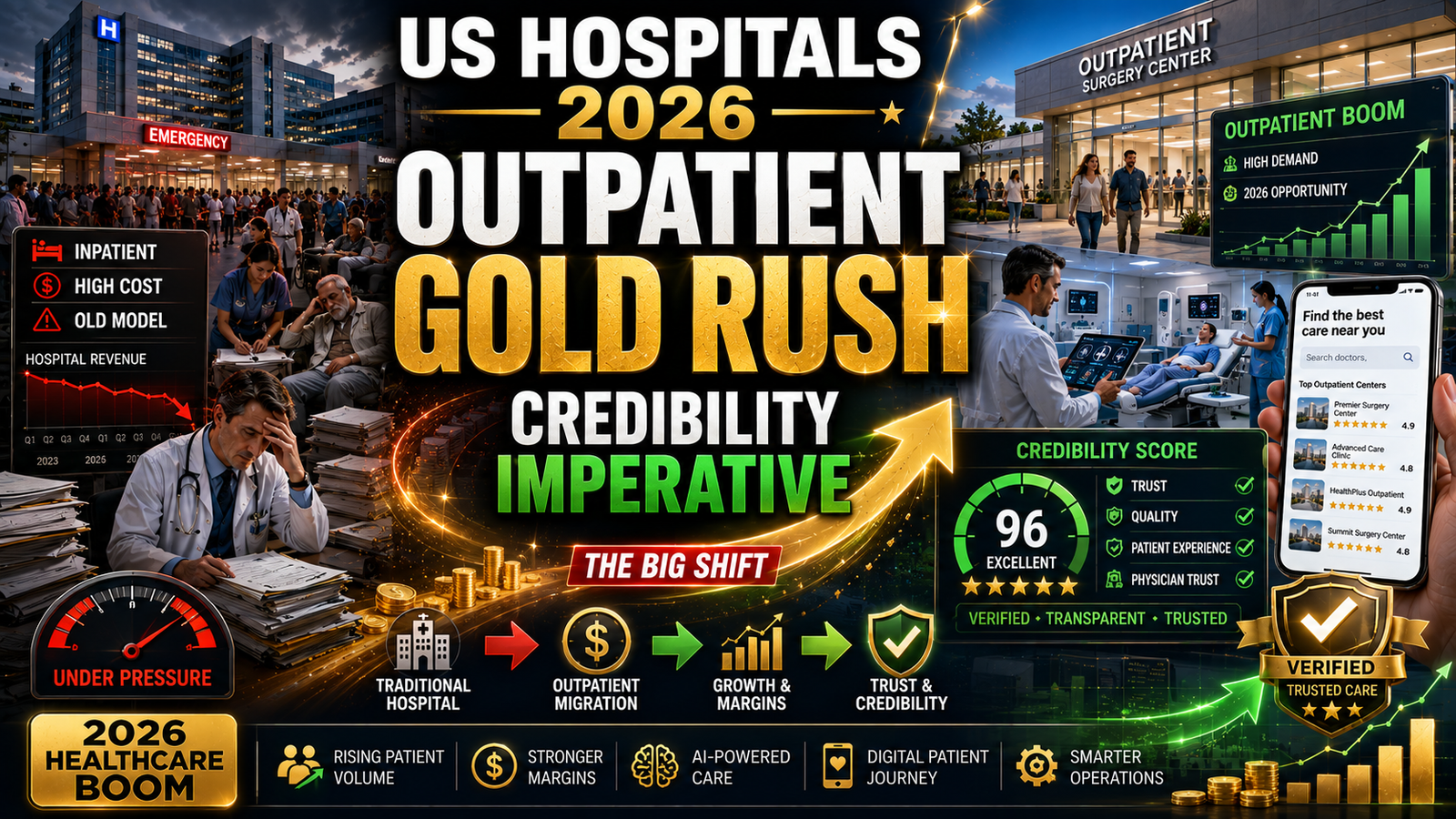
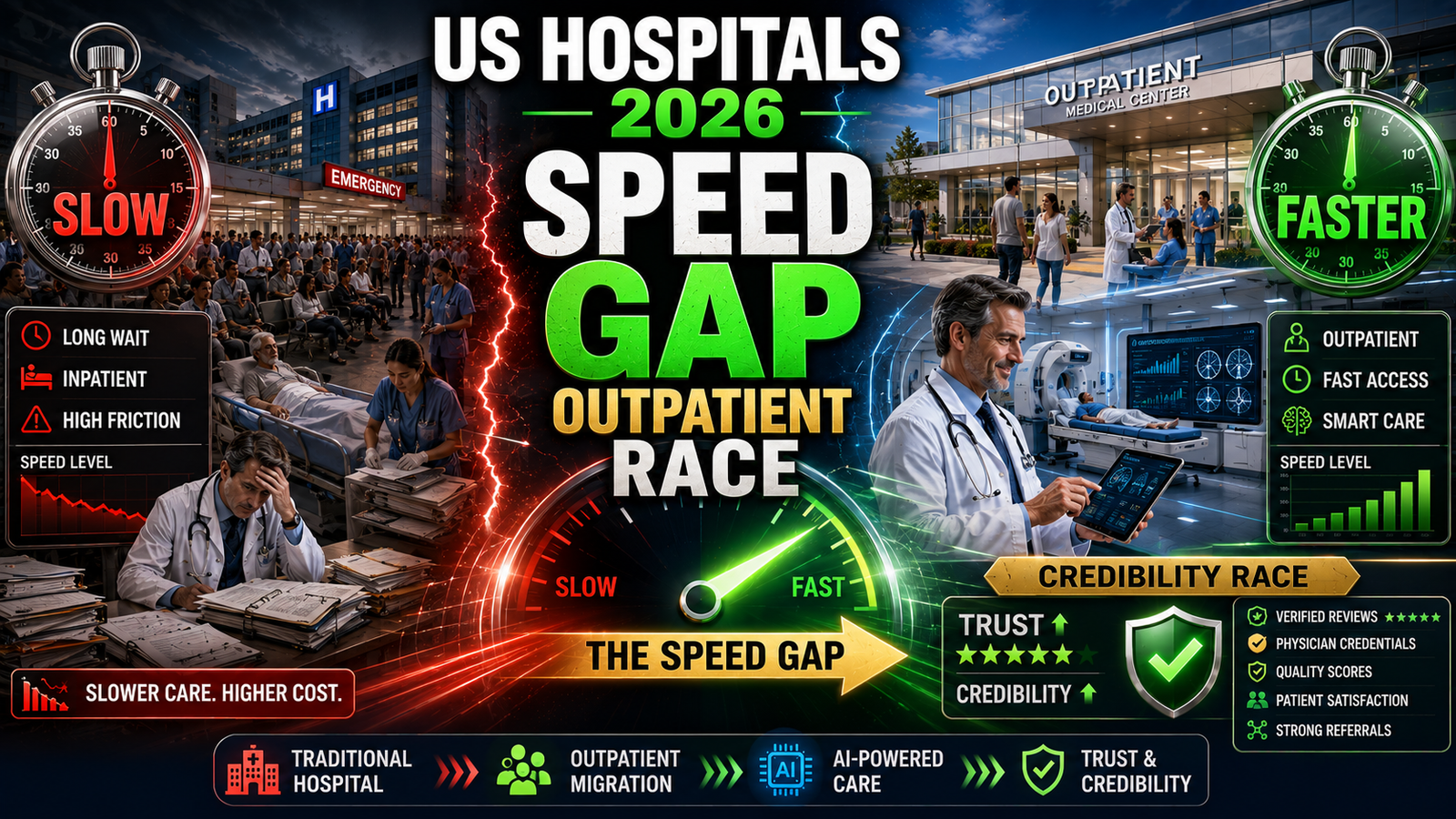
Outpatient care is the dominant revenue story of 2026. Major health systems are preemptively shifting toward outpatient-heavy revenue models, decoupling outpatient facilities and ASCs from central hospital overhead . The shift is structural and accelerated by policy changes, including the phase-out of the inpatient-only list.
CMS is expanding the number of surgeries eligible for reimbursement in freestanding ASCs through the ASC Covered Procedures List . The 2026 OPPS Final Rule introduces significant policy changes that will reshape hospital and ASC operations beginning January 1, 2026. While CMS characterizes the rule as advancing patient-centered care, hospital industry stakeholders have expressed substantial concerns about the financial implications .
The phase-out of the inpatient-only list reflects the agency’s continued emphasis on encouraging care delivery in lower-cost settings, but the American Hospital Association contends that such policies ignore critical differences between HOPDs and other care settings, arguing that HOPDs serve Medicare patients who are sicker and more clinically complex .
Erik Swanson, managing director at Kaufman Hall, warned: “Demand in outpatient services is on the rise, and hospitals without an outpatient footprint will struggle.” Kaufman Hall analysts wrote: “Traditional hospital care delivery is fundamentally shifting. As outpatient growth continues year-over-year in May, health systems may consider proactively adapting portfolios and operations to support the future of U.S. healthcare delivery” .
The ASC Speed Gap and the Hospital Sell-Off
The outpatient acquisition wave is the defining structural force reshaping how surgical care is owned and operated. The buyer universe has never been more diverse: health systems, private equity, payers, and physician-owned platforms are all acquiring outpatient assets simultaneously .
Major health systems are shedding hospitals and funneling the proceeds into ASCs. Tenet, Ascension, and Community Health Systems have collectively divested dozens of hospitals in recent years, redirecting billions toward outpatient growth . Health systems are decoupling outpatient facilities and ASCs from central hospital overhead, recognizing the margin advantages of the outpatient setting .
The for-profit speed gap is clear. Tenet Healthcare deployed $125 million in Q1 2026 to acquire seven ASCs, representing half of its annual M&A target. Community Health Systems is purchasing ASC operators, opening de novo facilities, and acquiring major surgery centers. HCA continued outpatient acquisitions in urgent care, ASC, and freestanding ED platforms .
The strategic pattern is consistent across for-profits. High-acuity surgical work is migrating outpatient at scale, and multispecialty ASCs in growth markets are the highest-margin growth vehicle available .
The Policy Storm: OBBBA and the Medicaid Cliff
The dominant near-term threat to hospital credit profiles is the One Big Beautiful Bill Act (OBBBA), which became law in 2025. The law imposes new work requirements for Medicaid recipients, limits hospital funding sources like state-directed payments, and could result in more than 10 million individuals losing insurance coverage .
Q1 earnings from the four largest publicly traded hospital operators showed soft headline volumes, with the softness layered on top of the predicted decline due to the expiration of ACA enhanced premium tax credits . The weather and respiratory effects are temporary, but the payer mix erosion from exchange losses is permanent and expected to worsen through 2026 .
The most striking takeaway is what the calls didn’t dwell on: OBBBA barely came up, even as many nonprofit health system boards have made it the dominant frame for 2026 strategy. The for-profits are betting that commercial mix and balance sheet strength make Medicaid policy impact less existential .
UnitedHealthcare’s Prior Authorization Shift
Adding to the strategic pressure, UnitedHealthcare announced it will eliminate prior authorization for roughly 30% of services requiring advance approval by year-end—with an emphasis on outpatient services—paralleling similar pledges from other major payers as part of a voluntary commitment with HHS and CMS .
By easing friction on outpatient services while leaving inpatient utilization management intact, UHC is widening the administrative gap between settings—sharpening the strategic pressure on health systems around ambulatory capacity and ASC investment, and giving physicians yet another reason to prefer working outside the hospital .
The CJR-X Model
CMS recently proposed CJR-X, a mandatory nationwide bundled payment model for lower extremity joint replacement taking effect October 1, 2027—extending the original CJR model’s two-sided risk structure to most IPPS hospitals . The savings playbook still runs through post-acute spend, but the easy reductions have largely been harvested. CMS itself acknowledges this by trimming the target price discount from 3% to 2% .
Paired with TEAM, CJR-X signals that CMS has validated a template it’s likely to keep using: mandatory episode pricing on high-volume, high-cost procedures, with regional benchmarks engineered to extract savings from whatever lever is available .
The Credibility Era: GEO for Healthcare
The Digital Front Door Has Moved
As patients increasingly use AI search and chatbots to find health information, health system marketers are pivoting from SEO to GEO—generative engine optimization . AI search visits grew 42.8% year over year, rising from 15.6 billion in Q1 2025 to 27.4 billion in Q1 2026 .
The American Hospital Association’s 2026 Annual Meeting features a session titled “Winning the AI Recommendation: Connecting Hospital Brands and Doctors in the GEO Era.” The session emphasizes that for decades, the “Digital Front Door” was your website. In 2026, that door has moved to the AI interface .
Patients increasingly start health research inside AI assistants rather than a search results page. When an AI engine answers a symptom or treatment query, it pulls from a small set of trusted sources. A health system absent from that set loses visibility at the exact moment a patient is choosing where to seek care .
How Health Systems Are Responding
Marketing leaders across the country are reorienting strategies:
SSM Health is changing the way it writes and distributes content to optimize “patient and consumer understanding and AI interpretation.” Ashley Pollard, vice president of marketing, captured the shift: “The traditional model where consumers ask Google a question and navigate multiple websites for answers is becoming obsolete. As AI evaluates every digital touchpoint, a holistic focus on the quality, credibility and structure of our content across the entire digital ecosystem is no longer optional—it is essential” .
Banner Health is “auditing and modernizing legacy content, using performance data and external search optimization tools to identify gaps and emerging patient intent.” “Our focus has shifted from traffic volume alone to high-intent visibility and conversion,” said Don Stanziano, senior vice president and chief marketing officer .
Intermountain Health is “trading pageviews for high-intent engagement,” no longer relying on web traffic as a performance benchmark. “Instead, our goal is to be a reliable source that AI tools reference in their search results. Success is measured by consumer conversion after that first discovery,” said Chief Marketing Officer Megan Mahncke .
NYU Langone Health is “laser-focused on showing up as a trusted and authoritative source” within AI platforms, ensuring “AI tools recognize NYU Langone Health as a leading clinical authority and source of truth” .
CommonSpirit Health is leaning into nonpaid, credible content. Chief Marketing Officer Adam Rice said: “Building on a strong SEO foundation, we are restructuring content for AI readability and implementing technical standards that improve how large language models interpret and accurately cite our trusted health information” .
Universal Health Services is putting “emphasis on building continued trust and credibility through service-line-specific video content, including doctor/expert-led explainer videos and patient and community endorsements,” while being “focused on SEO and AEO (answer engine optimization)” .
How AI Engines Pick Sources
AI engines reward content that is structured, sourced, and verifiable. Evidence matters more than tone: adding statistics increases AI visibility by 22%, and adding quotations raises it by 37% . Cited text is nearly twice as likely to contain definitive language: 36.2% versus 20.3% . 44.2% of ChatGPT citations come from the first 30% of page text, and 65% of AI bot hits target content published within the past year .
Building GEO-Ready Content
Expert review is the foundation of healthcare GEO. Every clinical page should name the reviewing physician, list credentials, show a review date, and link to current medical literature . Structure pages with question-style headings, short answer paragraphs, comparison tables, and FAQ blocks. Tables get extracted by LLMs at 81% versus 23% for prose . Add medical schema markup so AI engines can parse authorship, conditions, and procedures without guessing .
Real-World GEO Results
A medical GEO case study showed AI visibility improved from 18% to 44% (+26%), SOV increased 133%, brand citations rose 157%, and semantic hallucination rates dropped from 22% to 9% over a 5-month optimization period . These gains are within a reasonable engineering optimization range—30% to 80%—suggesting systematic improvements rather than statistical noise.
Key Takeaways for Hospital Marketing Leaders
1. The outpatient speed gap matters. Health systems are decoupling outpatient facilities from central hospital overhead. If your system is still planning while competitors execute, address that gap.
2. Build comprehensive content clusters with expert review. Specialized condition and treatment pages with named physician reviewers are required—not one-page overviews.
3. Optimize for GEO, not just SEO. AI search visits grew 42.8% year-over-year. Your content must be structured, sourced, and verifiable for AI extraction.
4. Technical foundations are non-negotiable. Schema markup, accessibility, internal linking, and AI crawler access are critical for both search and AI visibility.
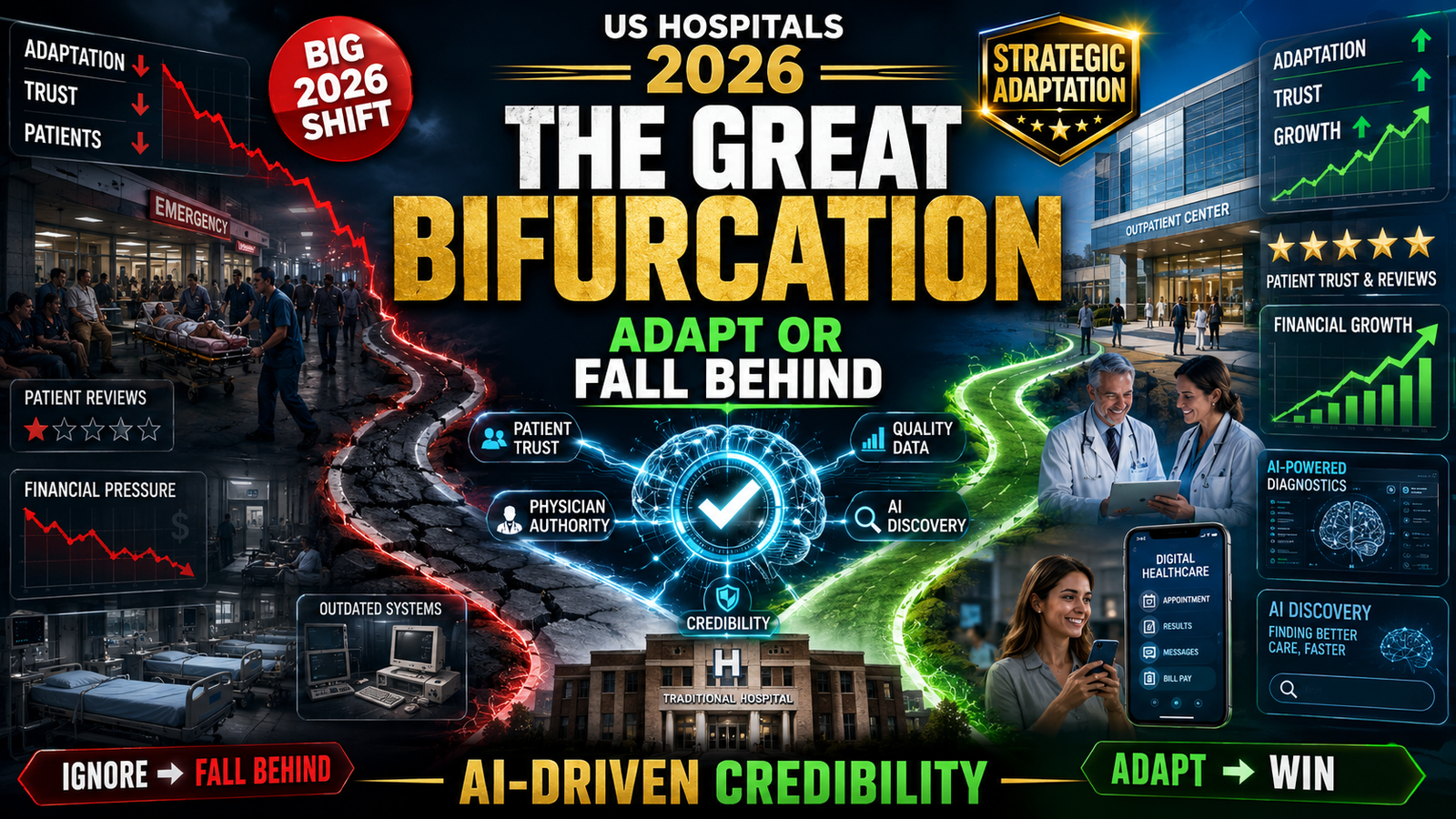
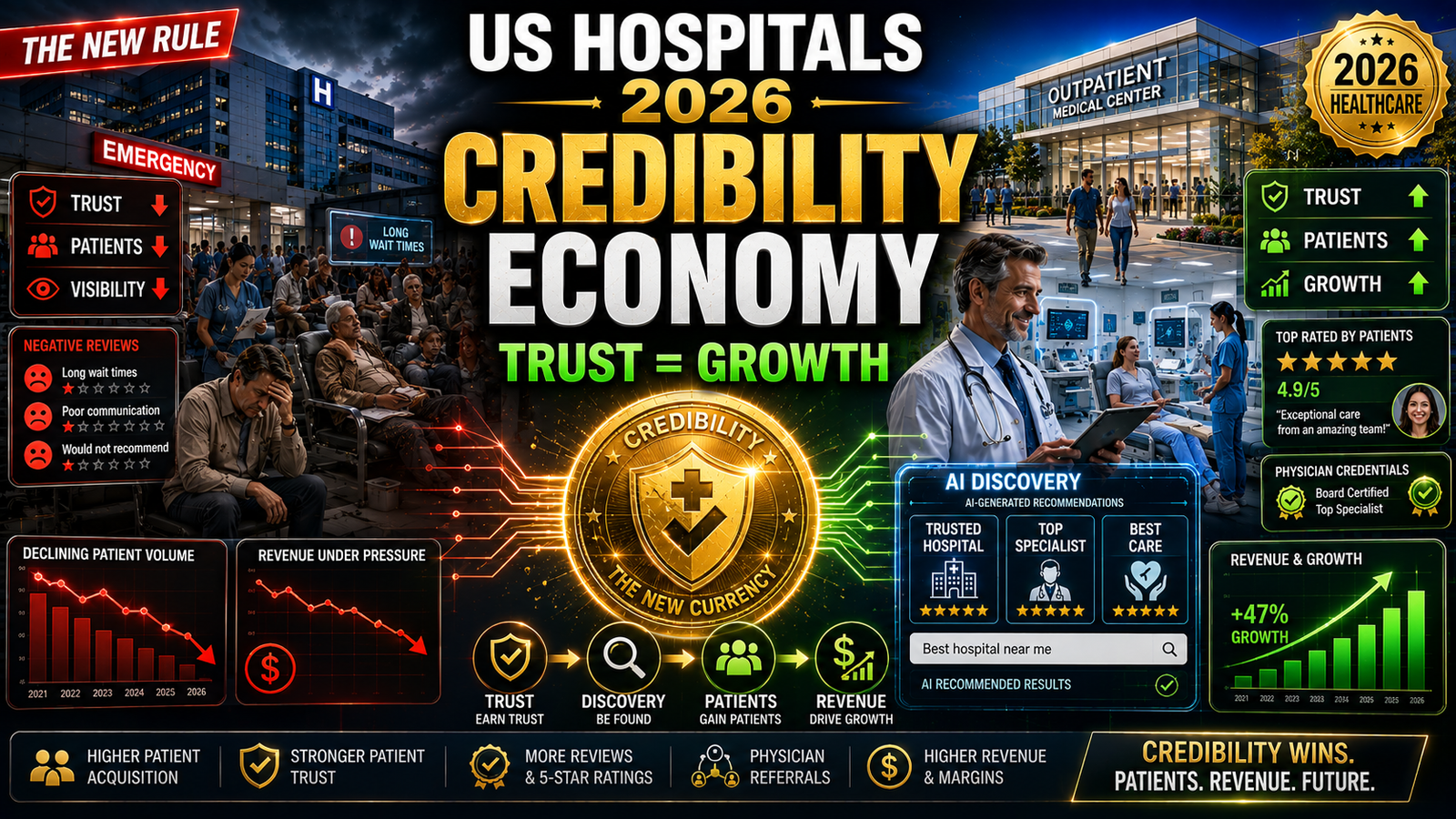
5. Credibility is the new currency. Systems investing in expert-reviewed, structured content earn AI citations and patient trust.
6. Quantify policy exposure. Rating agencies and boards are asking: What’s your Medicaid hit? What’s your mitigation plan?
Conclusion
The US hospital industry in 2026 is navigating structural pressures that are reshaping competition: a K-shaped recovery widening the gap between winners and losers, $1 trillion in Medicaid cuts, a massive ASC consolidation wave, and a patient discovery layer increasingly dominated by AI answer engines.
The for-profit speed gap is clear. Tenet, CHS, and HCA are deploying outpatient capital at scale while many NFP systems remain in the planning phase . As the American Hospital Association notes, the “Digital Front Door” has moved to the AI interface, and health systems absent from AI-generated recommendations face invisibility in the patient decision-making process .
For hospital marketing and SEO professionals, the mandate is clear: every patient who finds you online is a patient your competitors cannot see. The hospitals that invest in structured, expert-reviewed content, technical excellence, and AI-optimized visibility will capture patients in a system where demand outpaces supply. In an era of AI-mediated discovery, credibility is not just a marketing tactic—it is a survival strategy.