sharmaanubhav6660@gmail.com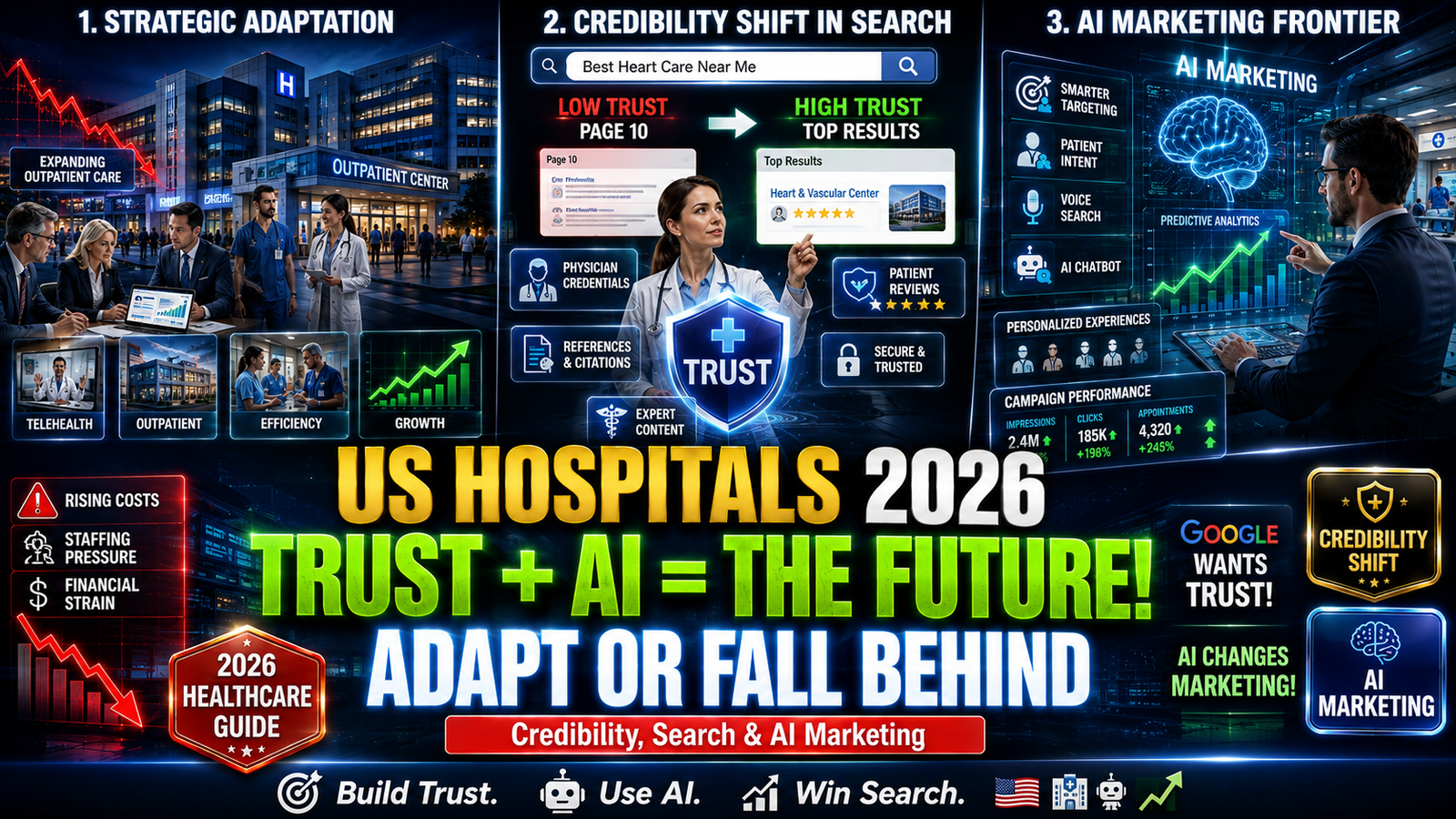
The Financial Reality: Modest Growth Amid Structural Pressure
The US hospital industry in 2026 finds itself in a state of cautious stability, but the underlying pressures are reshaping how systems must compete. Fitch Ratings has assigned a “neutral” outlook for the sector, citing stable credit trends and modest revenue growth, yet warning of potential margin pressure from rising labor costs and policy shifts . Mid-single-digit revenue growth is projected, driven by low-single-digit increases in volumes and modest reimbursement gains .
However, the financial picture is more nuanced than top-line growth suggests. Bad debt and charity care climbed 8% year-over-year in early 2026, while patient volumes dropped across inpatient, outpatient, and emergency care settings . Discharges fell 2% year-over-year, emergency department visits dropped 5%, and total costs per calendar day increased 5%—with supply costs up 5%, drug expenses rising 7%, and labor costs climbing another 5% .
The gap between gross and net operating revenue continues to widen. Gross operating revenue grew 7% nationally, while net operating revenue rose just 5%—a reflection of what hospitals bill versus what they ultimately collect . Policy-driven pressure compounds these concerns, with Medicaid cuts, bad debt, and charity care cited as structural forces weighing on net revenue, particularly for hospitals in high-Medicaid states .
Regional performance varies dramatically. Western hospitals led all regions with outpatient revenue surging 13% . Hospitals in the 200-299 bed range posted the strongest growth across every metric—net operating revenue up 8%, inpatient revenue up 7%, and outpatient revenue up 10% . The smallest hospitals (0–25 beds) recorded inpatient revenue declining 2%, even as outpatient revenue grew 4%, pointing to distinct financial pressures on smaller and rural facilities .
The Outpatient Shift: Cannibalization or Growth?
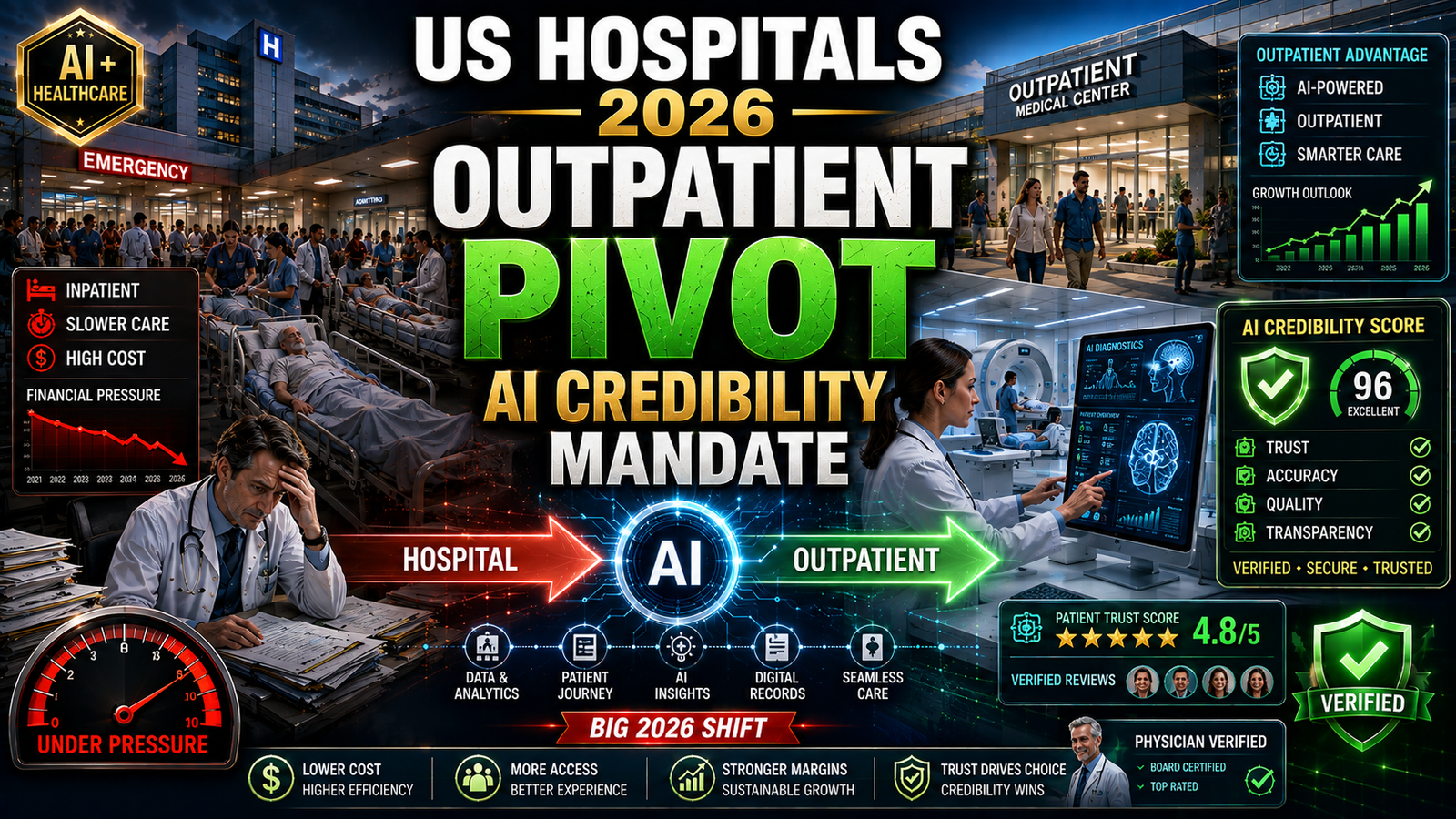
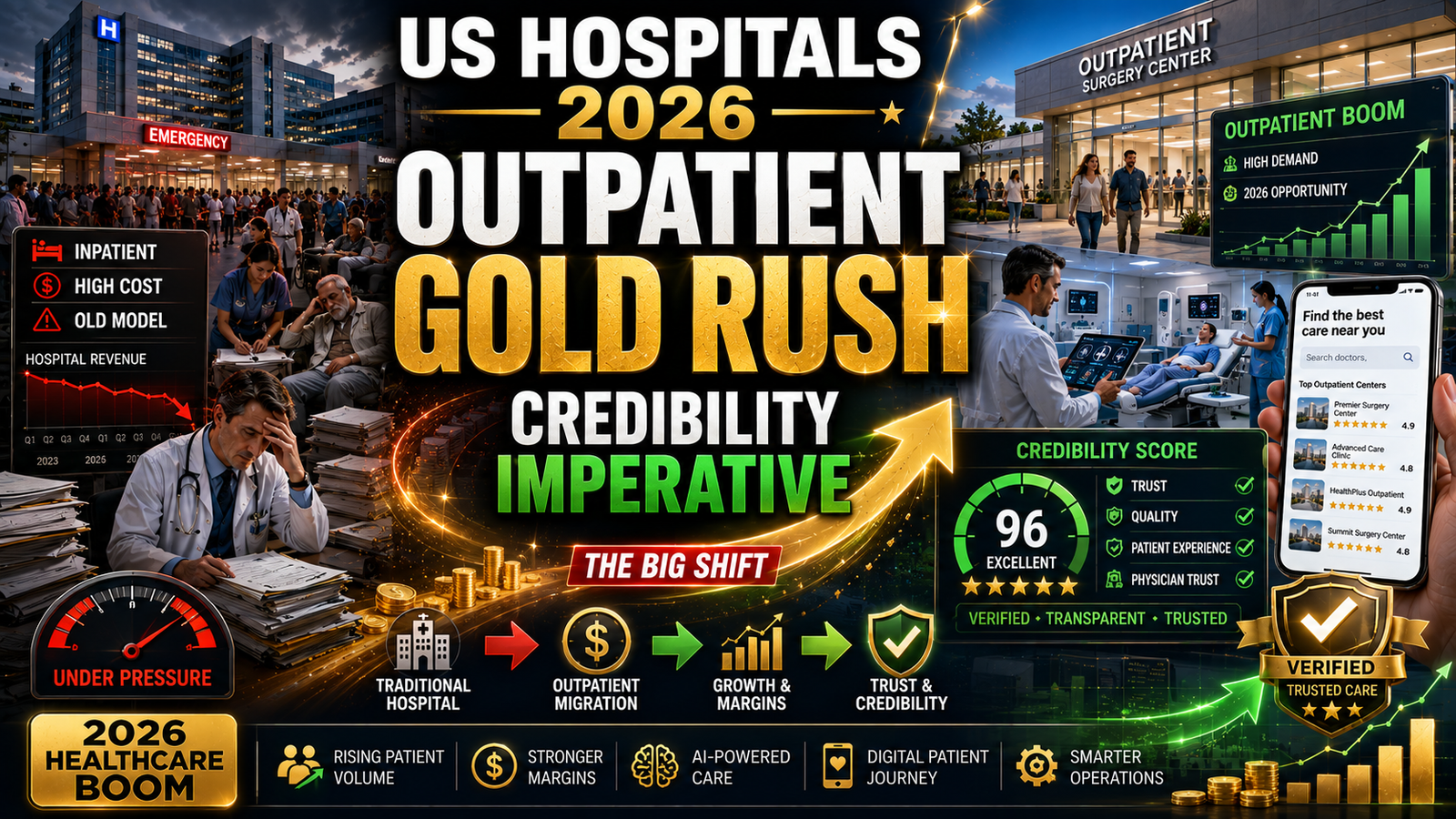
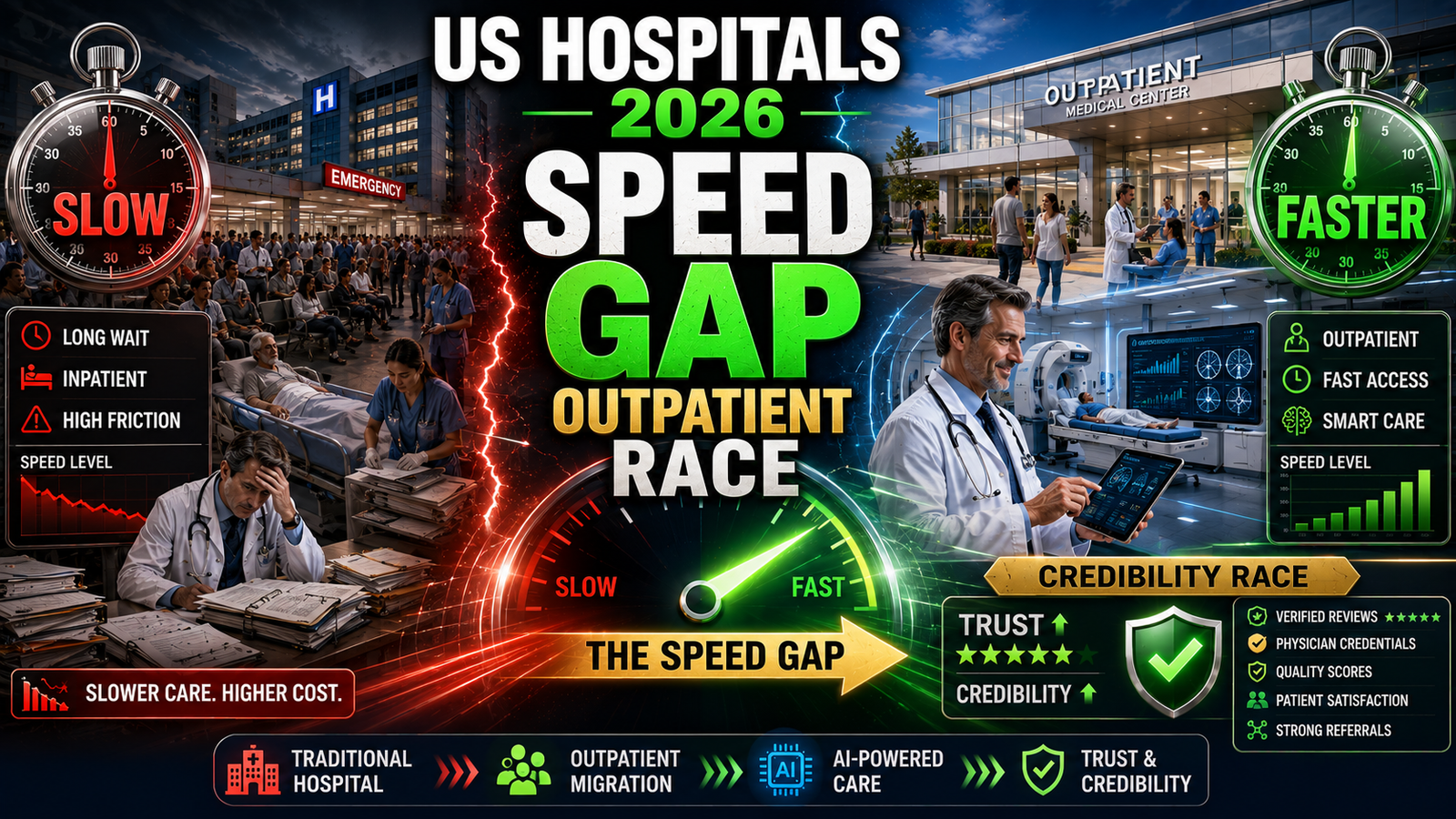
Outpatient care was the clearest driver of revenue growth in early 2026, outpacing inpatient revenue in every region and nearly every bed-size category nationwide . This trend animated significant conversation at the Becker’s 16th Annual Meeting, where hospital leaders debated whether expanding outpatient and ambulatory access grows the overall revenue pie or cannibalizes inpatient volume—a strategic question with real financial consequences as systems decide where to invest .
The policy environment favors this shift. Medicare’s 2026 Outpatient Prospective Payment System rule will cut reimbursement for drug administration at some off-campus hospital outpatient departments to 40% of prior OPPS rates, and the inpatient-only list will be phased out by year-end 2027, sustaining volume and margin growth for ambulatory surgery centers .
Meanwhile, Medicaid changes may increase the uninsured population. The 2025 Tax Cuts and Jobs Act will tighten Medicaid eligibility and intensify annual redeterminations in 2026, likely reducing Medicaid enrollment and pushing more people into the uninsured population, placing more pressure on overall hospital margins . HCA Healthcare expects to lose up to $900 million this year due to subsidy rollbacks, while Tenet Healthcare projects a $250 million hit .
The Marketing Response: Trust, Credibility, and AI-First Content
As patients increasingly use AI search and chatbots to find health information—with 16% of Americans now turning to chatbots such as ChatGPT and Gemini for medical advice—health system marketers are focusing on cultivating credibility and connectivity over chasing clicks .
Ashley Pollard, vice president of marketing at SSM Health, captured the shift: “The traditional model where consumers ask Google a question and navigate multiple websites for answers is becoming obsolete. Equally outdated is the notion that a single website serves as the central hub for information. As AI evaluates every digital touchpoint, a holistic focus on the quality, credibility and structure of our content across the entire digital ecosystem is no longer optional—it is essential” .
Marketing leaders across the country are reorienting their strategies:
- Banner Health is “auditing and modernizing legacy content, using performance data and external search optimization tools to identify gaps and emerging patient intent,” while restructuring content to answer natural-language queries more directly and shoring up physician attribution .
- Intermountain Health is “trading pageviews for high-intent engagement,” no longer relying on web traffic as a performance benchmark. Success is now measured by consumer conversion after discovery—“a patient could find our system through a chatbot and then be able to book an appointment or consult a provider right away” .
- NYU Langone Health is “laser-focused on showing up as a trusted and authoritative source” within AI platforms, ensuring that “AI tools recognize NYU Langone Health as a leading clinical authority and source of truth,” with the goal of remaining “a leading destination that patients trust and choose” .
- CommonSpirit Health is “restructuring content for AI readability and implementing technical standards that improve how large language models interpret and accurately cite our trusted health information” .
Technical SEO and GEO: The New Standards for Hospital Websites
E-E-A-T and Clinical Credibility
In healthcare, demonstrating credibility is essential because content impacts health decisions. E-E-A-T (Experience, Expertise, Authoritativeness, and Trustworthiness) is the foundation . The strongest signal in 2026 is named clinical review: every clinical page should name the reviewing physician, list credentials, show a review date, and link to current medical literature .
If providers won’t byline content, a practical alternative is having a medical professional review each piece and add a visible note such as “medically reviewed by [provider name]” with the most recent review date . This approach keeps content educational and credible while still showing that qualified experts are validating information.
Content Clusters and Authority Pathways
Content clusters—a pillar page supported by related subtopic pages—mirror how Google’s AI systems understand conditions, treatments, and patient journeys . A joint replacement cluster might include the pillar page, then branch into preparation, surgery types, recovery timelines, physical therapy, and long-term outcomes—all interconnected and demonstrating comprehensive expertise.
Siteimprove emphasizes mapping clusters and authority pathways before publishing another article . Hospitals need a content map: which specialty areas do you want to own in search? Which patient questions are you equipped to answer better than anyone else in your market?
Technical SEO Fundamentals
Technical execution is as important as content quality. Siteimprove identifies three priority areas :
Accessibility: Pages must meet heading hierarchy, color contrast, alt text, and keyboard navigation standards. Older adults (a huge portion of healthcare searchers) abandon sites that don’t work with screen readers or keyboard controls. Google penalizes inaccessible pages .
Technical SEO validation: Broken links, orphaned pages, missing meta descriptions, canonical tags, crawlability, and mobile usability must be checked before publishing .
Brand consistency: Consistent tone, legal disclaimers, and brand terminology must be maintained across departments .
GEO: Generative Engine Optimization
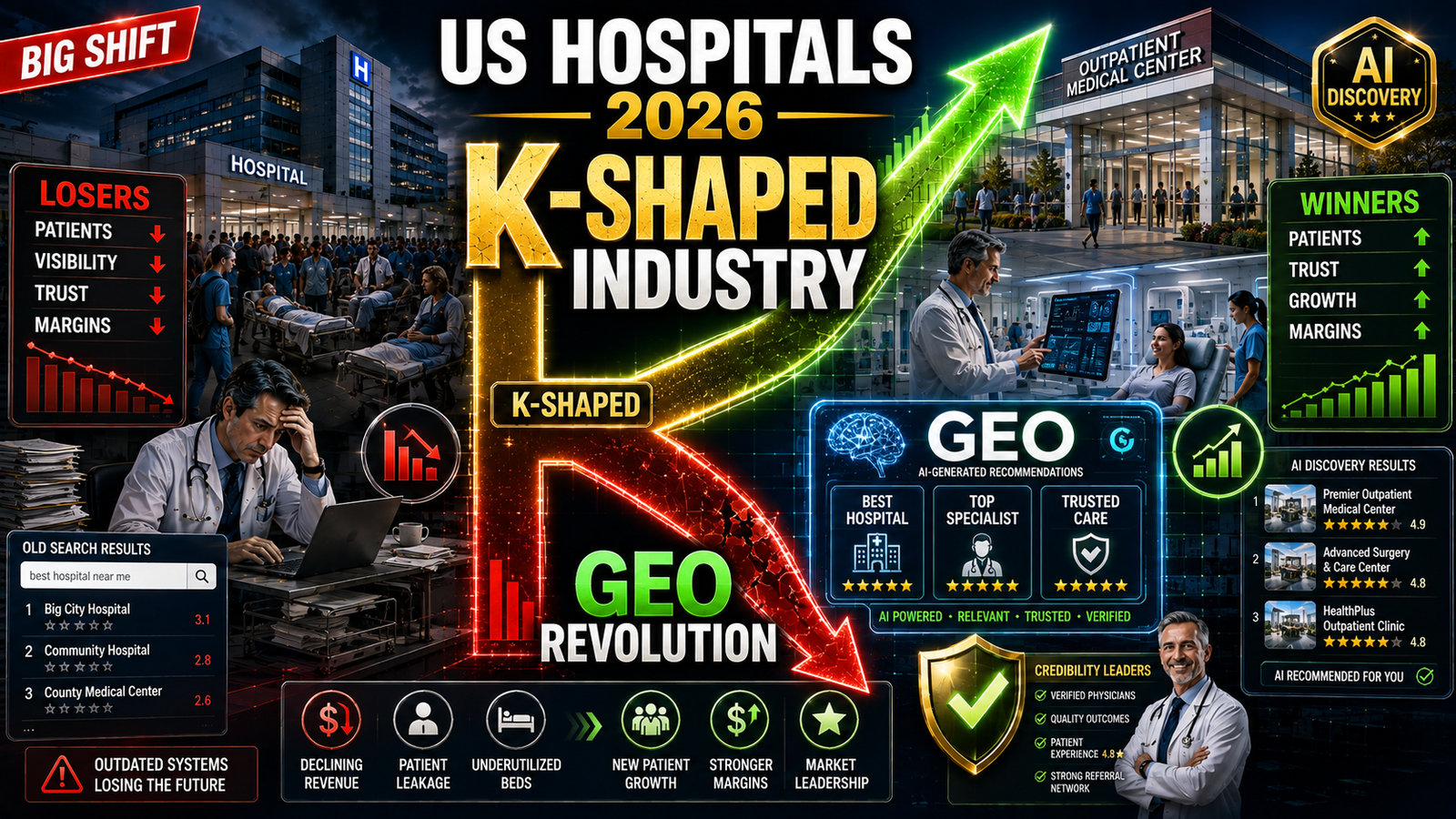
AI search visits grew 42.8% year-over-year, rising from 15.6 billion in Q1 2025 to 27.4 billion in Q1 2026 . Health systems that rely only on classic SEO are now optimizing for a channel that grows far slower than the one patients are adopting .
AI engines reward content that is structured, sourced, and verifiable . Evidence matters more than tone: adding statistics increased AI visibility by 22%, and adding quotations raised it by 37% . Cited text is nearly twice as likely to contain definitive language (36.2% versus 20.3%) .
Key GEO tactics include :
- Place answers high: 44.2% of ChatGPT citations come from the first 30% of page text.
- Use structured tables: Tables get extracted by LLMs at 81% versus 23% for prose.
- Cover real patient questions: Symptoms, treatment options, recovery timelines, costs, and insurance coverage.
- Freshness matters: 65% of AI bot hits target content published within the past year.
- Schema markup: Add medical schema so engines can parse authorship, conditions, and procedures without guessing.
Key Takeaways for Hospital Marketing Leaders
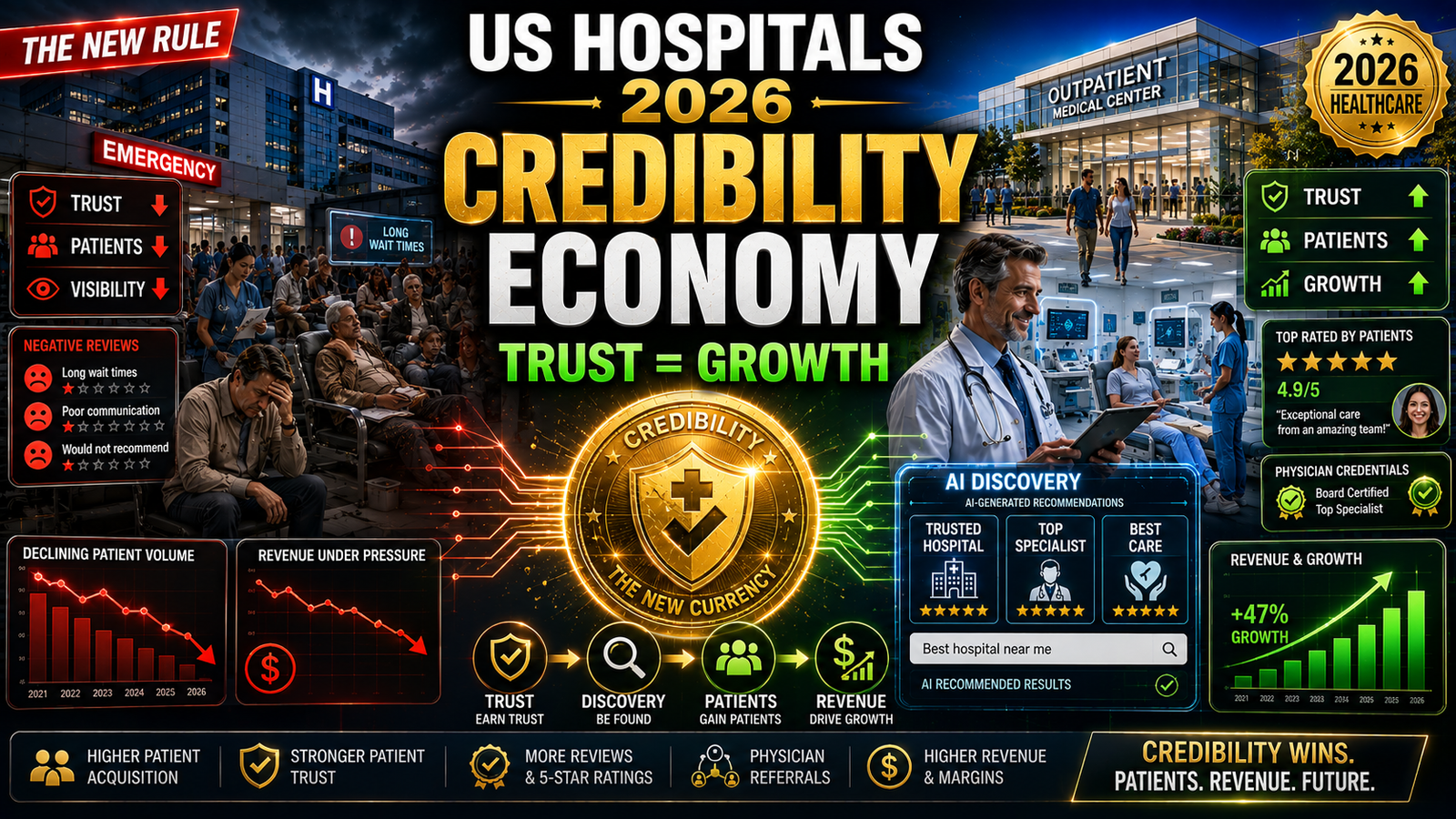
1. The credibility shift is permanent. Search and AI engines now evaluate trustworthiness more than keyword density. Clinical review, physician attribution, and authoritative sources are non-negotiable .
2. Build comprehensive content clusters. Cardiology, oncology, and orthopedics need 15-25+ pages each, not one-page overviews .
3. Optimize for AI, not just Google. AI search visits grew 42.8% year-over-year. Your content must be structured, sourced, and verifiable for AI extraction .
4. Technical SEO matters as much as content. Accessibility, schema markup, and internal linking are critical for both search and AI visibility .
5. Diversify your content portfolio. Don’t rely on one traffic driver. Build multiple content clusters across priority specialties .
Conclusion
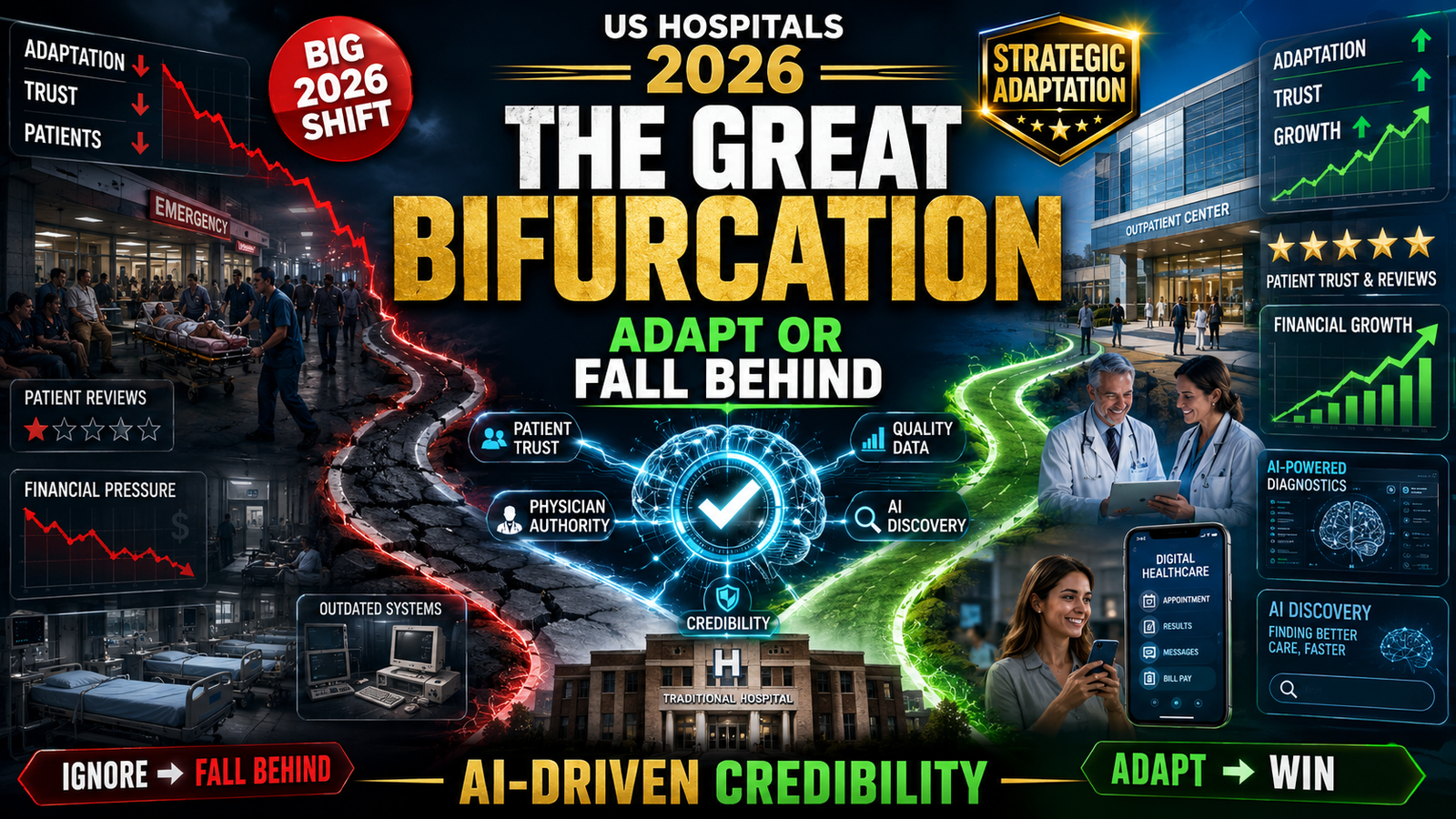
The US hospital industry in 2026 is navigating structural pressures: a K-shaped recovery, the continued shift to outpatient care, Medicaid cuts that could cost systems billions, and a patient discovery layer increasingly dominated by AI answer engines.
For hospital marketing and SEO professionals, the mandate is clear: every patient who finds you online is a patient your competitors cannot see. The hospitals that invest in structured, expert-reviewed content, technical excellence, and AI-optimized visibility will capture patients in a system where demand outpaces supply. In an era of zero-click search and AI-mediated discovery, credibility is not just a marketing tactic—it is a survival strategy .