sharmaanubhav6660@gmail.com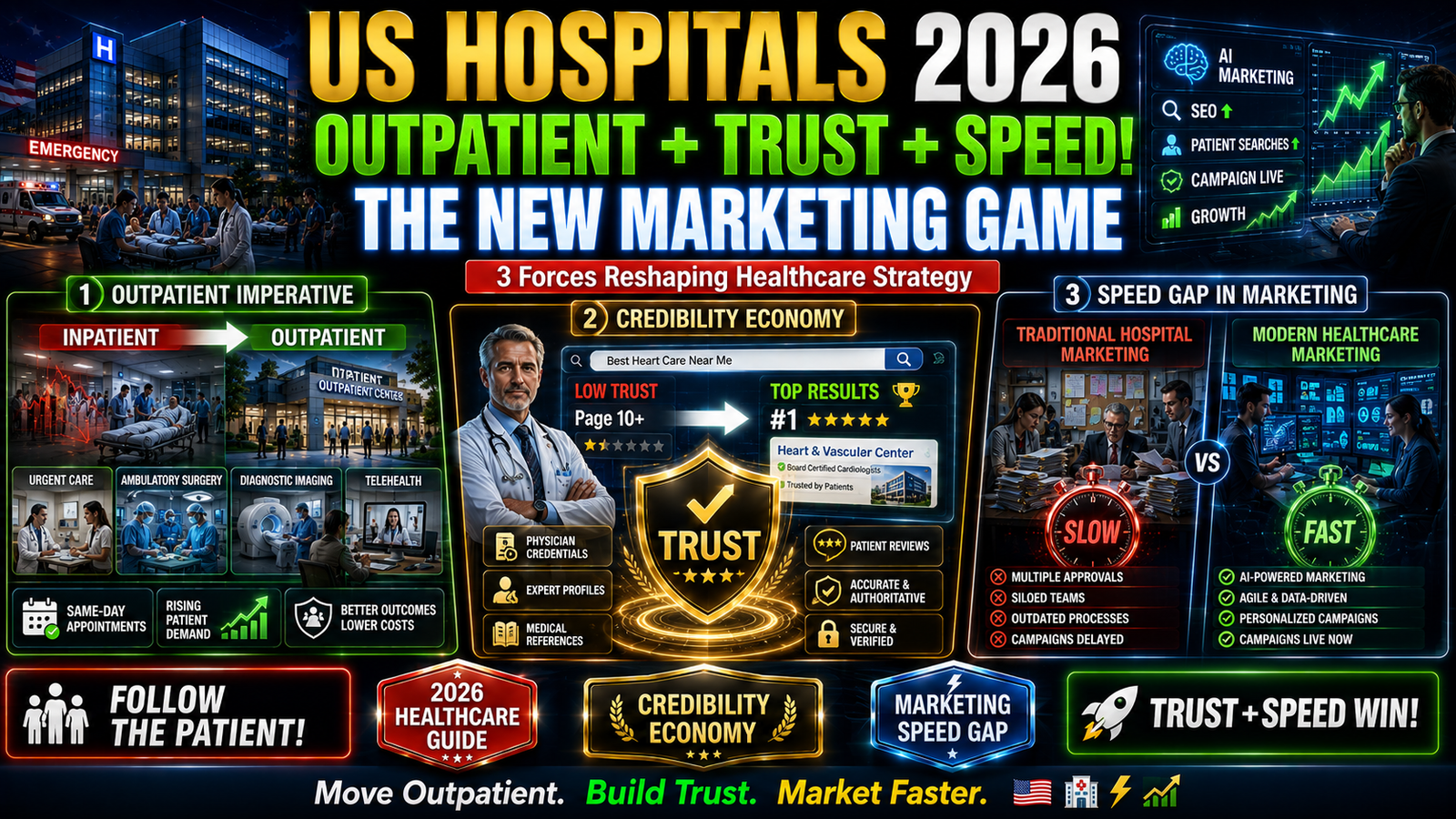
The K-Shaped Reality: Broad Revenue, Thin Margins
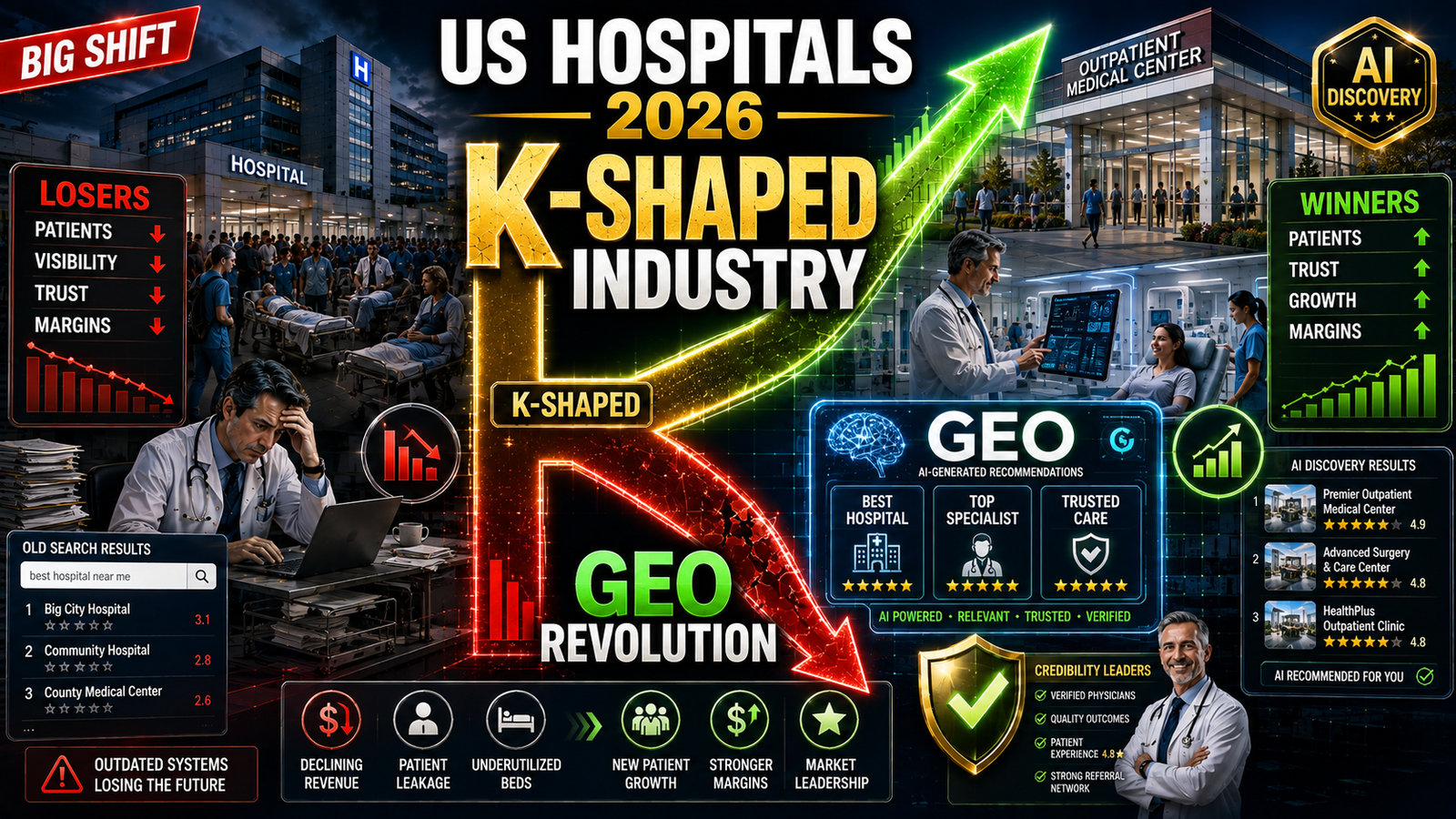
The US hospital industry in 2026 is experiencing what analysts describe as a “K-shaped” recovery, where financially strong systems pull decisively ahead while weaker institutions struggle. The data from more than 1,300 hospitals tells a story of broad revenue growth hiding deeper complications. Net operating revenue rose 5% per calendar day in the first quarter compared to the previous year, with gross operating revenue growing 7% . However, the year-to-date operating margin index stood at 1.9%, considerably below the 3.7% margin posted at the end of 2025 .
Bad debt and charity care climbed 8% year-over-year, while patient volumes dropped across inpatient, outpatient, and emergency settings . Discharges fell 2%, emergency department visits dropped 5%, and total costs per calendar day increased 5%—with supply costs up 5%, drug expenses rising 7%, and labor costs climbing another 5% . Erik Swanson, managing director at Kaufman Hall, described the environment as a “new normal” where “hospitals are off to a relatively soft start in 2026” .
The gap between gross and net operating revenue continues to widen. Gross operating revenue grew 7% nationally, while net operating revenue rose just 5%—reflecting the difference between what hospitals bill and what they ultimately collect . Policy-driven pressure compounds these concerns, with Medicaid cuts, bad debt, and charity care cited as structural forces weighing on net revenue, particularly for hospitals in high-Medicaid states .
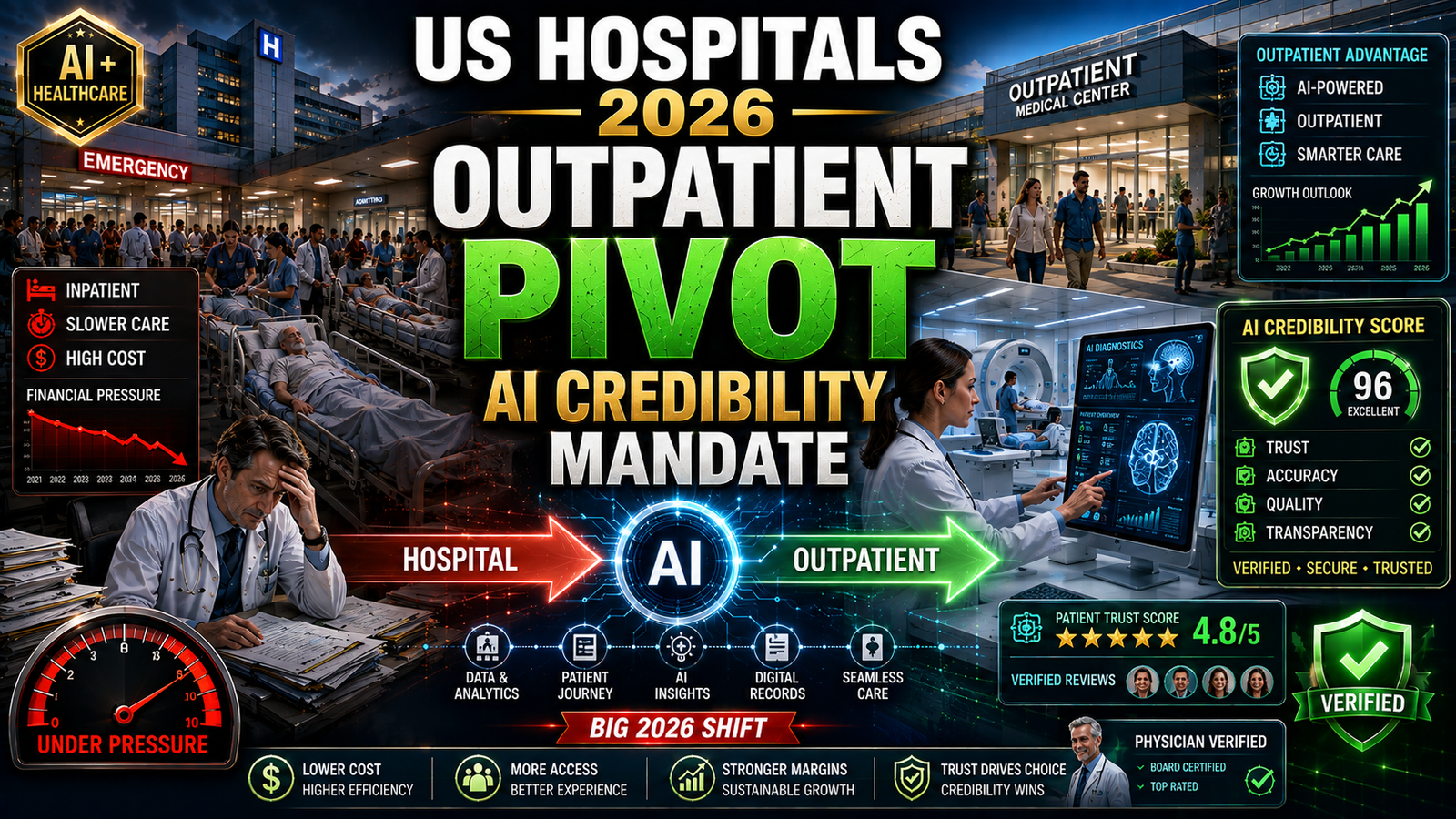
The Outpatient Shift: 8% Growth and the Cannibalization Question
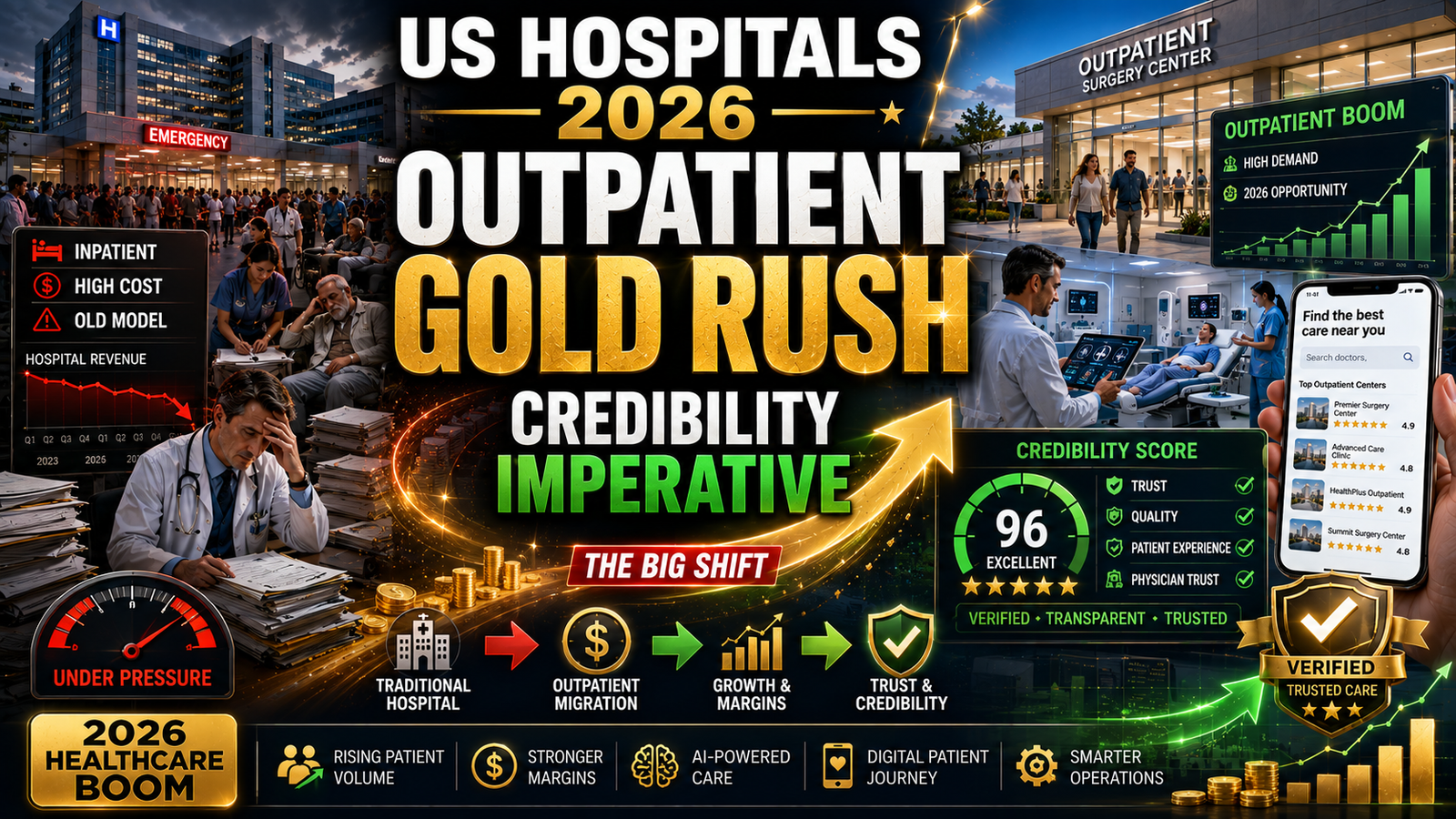
Outpatient care was the clearest driver of revenue growth in early 2026, outpacing inpatient revenue in every region and nearly every bed-size category nationwide . This trend animated significant conversation at the Becker’s 16th Annual Meeting, where leaders debated whether expanding outpatient access grows the overall revenue pie or cannibalizes inpatient volume—a strategic question with real financial consequences .
Regional performance varies dramatically. Western hospitals led all regions with outpatient revenue surging 13% . Hospitals in the 200-299 bed range posted the strongest growth across every metric—net operating revenue up 8%, inpatient revenue up 7%, and outpatient revenue up 10% . The smallest hospitals (0–25 beds) recorded inpatient revenue declining 2%, even as outpatient revenue grew 4%, pointing to distinct financial pressures on smaller and rural facilities .
Outpatient growth helps offset some financial headwinds, but as more care moves to outpatient settings, hospitals face revenue dilution and a higher concentration of complex, high-acuity patients on the inpatient side . Swanson summarized: “Outpatient care strategies offer a potential path forward, though hospitals must manage both revenue dilution and a greater concentration of high-acuity patients as a result” .
Kaufman Hall analysts noted a persistent theme heading into 2026: “Demand in outpatient services is on the rise, and hospitals without an outpatient footprint will struggle” . The structural shift is not temporary—the continued migration of surgical procedures to ASCs (Ambulatory Surgery Centers) will define the competitive landscape for years to come.
The For-Profit Speed Gap: Outpatient Capital Deployed at Pace
The four largest publicly traded hospital companies—HCA, Tenet, UHS, and Community Health Systems—reported Q1 earnings that reveal massive outpatient capital deployment moving faster than most not-for-profit systems can match . Collectively, these four systems operate 327 acute care facilities and generated approximately $126.7 billion in revenue in 2025 .
Tenet’s USPI outpatient surgery subsidiary delivered a 36.7% adjusted EBITDA margin driven by double-digit same-store growth in total joint replacements across its 533 ASCs . Tenet deployed $125 million (half its annual M&A target) to acquire seven additional ASCs and opened three de novos in Q1 alone . By Q2 2026, USPI’s footprint had grown to 538 ASCs across 37 states .
Community Health Systems is purchasing a majority stake in an ASC operator in Anchorage, opening two de novo ASCs in Alabama, and acquiring the Surgical Institute of Alabama—an 8,000+ annual case facility and its largest acquisition since 2016 . HCA continued outpatient acquisitions in urgent care, ASC, and freestanding ED platforms . The takeaway is clear: high-acuity surgical work—total joints, robotics-enabled general surgery, urology—is migrating outpatient at scale, and multispecialty ASCs in growth markets are the highest-margin growth vehicle available .
Notably, the for-profit earnings calls were near-silent on policy pressures while NFP boards were dominated by the One Big Beautiful Bill Act . What investors heard instead was capital deployment: HCA’s $5.5B–$6B project pipeline, Tenet’s ASC acquisitions, UHS’s behavioral expansion, and CHS’s ambulatory investments . UHS was unique among the four in quantifying policy impact, estimating $432 million to $480 million in annual Medicaid revenue reductions by 2032 .
The Policy Storm: 446 Hospitals at Risk
The dominant threat to hospital credit profiles is the One Big Beautiful Bill Act (H.R. 1), which became law in 2025. Projected federal Medicaid funding reductions of nearly $1 trillion over the next decade represent one of the most significant proposed reductions to the program in decades . Public Citizen identified 446 at-risk hospitals—those heavily dependent on Medicaid revenue and operating at a loss in recent years—with at least one facility affected in 44 states and Washington, D.C. . About 60% of at-risk hospitals (267 facilities) are in urban areas, with Black and Latino communities likely to be hardest hit .
CMS has proposed rule changes that would cap certain state-directed payments at 100% of Medicare rates in expansion states, reducing Medicaid spending by more than $775 billion over 10 years . The American Hospital Association warned the changes will have “very real consequences for access to care in communities across the nation,” adding: “When hospitals and providers are forced to reduce services—or even close entirely—everyone in a community is impacted” .
Specific health systems have projected devastating losses. Alameda Health System will lose more than $100 million annually by 2030 and has laid off nearly 300 employees . Trinity Health projects $1.5 billion in losses and has already cut 10.5% of its billing staff, closing the maternity unit at one of its Georgia hospitals . National Nurses United projects that the combined deficit of financially vulnerable hospitals could grow 50% to 75% under the combined weight of Medicare sequestration, Medicaid cuts, and the expiration of enhanced ACA marketplace subsidies.
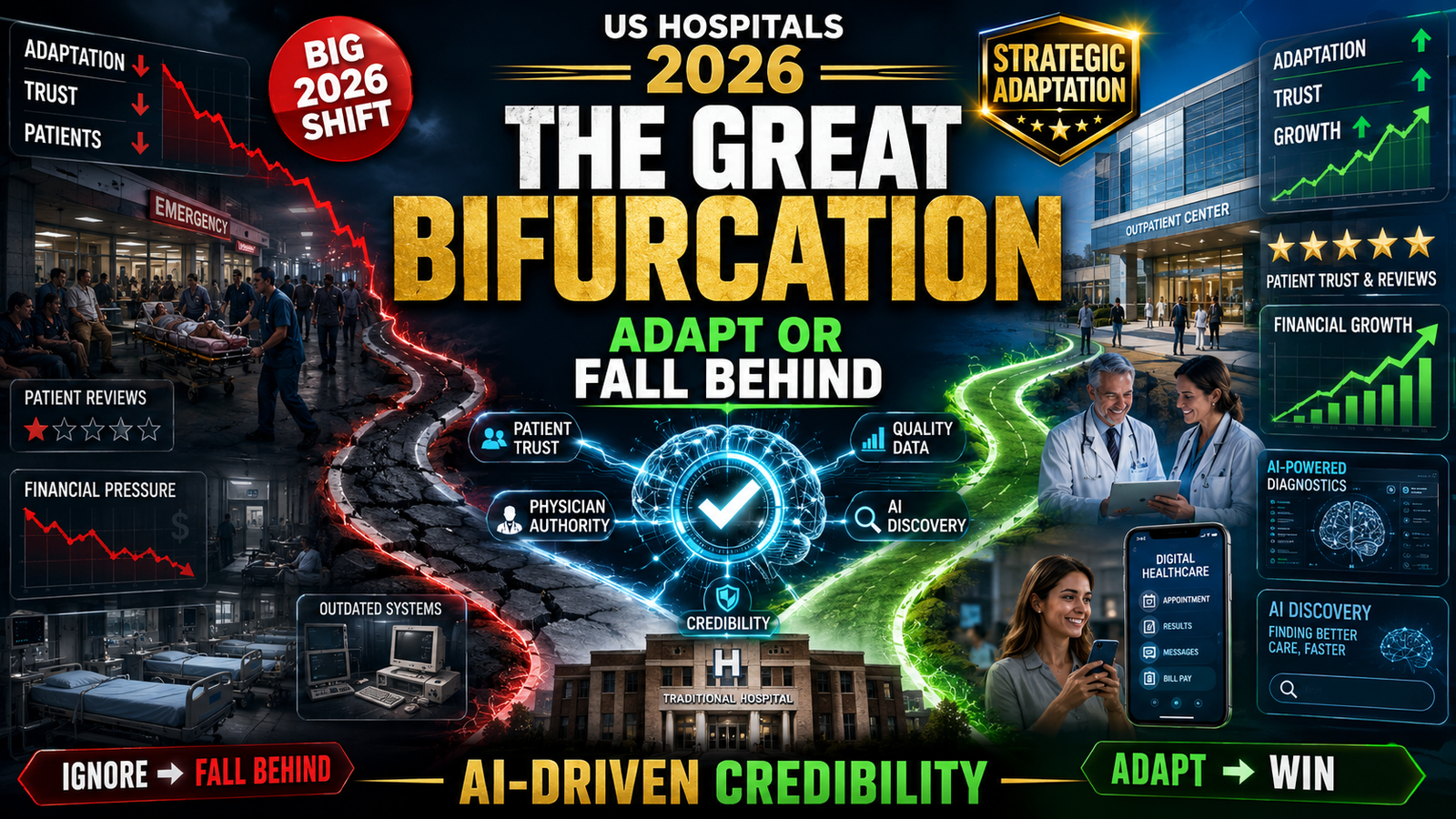
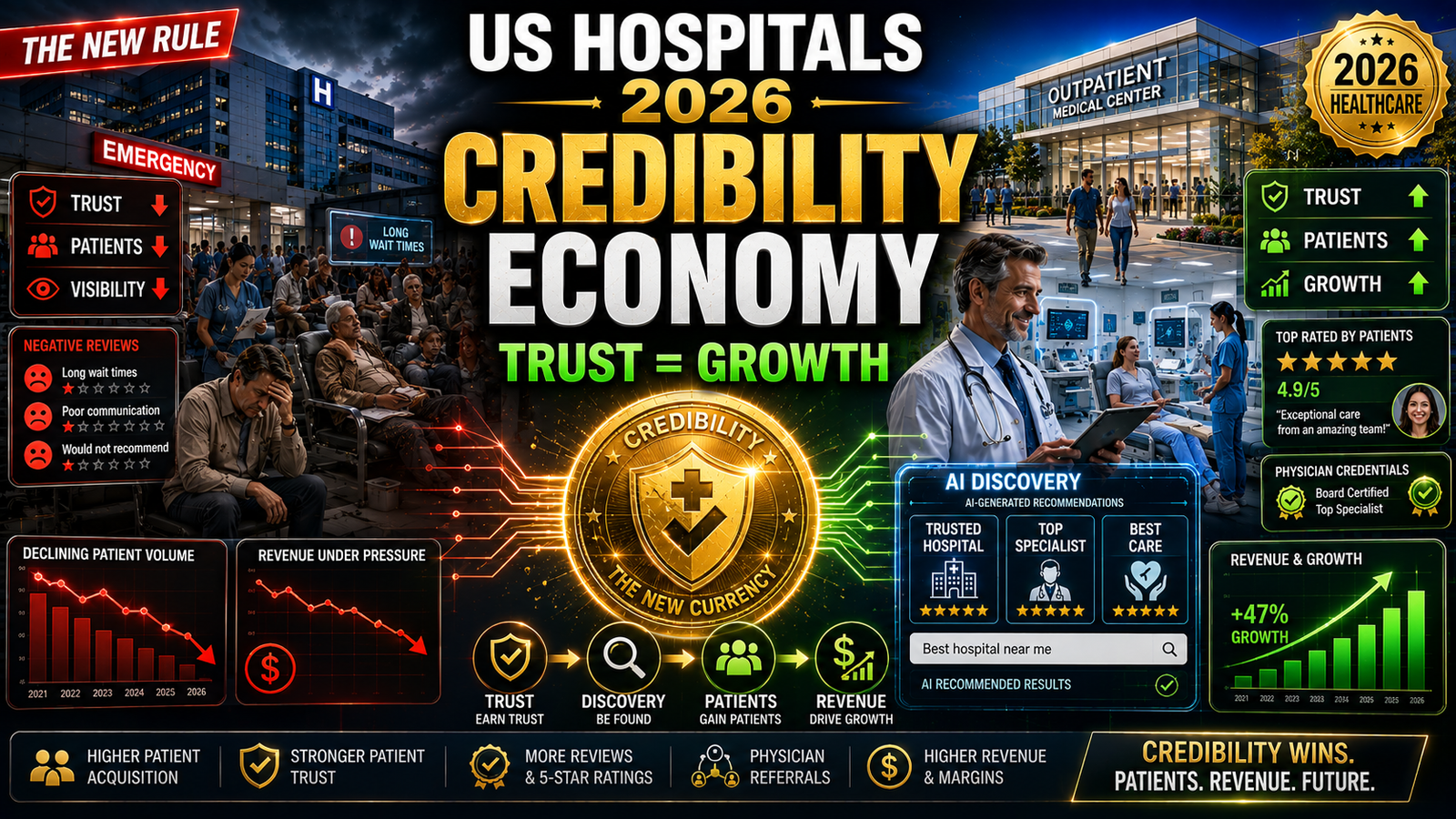
The Credibility Shift: AI Search and Patient Trust
As patients increasingly use AI tools for health information—with 62% of Americans having used AI chatbots, ChatGPT, Google Assistant, or Gemini for medical information—health system marketers are shifting from chasing clicks to cultivating credibility . The most common uses include getting information about a specific condition (33%), symptoms (29%), and medication side effects (26%) .
However, patient trust is conditional. Among those who use AI for medical information, 88% trust the information, but only 14% trust it completely . Nine in 10 take steps to check legitimacy, with the most common action being talking to a healthcare professional for confirmation (41%) . This pattern reinforces why hospitals must position themselves as authoritative sources across all digital touchpoints—patients cross-reference AI answers with trusted institutional sources.
Research on ChatGPT’s health responses found that over 75% of cited sources were from established institutional sources like Mayo Clinic, Cleveland Clinic, and the National Health Service . This tells a clear story: AI engines gravitate toward institutional credibility. Hospitals that invest in authority signals—named physician review, published dates, clear credentials, and linkable references—are far more likely to be cited in AI-generated answers .
Healthcare GEO: The Technical Framework for AI Visibility
AI search visits grew 42.8% year-over-year, rising from 15.6 billion in Q1 2025 to 27.4 billion in Q1 2026 . Health systems that rely only on classic SEO are now optimizing for a channel that grows far slower than the one patients are adopting .
How AI Engines Pick Sources
AI engines reward content that is structured, sourced, and verifiable . Evidence matters more than tone:
- Adding statistics increased AI visibility by 22%, and adding quotations raised it by 37%
- Cited text is nearly twice as likely to contain definitive language (36.2% versus 20.3%)
- 44.2% of ChatGPT citations come from the first 30% of page text
- 65% of AI bot hits target content published within the past year
Expert-Reviewed Content as Foundation
Expert review is the foundation of healthcare GEO. Every clinical page should name the reviewing physician, list credentials, show a review date, and link to current medical literature . These signals tell AI engines the content is accountable and protect patients from inheriting errors. If providers will not byline content, a visible “medically reviewed by [provider name]” note with the most recent review date is a practical alternative.
Structure Pages for Extraction
Tables get extracted by LLMs at 81% versus 23% for prose . Use clear question-style headings, short answer paragraphs, comparison tables, and FAQ blocks. Add medical schema markup so engines can parse authorship, conditions, and procedures without guessing.
Marketing Response: How Health Systems Are Adapting
Marketing leaders across the country are reorienting strategies to the AI-driven discovery era:
- Banner Health is “auditing and modernizing legacy content, using performance data and external search optimization tools to identify gaps and emerging patient intent,” while restructuring content to answer natural-language queries and shoring up physician attribution .
- Intermountain Health is “trading pageviews for high-intent engagement,” no longer relying on web traffic as a performance benchmark. Success is measured by consumer conversion after discovery .
- NYU Langone Health is “laser-focused on showing up as a trusted and authoritative source” within AI platforms, ensuring “AI tools recognize NYU Langone Health as a leading clinical authority and source of truth” .
- CommonSpirit Health is “restructuring content for AI readability and implementing technical standards that improve how large language models interpret and accurately cite our trusted health information” .
Ashley Pollard, vice president of marketing at SSM Health, captured the shift: “The traditional model where consumers ask Google a question and navigate multiple websites for answers is becoming obsolete. As AI evaluates every digital touchpoint, a holistic focus on the quality, credibility and structure of our content across the entire digital ecosystem is no longer optional—it is essential” .
Key Takeaways for Hospital Marketing Leaders
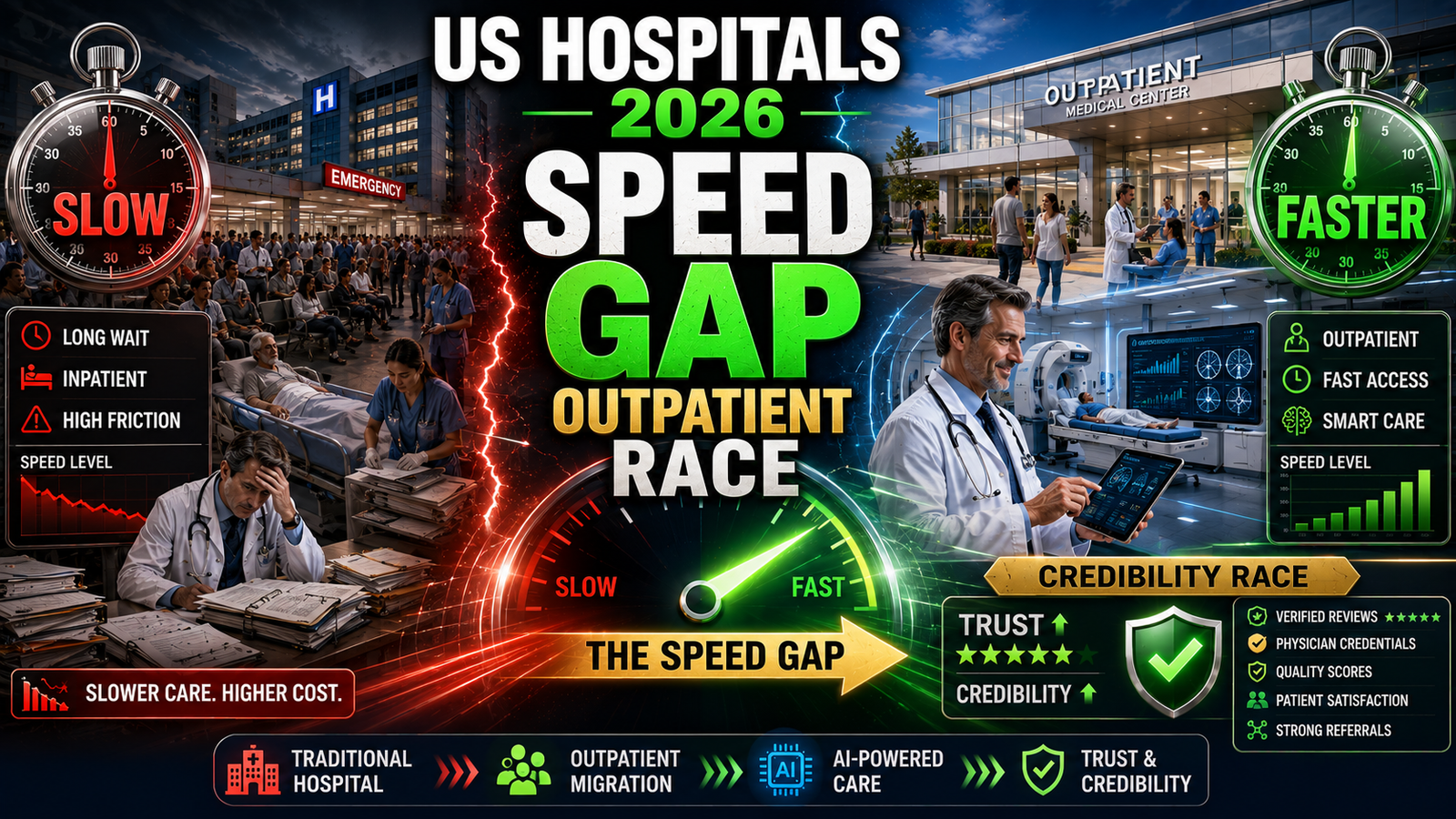
1. The outpatient speed gap matters. For-profit systems are deploying outpatient capital at pace, acquiring multiple ASCs in a single quarter. If your NFP system is still planning while for-profits execute, your marketing strategy must address that gap .
2. Build comprehensive content clusters. Specialized condition and treatment pages with medical expert bylines are required—not one-page overviews.
3. Optimize for GEO, not just SEO. AI search visits grew 42.8% year-over-year. Your content must be structured, sourced, and verifiable for AI extraction .
4. Technical SEO is non-negotiable. Accessibility, schema markup, and internal linking are critical for both search and AI visibility .
5. Credibility is the new currency. AI engines cite established institutional sources. Systems that invest in expert-reviewed, structured content earn AI citations and patient trust .
6. Quantify your policy exposure. Rating agencies and boards are asking for numbers: What’s your Medicaid hit? What’s your mitigation plan?
Conclusion: Visibility Is Survival
The US hospital industry in 2026 is navigating structural pressures: a K-shaped recovery widening the gap between winners and losers, $1 trillion in Medicaid cuts putting 446 hospitals at risk, for-profit outpatient deployment moving faster than most NFPs can match, and a patient discovery layer increasingly dominated by AI answer engines.
For hospital marketing and SEO professionals, the mandate is clear: every patient who finds you online is a patient your competitors cannot see. The hospitals that invest in structured, expert-reviewed content, technical excellence, and AI-optimized visibility will capture patients in a system where demand outpaces supply. In an era of AI-mediated discovery, credibility is not just a marketing tactic—it is a survival strategy.