sharmaanubhav6660@gmail.com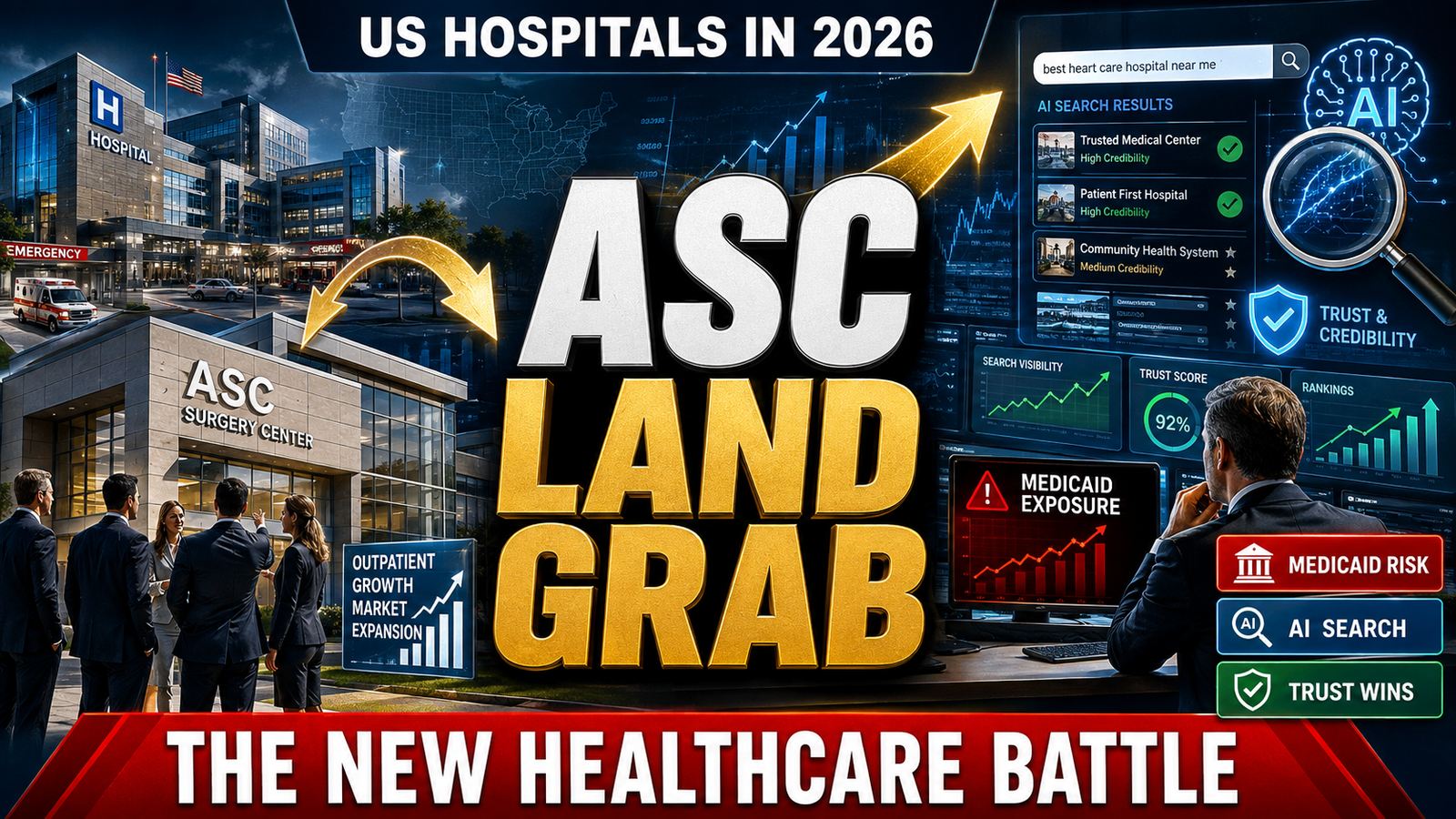
The Structural Reset: A K-Shaped Industry
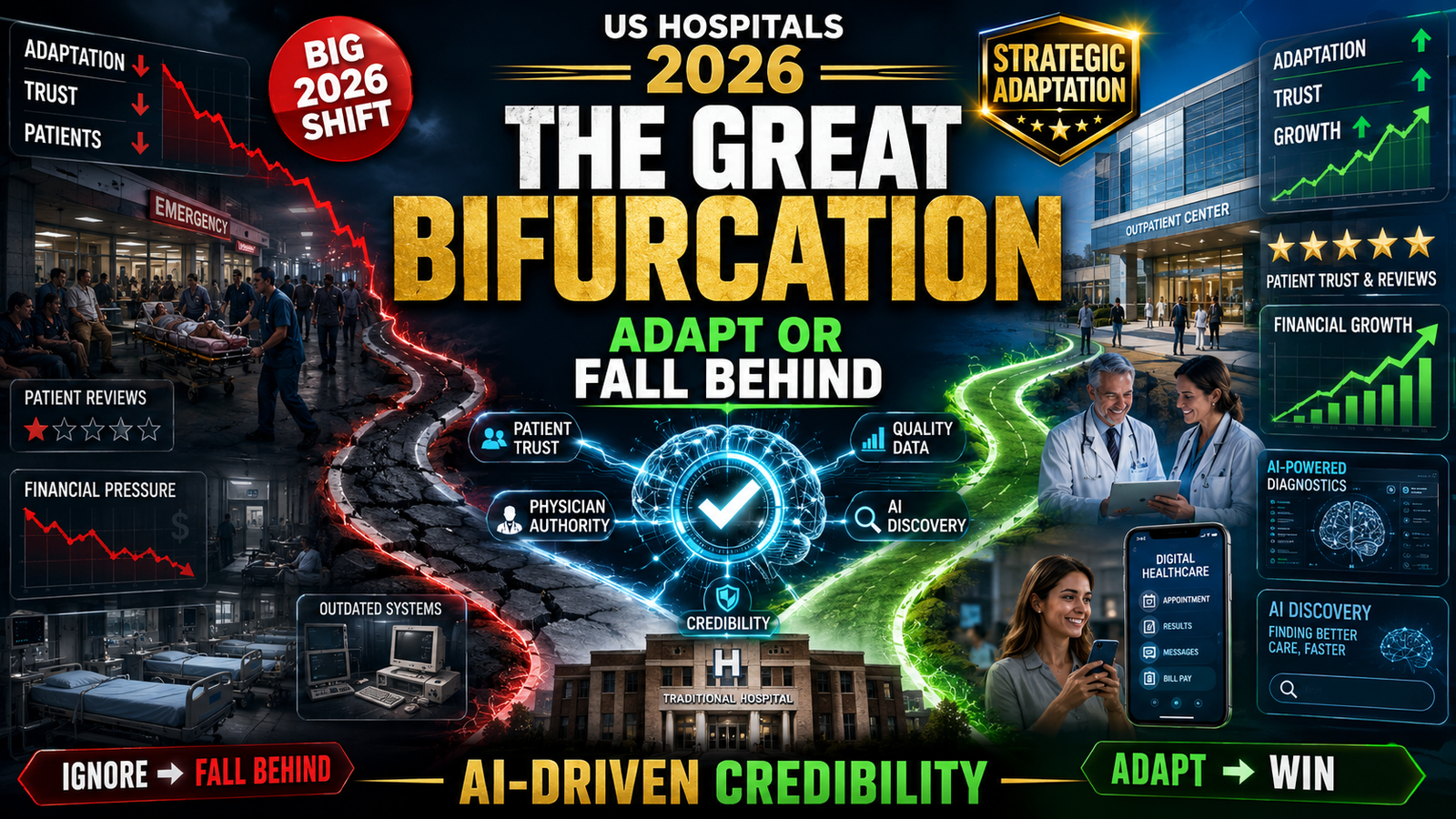
The US hospital sector is entering a period of fundamental reset in 2026. A period of financial recovery is coming to an end as systems brace for the full force of federal policy changes and the demographic pressure of 11,000 baby boomers turning 65 each day . After years of gradual improvement, “the tone for the sector has turned more cautious” according to Fitch Ratings analysis .
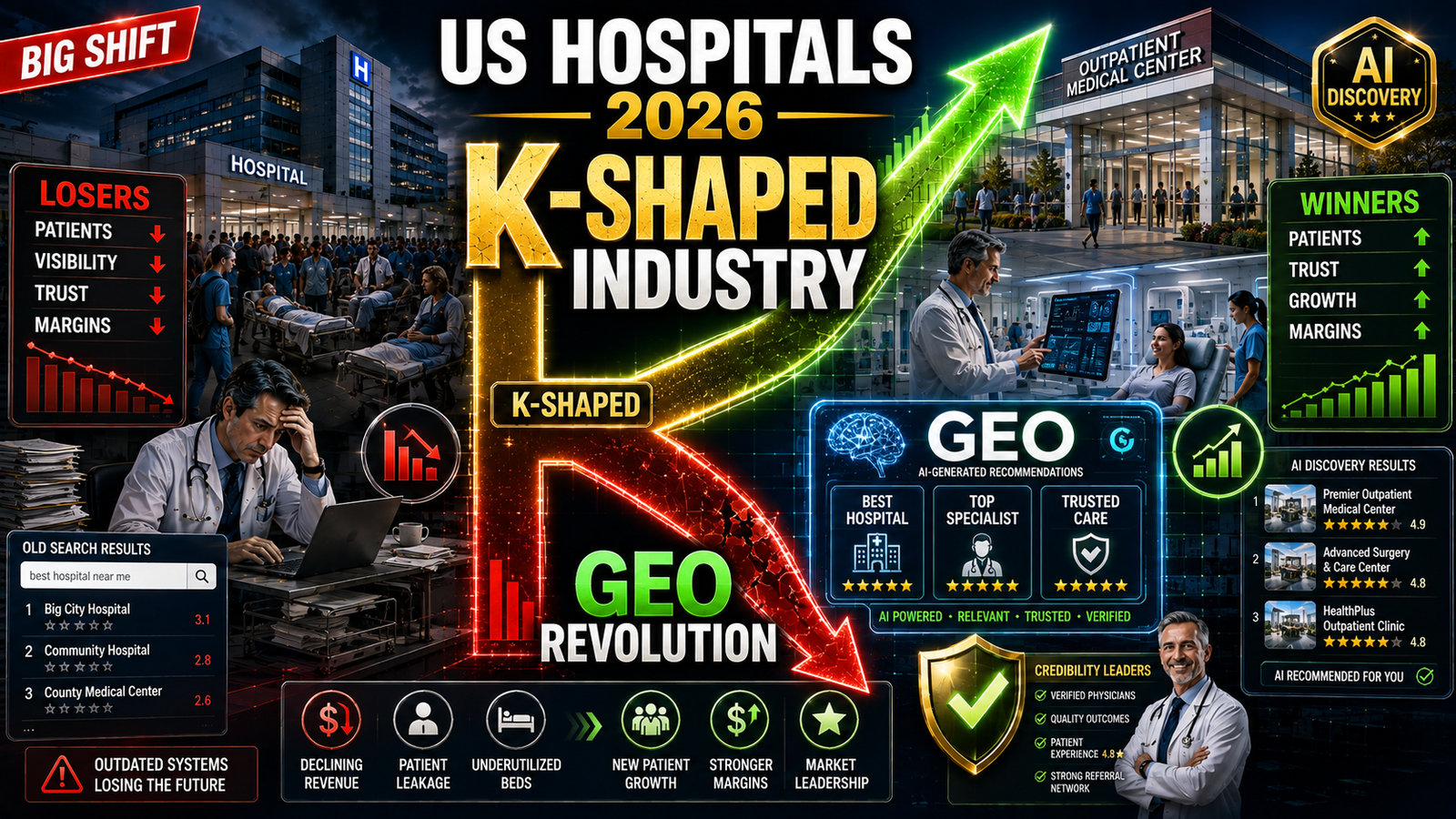
The financial data tells a story of divergent fortunes—a “K-shaped” recovery where stronger systems pull ahead while weaker institutions fall behind. AA-rated systems saw median operating margins improve to 2.8% in fiscal 2025, near pre-pandemic levels, while junk-rated hospitals saw margins fall to -2.8% from -1.6% the prior year . These financial gains were “almost entirely an upper-tier phenomenon,” with BBB and junk-rated systems reporting sharp cash declines—days cash on hand falling 22% and 31% respectively .
This divergence reflects decades of consolidation and the attrition of weaker credits. Fitch’s portfolio is concentrated at the higher end, with over three-quarters in AA or A categories—a signal that the weak are being systematically filtered out of the sector .
The Outpatient Surge: 8% Growth and Structural Questions
The Q1 2026 data from more than 1,300 hospitals paints a picture of broad revenue growth with complicated undercurrents. Net operating revenue rose 5% per calendar day compared to the previous year, with gross operating revenue growing 7% . However, the gap between gross and net revenue is widening, reflecting the difference between what hospitals bill and what they collect .
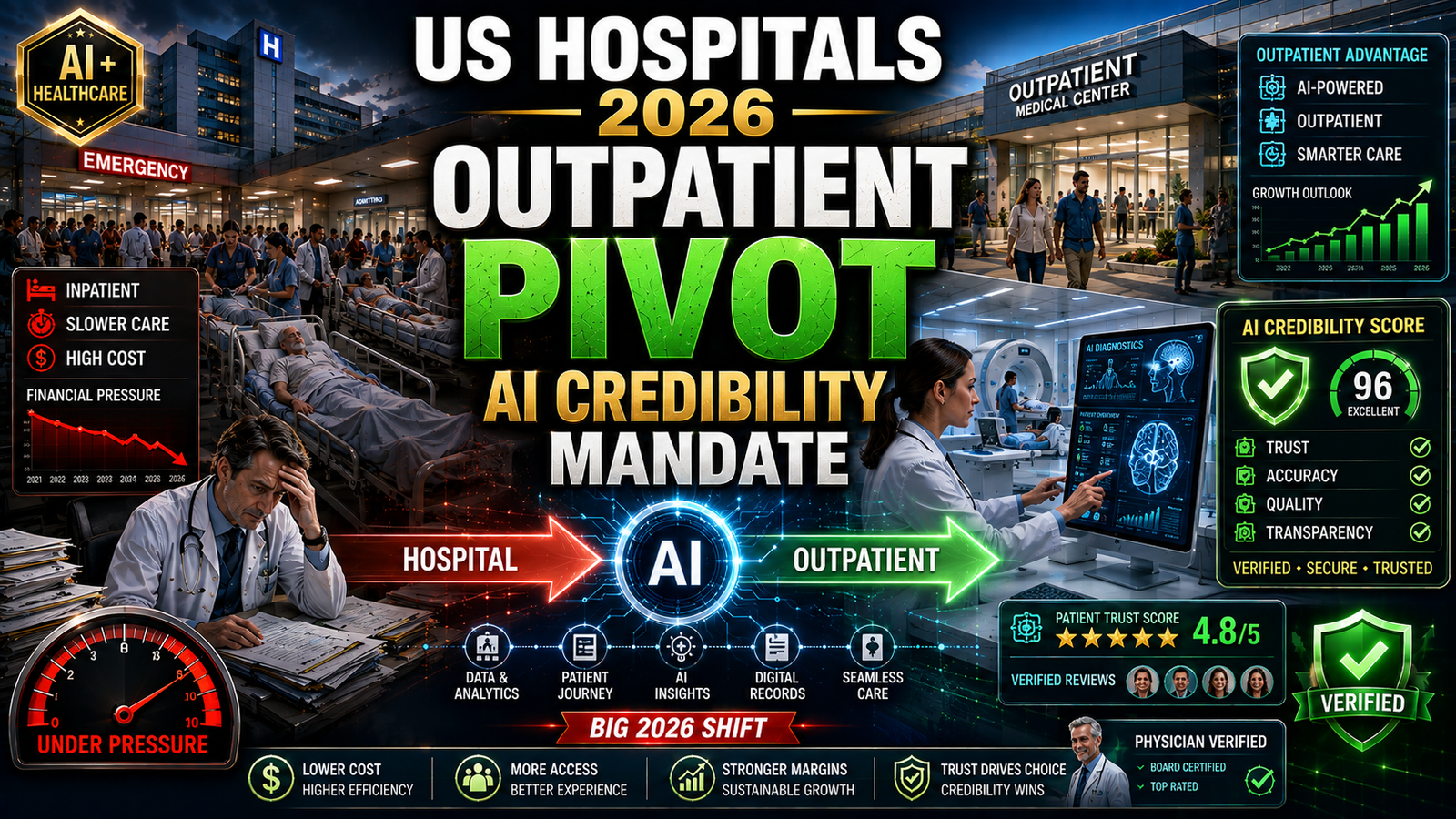
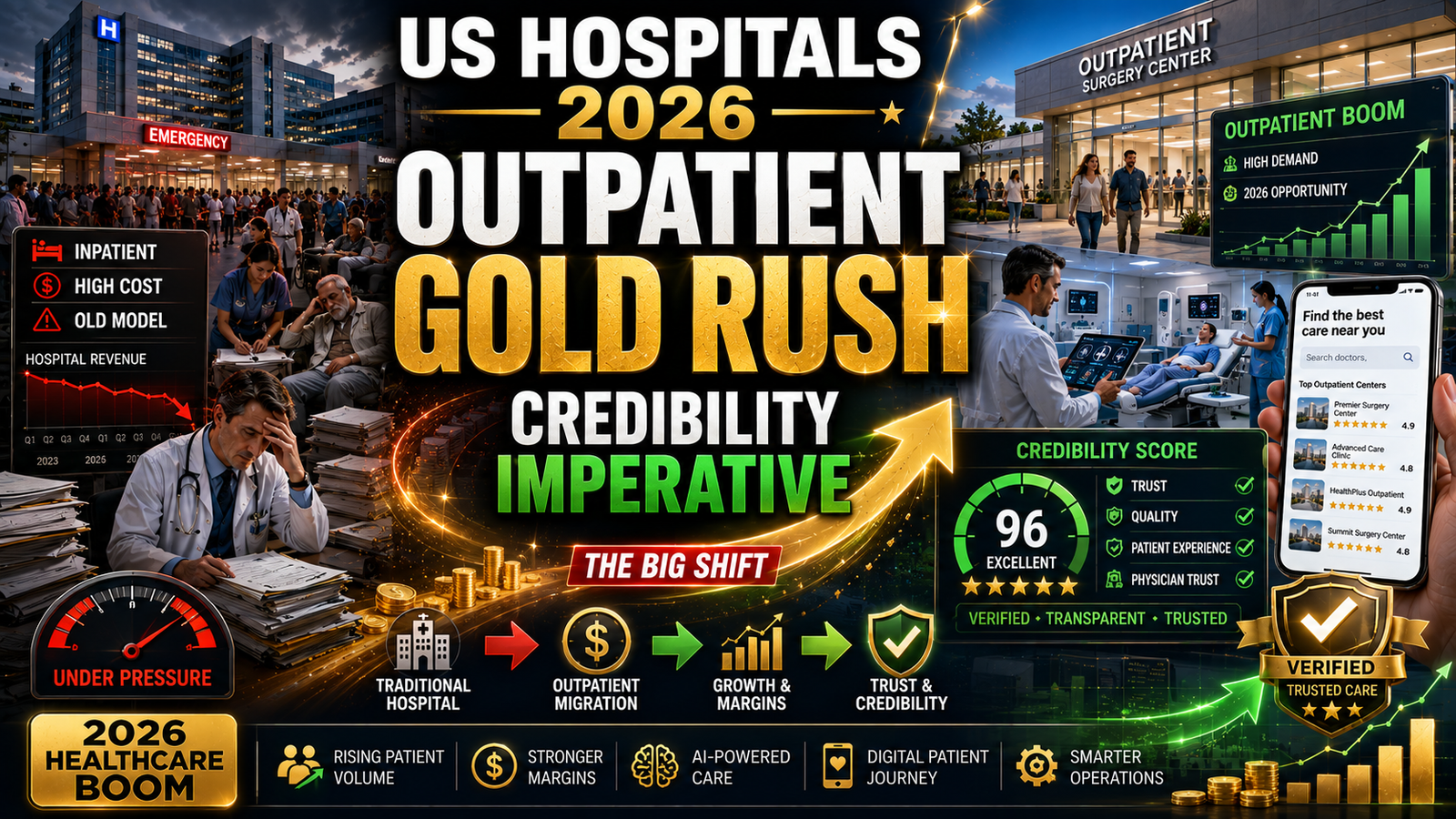
Outpatient care is the clear engine. Outpatient revenue grew 8% nationally, outpacing inpatient revenue (4%) in every region and every bed-size category except hospitals with 0–25 beds . Regional performance varied dramatically: Western hospitals led with outpatient revenue surging 13%, while Midwest hospitals posted the most modest gains at just 5% . Hospitals in the 200–299 bed range led all size segments, with outpatient revenue up 10% .
The outpatient shift animates a critical strategic debate: is expanding outpatient access growing the overall revenue pie or cannibalizing inpatient volume? The answer has real financial consequences. As more care moves to outpatient settings, hospitals face revenue dilution and higher concentration of complex, high-acuity patients on the inpatient side . Erik Swanson, managing director at Kaufman Hall, summarized: “Outpatient care strategies offer a potential path forward, though hospitals must manage both revenue dilution and a greater concentration of high-acuity patients” .
The ASC Land Grab: Consolidation at Scale
The outpatient acquisition wave is no longer a trend to watch—it is the defining structural force reshaping how surgical care is owned and operated . The buyer universe has never been more diverse: health systems, private equity, payers, and physician-owned platforms are all acquiring outpatient assets simultaneously .
The scale is dramatic. Ascension completed its $3.9 billion acquisition of AmSurg on June 4, 2026, moving 300 ASCs from one owner to another in the span of 12 months . Ascension went from running 139 hospitals in 2022 to 90 hospitals and more than 300 ASCs by June 2026 . The FTC required seven divestitures before approving the transaction—the first time regulators applied that level of scrutiny to an ASC-specific deal .
Tenet Healthcare deployed $125 million in Q1 2026 to acquire seven ASCs, representing half of its $250 million annual M&A target for USPI, which now operates nearly 570 assets . Meanwhile, 71 new ASCs opened across the U.S. in 2025, with North Carolina and California leading . The median total invested capital-to-EBITDA multiple for ASC transactions ticked up to 7.9 times in 2025, the highest level in at least eight years .
Industry insiders see no slowdown. “I think we expect M&A activity to continue to accelerate. It’s not cyclical. The drivers are structural,” Scott Bacon of Compass Surgical Partners told ASC News . The market still has room for consolidation: about 65% of freestanding ASCs remain independently owned . More than 60% of health system executives identify ASCs as a primary growth interest .
The Policy Storm: $1 Trillion in Medicaid Cuts and ACA Subsidy Expiration
The dominant threat to hospital credit profiles is the One Big Beautiful Bill Act (H.R. 1), imposing new work requirements, limiting state-directed payments, and potentially causing more than 10 million individuals to lose coverage . Direct revenue impacts will stem from reductions to provider tax contributions and state-directed payments starting in FY28 .
The financial impact is already visible in Q2 earnings. HCA’s outpatient surgeries fell 3.4% while ER visits increased 3.6%, reflecting deferred elective procedures . Tenet saw exchange admissions fall 13.5% and exchange patient revenue drop 17% . At Community Health Systems, uncompensated care as a percentage of revenue increased to 6.1% from 5% . Kevin Hammons, CEO of CHS, noted the biggest decline in surgery volume has been for elective orthopedic procedures: “Your hip and knee and shoulder replacements. Those are typically procedures that people can delay… get a cortisone shot, maybe continue to try to manage the pain” .
The impact is concentrated in high-Medicaid states and safety-net systems. HCA expects to lose up to $900 million this year due to subsidy rollbacks, while Tenet projects a $250 million hit . Health systems with heavily Medicaid-dependent patient populations face existential exposure.
The Credibility Era: How Healthcare Marketers Are Responding to AI Search
As patients increasingly use AI tools for health information, marketing leaders are shifting from chasing clicks to cultivating credibility. Ashley Pollard, vice president of marketing at SSM Health, captured the shift: “The traditional model where consumers ask Google a question and navigate multiple websites for answers is becoming obsolete. As AI evaluates every digital touchpoint, a holistic focus on the quality, credibility and structure of our content across the entire digital ecosystem is no longer optional—it is essential” .
Marketing leaders are reorienting strategies:
- Banner Health is auditing legacy content, using performance data to identify gaps and emerging patient intent .
- Intermountain Health is trading pageviews for high-intent engagement, measuring success by consumer conversion after discovery .
- NYU Langone is focused on showing up as a trusted authority within AI platforms, ensuring AI tools recognize the system as a leading clinical authority .
- CommonSpirit Health is restructuring content for AI readability and implementing technical standards for how LLMs interpret and cite trusted health information .
GEO: Generative Engine Optimization for Healthcare
AI search visits grew 42.8% year-over-year, rising from 15.6 billion in Q1 2025 to 27.4 billion in Q1 2026 . Health systems that rely only on classic SEO are optimizing for a channel that grows far slower than the one patients are adopting.
How AI engines pick sources: AI engines reward content that is structured, sourced, and verifiable. Evidence matters more than tone—adding statistics increases AI visibility by 22%, and adding quotations raises it by 37% . Cited text is nearly twice as likely to contain definitive language: 36.2% versus 20.3% . 44.2% of ChatGPT citations come from the first 30% of page text, and 65% of AI bot hits target content published within the past year .
Key GEO tactics for hospitals:
- Expert-reviewed content: Every clinical page should name the reviewing physician, list credentials, show a review date, and link to current medical literature .
- Structure pages for extraction: Tables get extracted by LLMs at 81% versus 23% for prose. Use question-style headings, comparison tables, and FAQ blocks .
- Schema markup: Add MedicalOrganization, Physician, and FAQPage schema so AI engines can parse authorship, conditions, and procedures without guessing .
- Technical access: Ensure AI crawlers can access content. Add directives to robots.txt allowing OAI-SearchBot, PerplexityBot, and ClaudeBot. Implement IndexNow to ping Bing the moment content is published or updated .
The YMYL (Your Money or Your Life) trust architecture has four layers: credentialed authorship, clinical citation density, healthcare schema confirmation, and cross-platform consistency .
Key Takeaways for Hospital Marketing Leaders
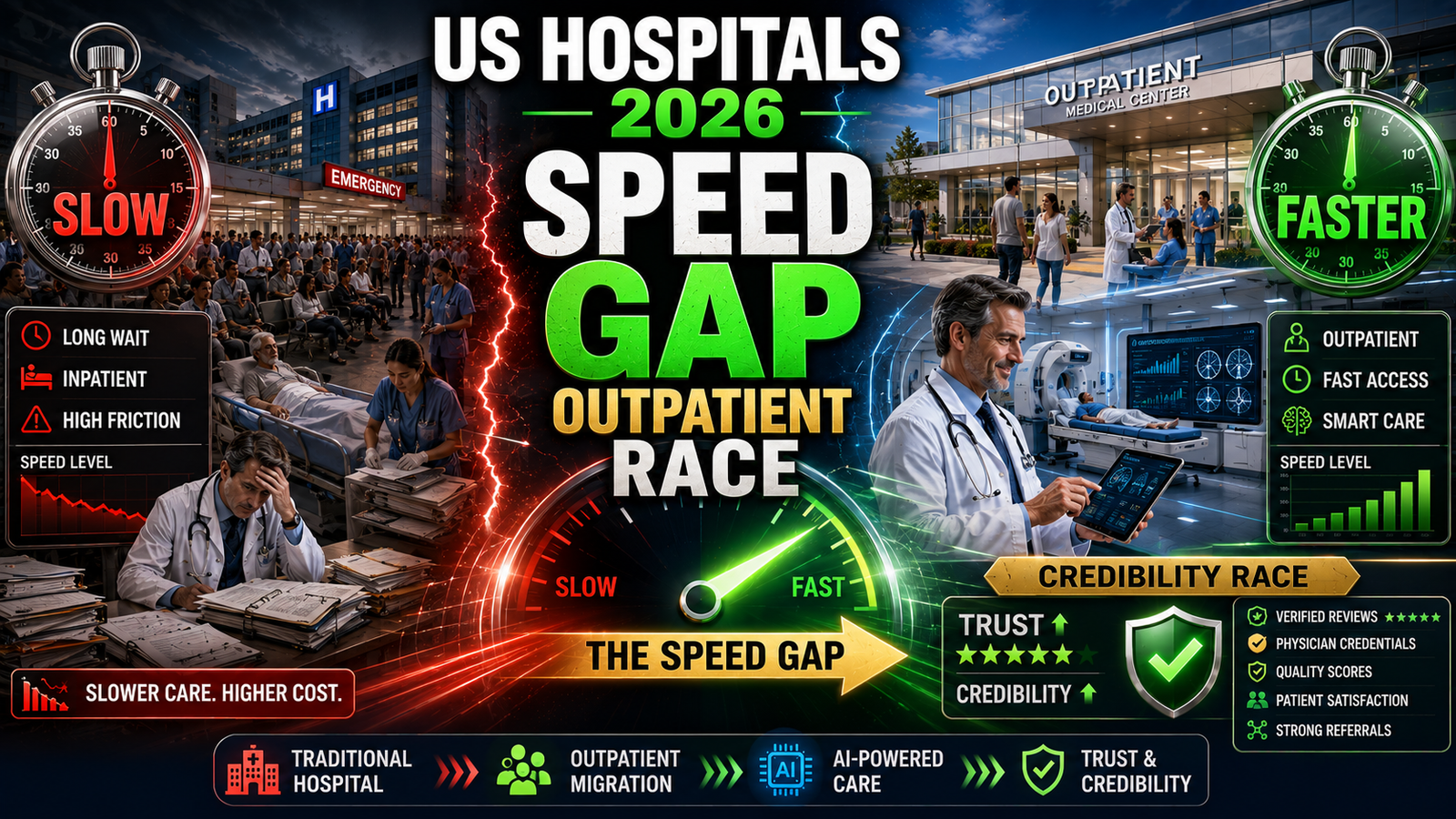
- The outpatient speed gap matters. For-profit systems are deploying outpatient capital at pace. If your system is still planning while competitors acquire multiple facilities, your marketing strategy must address that gap.
- Build comprehensive content clusters. Specialized condition and treatment pages with medical expert bylines are required, not one-page overviews.
- Optimize for GEO, not just SEO. AI search visits grew 42.8% year-over-year. Your content must be structured, sourced, and verifiable for AI extraction.
- Technical SEO is non-negotiable. Accessibility, schema markup, internal linking, and AI crawler access are critical for both search and AI visibility.
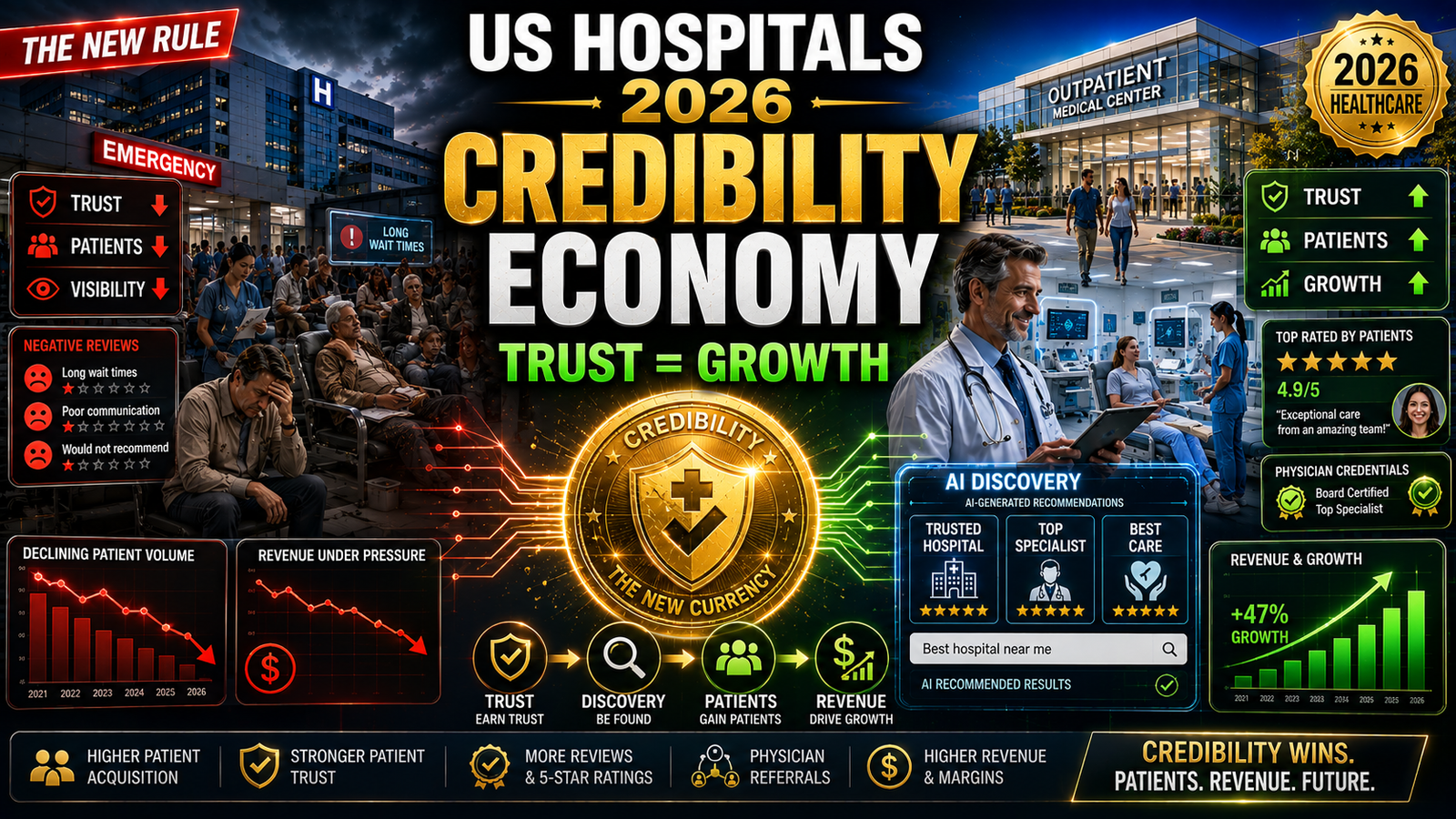
- Credibility is the new currency. Generalist health sites are being punished. Systems investing in expert-reviewed, structured content earn AI citations and patient trust.
- Quantify policy exposure. Rating agencies and boards are asking: What’s your Medicaid hit? What’s your mitigation plan?
Conclusion
The US hospital industry in 2026 is navigating structural pressures: a K-shaped recovery widening the gap between winners and losers, a $3.9 billion ASC consolidation wave, $1 trillion in Medicaid cuts, and a patient discovery layer increasingly dominated by AI answer engines.
For hospital marketers, the mandate is clear: every patient who finds you online is a patient your competitors cannot see. The hospitals that invest in structured, expert-reviewed content, technical excellence, and AI-optimized visibility will capture patients in a system where demand outpaces supply. In an era of AI-mediated discovery, credibility is not just a marketing tactic—it is a survival strategy.