sharmaanubhav6660@gmail.com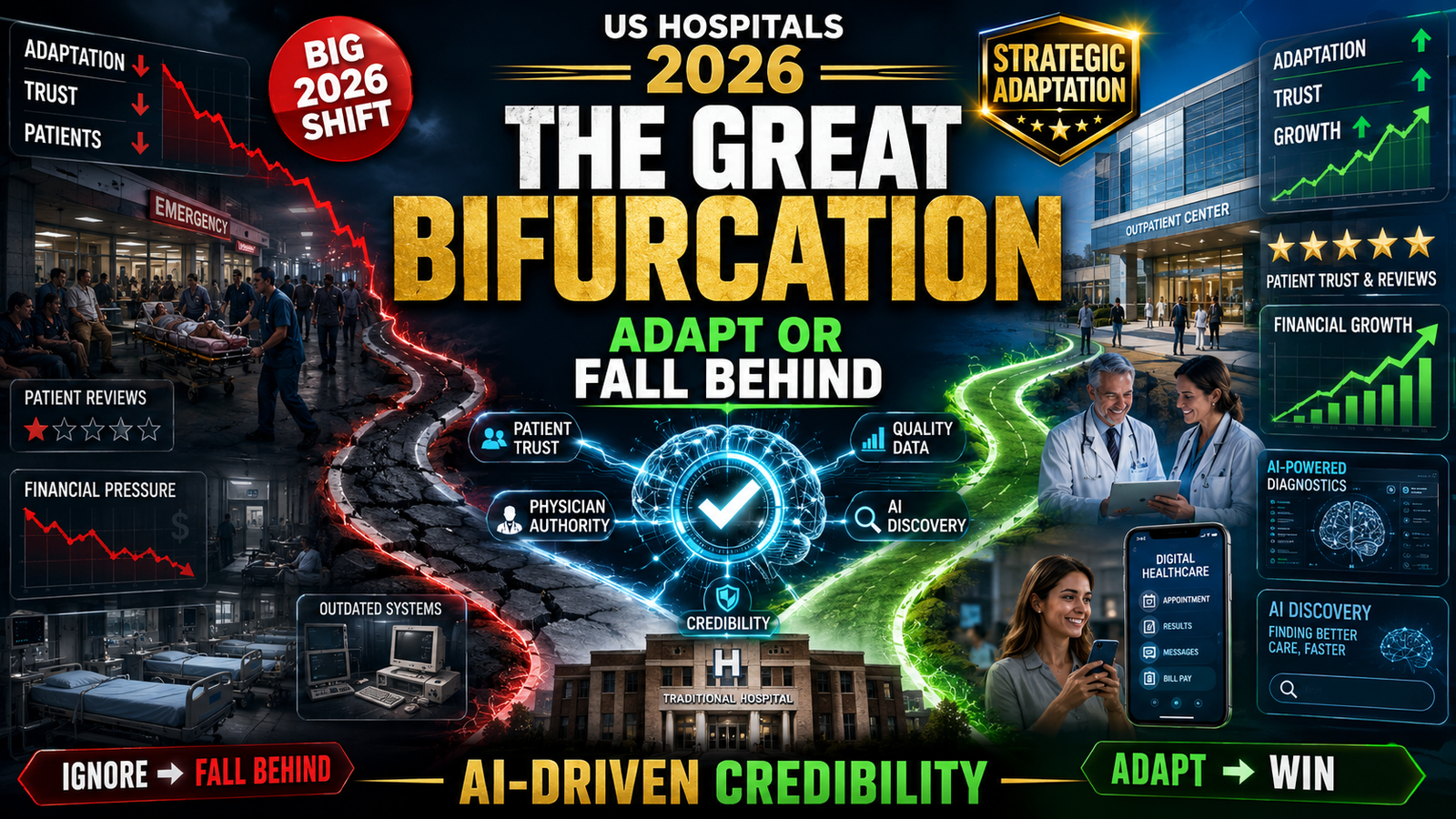
Part 1: The K-Shaped Reality
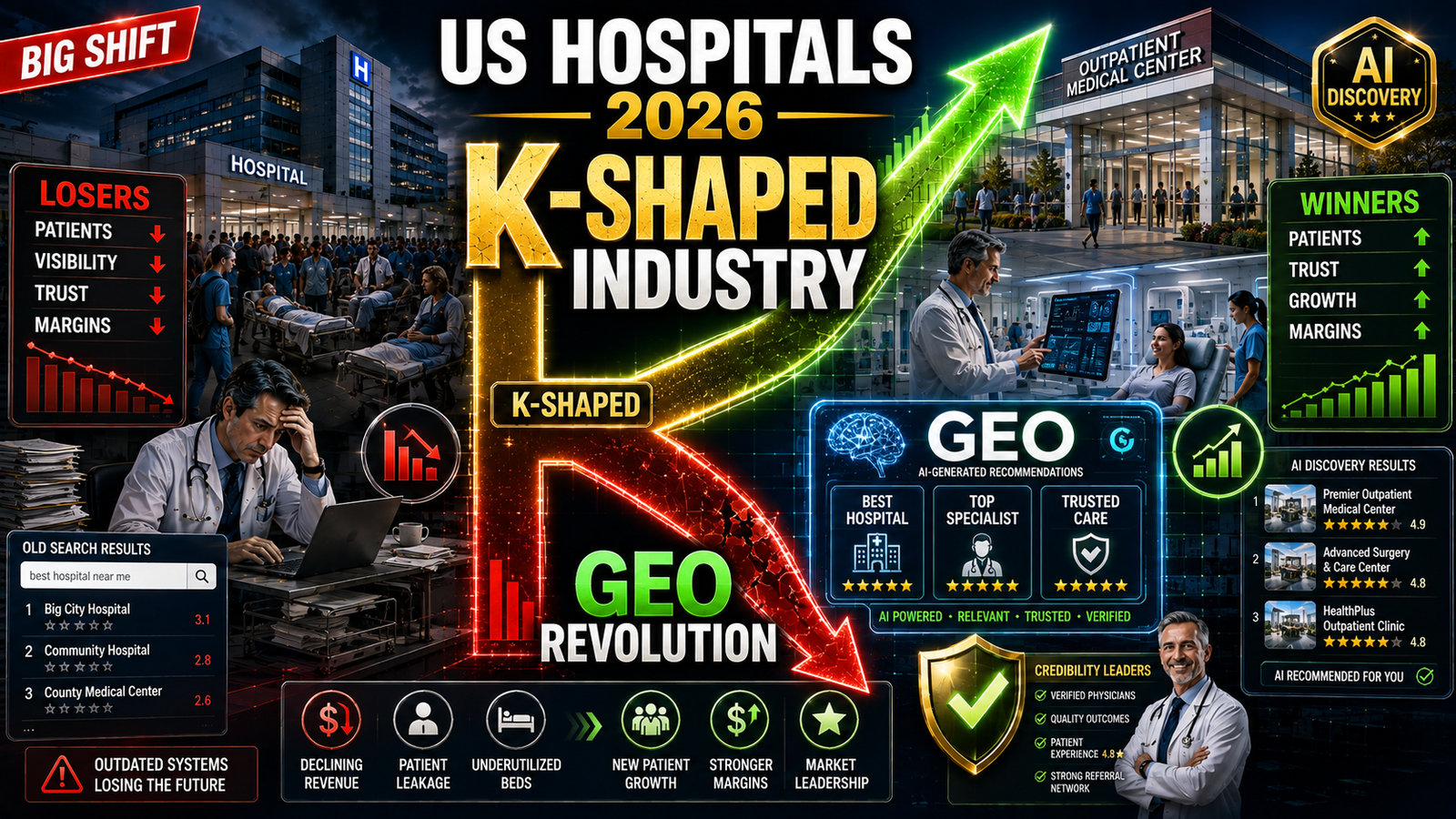
The US hospital sector is experiencing what analysts describe as a “K-shaped” recovery—a divergence where financially strong systems thrive while weaker institutions decline . According to a Fitch Ratings analysis of 222 not-for-profit hospitals, AA-rated systems saw median operating margins improve to 2.8% in fiscal 2025, near pre-pandemic levels, while junk-rated hospitals saw their margins fall to -2.8% from -1.6% the prior year .
This divergence is structural, not temporary. Most of Fitch’s rated portfolio is concentrated at the higher end of the credit spectrum, with over three-quarters falling in either the AA or A rating category—a signal that weaker providers are being systematically filtered out through consolidation . Kevin Holloran, senior director at Fitch Ratings, predicts a bifurcation between “have” and “have-not” hospitals based on three factors: location, willingness to make hard decisions on mission versus margin, and ability to realize operational opportunities .
The financial squeeze is intensifying. Hospital operating margins softened in May 2026, with a calendar year-to-date operating margin index of 2.9%, down from 3.6% in April . Bad debt rose 16% per calendar day, while charity care increased 7% as a share of gross operating revenue. Labor costs and total expenses increased 5% year over year, leaving little room for margin expansion .
Part 2: The Outpatient Imperative – Where Capital Is Flowing
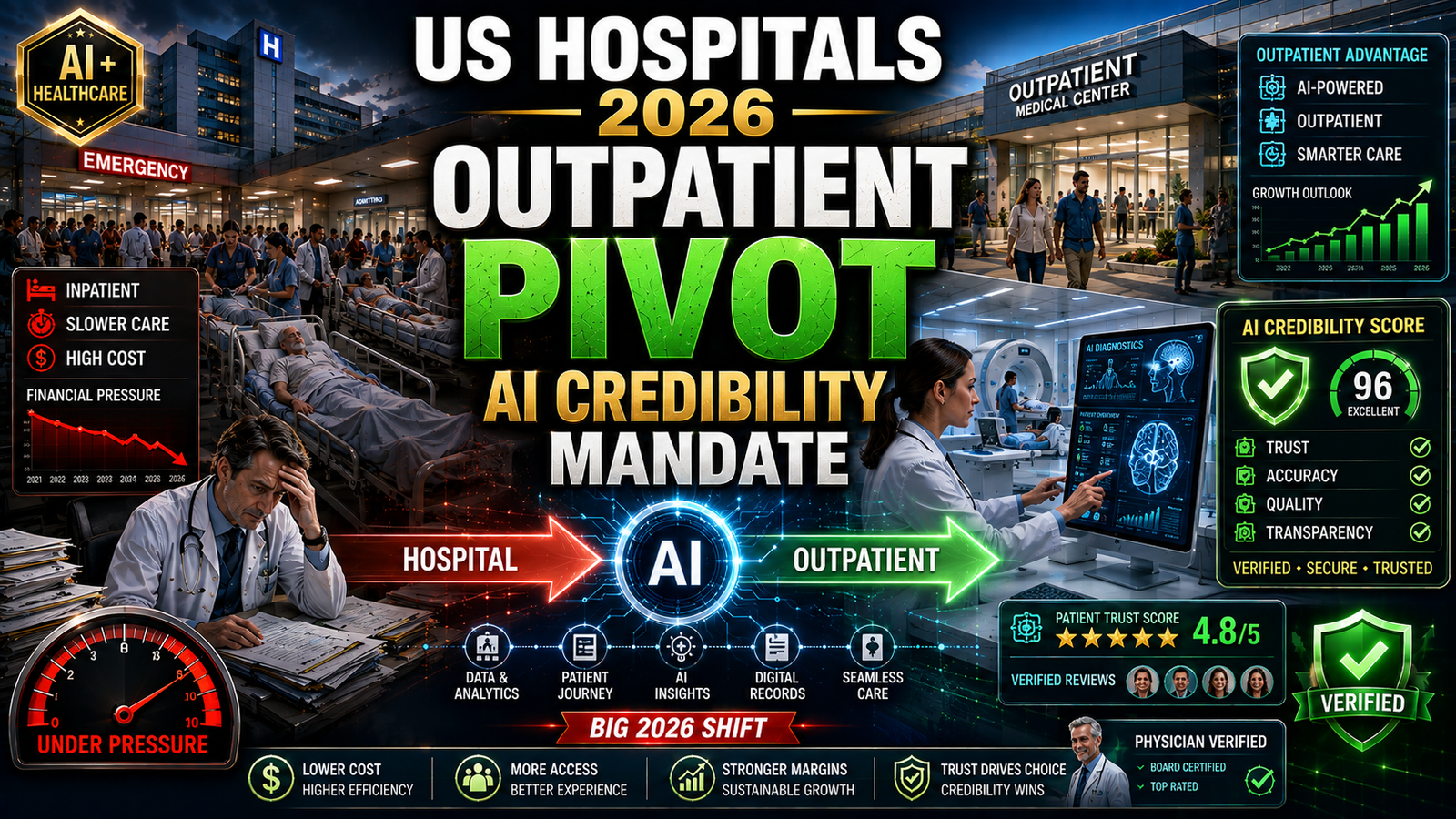
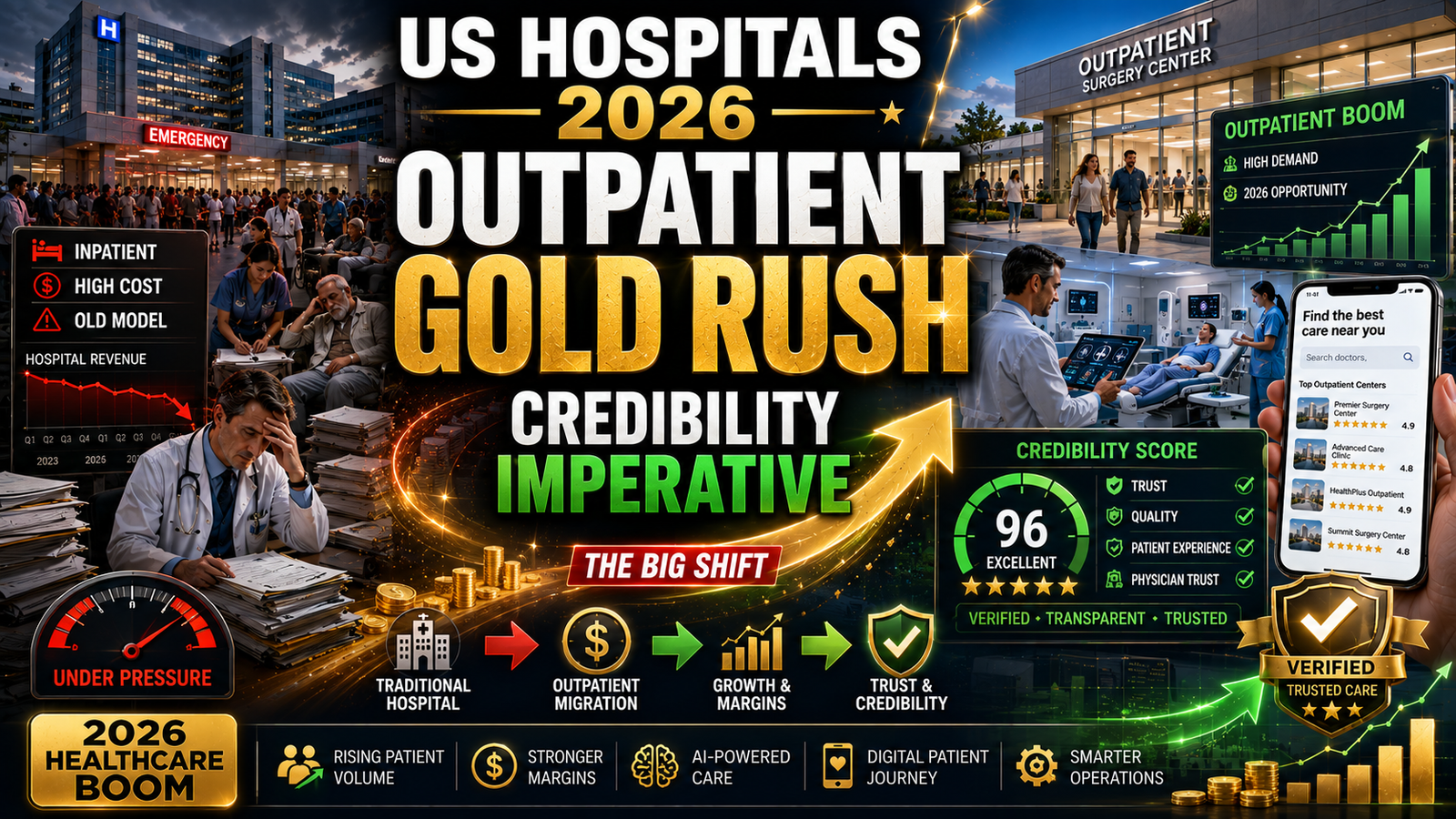
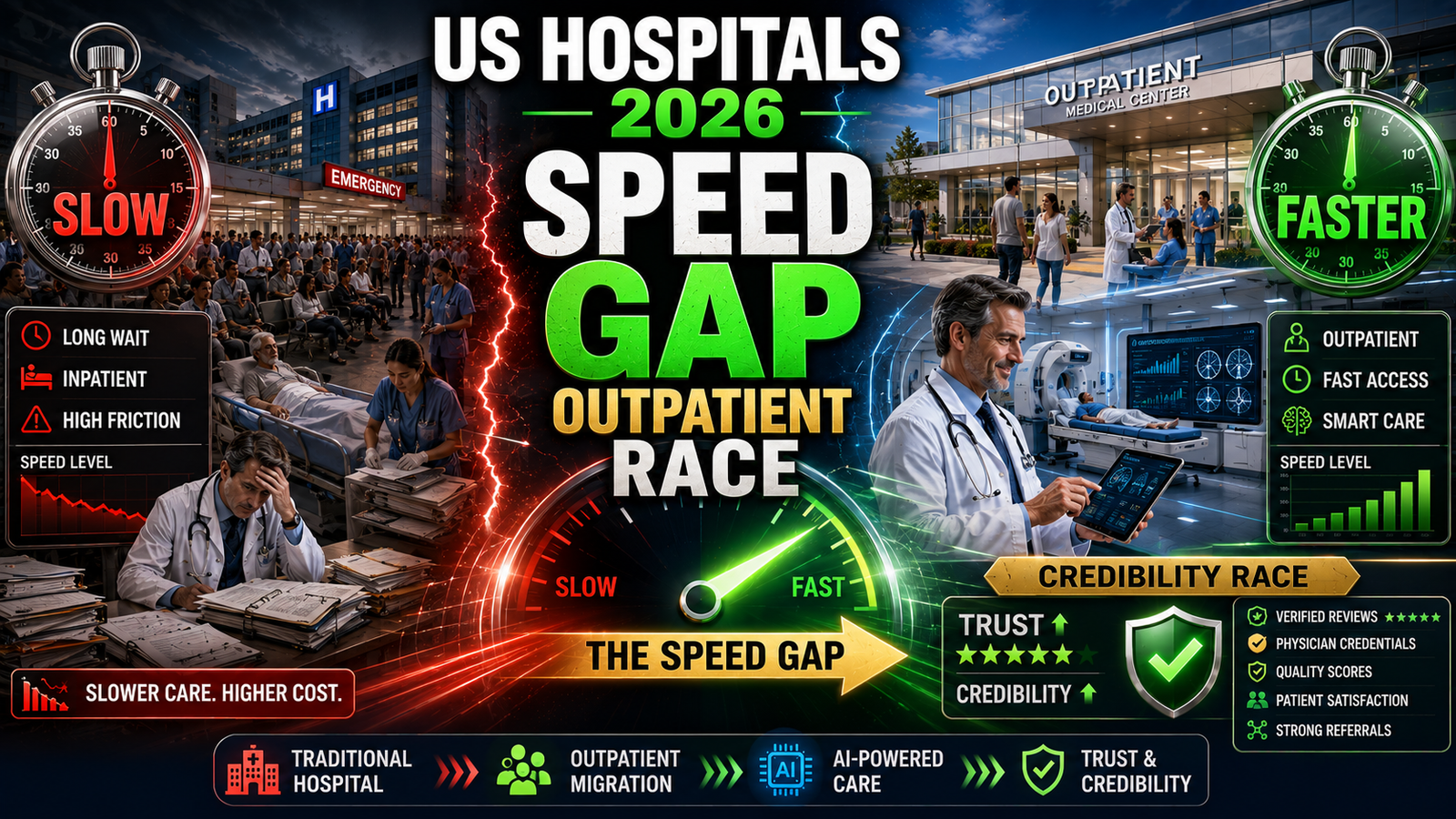
Outpatient care has emerged as the dominant revenue driver in 2026. Through May, outpatient revenue per calendar day increased 8% year over year, outpacing the 5% increase in inpatient revenue . At the same time, adjusted patient days rose 1% while inpatient discharges remained relatively flat, underscoring the industry’s steady migration away from traditional inpatient care.
Kaufman Hall analysts wrote: “Traditional hospital care delivery is fundamentally shifting. As outpatient growth continues year-over-year, health systems may consider proactively adapting portfolios and operations to support the future of U.S. healthcare delivery” .
Erik Swanson, managing director at Kaufman Hall, warned: “Demand in outpatient services is on the rise, and hospitals without an outpatient footprint will struggle” . Health systems are responding by decoupling outpatient facilities and ASCs from central hospital overhead, recognizing the margin advantages of the outpatient setting .
The ASC Speed Gap
The outpatient acquisition wave is the defining structural force reshaping how surgical care is owned and operated. Health systems, private equity firms, and payers are racing to acquire outpatient assets. Physician medical groups accounted for a record 46% of all healthcare transactions in the first quarter of 2026 .
The scale of consolidation is unprecedented. Ascension completed its $3.9 billion acquisition of AmSurg, expanding its ASC network to roughly 300 facilities nationwide . Ascension itself went from running 139 hospitals in 2022 to 90 hospitals and more than 300 ASCs by June 2026. Amber Sims, Ascension’s executive vice president and chief strategy and growth officer, explained: “We had to get ahead in the ambulatory business, because that’s where care is going. It’s where patients want to receive care, where payers want to seek care, and where providers want to provide care” .
Novant Health is building a 25-center ASC network designed to shift volume out of hospitals and closer to patients . Leslie Barrett, senior vice president of ambulatory surgery strategy at Novant, told Becker’s the system is “building a flexible, scalable outpatient surgical network in a way that benefits everyone involved. It offers patients affordability and expanded access close to home” .
The Reimbursement Fight
While the volume migration is well underway, reimbursement has not followed at the same pace. CMS added 573 codes to the ASC Covered Procedures List and began phasing out the Medicare inpatient-only list, but the payment gap between settings remains stark. For 2026, the ASC conversion factor is $56.322, compared with $91.415 for hospital outpatient departments—roughly a 60% difference for similar services .
Orthopedic leaders reading the 2026 proposals expect hospital payments to fall rather than ASC rates to rise, which erodes the economics of hospital-employed physician models and accelerates consolidation . Site-neutral policy narrows the disparity by pulling the ceiling down—a dynamic that puts pressure on health systems already struggling to maintain margins.
Part 3: The Policy Storm – OBBBA, Medicaid Cuts, and the Backloaded Cliff
The dominant near-term threat to hospital credit profiles is the One Big Beautiful Bill Act (OBBBA), which became law in 2025 . The law imposes new work requirements for Medicaid recipients, limits hospital funding sources like state-directed payments, and could result in more than 10 million individuals losing insurance coverage.
The impact of these cuts is delayed but devastating. Only 6% of total cuts take effect from 2025 to 2027, with the 80-hour monthly work requirement for Medicaid expansion adults taking effect in January 2027. From 2028 to 2034, the remaining 76% of funding reductions take effect, increasing pressure on states to fund programs from general revenues, reduce optional benefits, or narrow provider networks .
Demographic pressures add to the strain. Over the next four years, approximately 11,000 baby boomers will turn 65 each day, simultaneously driving up demand for advanced medical care and drawing skilled labor out of the workforce . Hospitals are responding with capital spending at the highest level since 2008, with about $29.2 billion in muni bonds issued year-to-date .
Part 4: The Credibility Era – GEO for Healthcare
As patients increasingly use AI search and chatbots to find health information, healthcare marketers are pivoting from SEO to GEO—generative engine optimization . The shift is measurable: AI search visits grew 42.8% year over year, rising from 15.6 billion in Q1 2025 to 27.4 billion in Q1 2026 .
How AI Engines Pick Sources
AI engines reward content that is structured, sourced, and verifiable . Evidence matters more than tone: adding statistics increases AI visibility by 22%, and adding quotations raises it by 37%. Cited text is nearly twice as likely to contain definitive language: 36.2% versus 20.3%. 44.2% of ChatGPT citations come from the first 30% of page text, and 65% of AI bot hits target content published within the past year .
Expert-Reviewed Content as Foundation
Expert review is the foundation of healthcare GEO . Every clinical page should name the reviewing physician, list credentials, show a review date, and link to current medical literature. These signals tell AI engines the content is accountable and protect patients from inheriting errors .
Technical GEO Configuration
Technical SEO configuration determines whether AI crawlers can even access medical content. Many healthcare websites block AI bots by default through restrictive robots.txt rules . Add directives for OAI-SearchBot, PerplexityBot, Google-Extended, and anthropic-ai. Because ChatGPT’s live web browsing is powered by Bing’s index, implement the IndexNow protocol to ping Bing the moment you publish or update a page .
The YMYL Trust Architecture
The YMYL (Your Money or Your Life) trust architecture for healthcare GEO has four layers: credentialed authorship, clinical citation density, healthcare schema confirmation, and cross-platform consistency . Without MedicalOrganization and Physician schema, AI engines cannot verify or recommend providers . A real-world medical GEO case study showed AI visibility improved from 18% to 44% (+26%), SOV increased 133%, brand citations rose 157%, and semantic hallucination rates dropped from 22% to 9% over a five-month optimization period .
Part 5: How Health Systems Are Responding
Marketing leaders across the country are reorienting strategies to the AI-driven discovery era. Ashley Pollard, vice president of marketing at SSM Health, captured the shift: “The traditional model where consumers ask Google a question and navigate multiple websites for answers is becoming obsolete. As AI evaluates every digital touchpoint, a holistic focus on the quality, credibility and structure of our content across the entire digital ecosystem is no longer optional—it is essential” .
Banner Health is “auditing and modernizing legacy content, using performance data and external search optimization tools to identify gaps and emerging patient intent.” Intermountain Health is “trading pageviews for high-intent engagement,” no longer relying on web traffic as a performance benchmark . NYU Langone Health is “laser-focused on showing up as a trusted and authoritative source” within AI platforms, ensuring “AI tools recognize NYU Langone Health as a leading clinical authority and source of truth” .
Key Takeaways for Hospital Marketing Leaders
1. The outpatient speed gap matters. Health systems are decoupling outpatient facilities from central hospital overhead. If your system is still planning while competitors execute, address that gap.
2. Build comprehensive content clusters with expert review. Every clinical page should name the reviewing physician, list credentials, show a review date, and link to current medical literature .
3. Optimize for GEO, not just SEO. AI search visits grew 42.8% year-over-year. Your content must be structured, sourced, and verifiable for AI extraction .
4. Schema markup is non-negotiable. Without MedicalOrganization and Physician schema, AI engines cannot verify or recommend your providers .
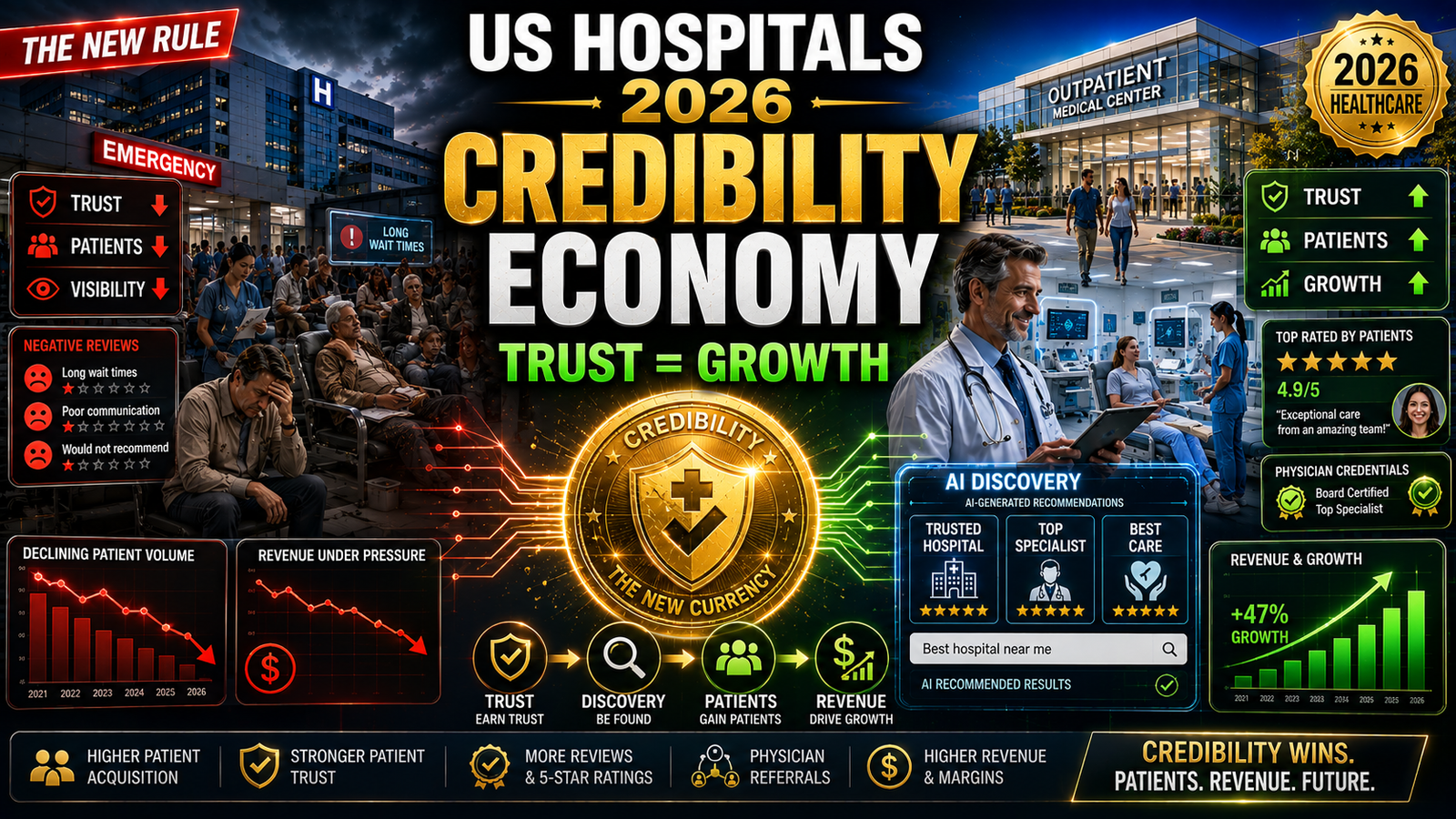
5. Credibility is the new currency. Systems investing in expert-reviewed, structured content earn AI citations and patient trust .
6. Quantify policy exposure. Rating agencies and boards are asking: What’s your Medicaid hit? What’s your mitigation plan?
Conclusion
The US hospital industry in 2026 is navigating structural pressures: a K-shaped recovery widening the gap between winners and losers, a $3.9 billion ASC consolidation wave, $1 trillion in Medicaid cuts, and a patient discovery layer increasingly dominated by AI answer engines. The for-profit speed gap is clear—Tenet, CHS, and HCA are deploying outpatient capital at scale while many NFP systems remain in the planning phase .
As Erik Swanson of Kaufman Hall warned: “Demand in outpatient services is on the rise, and hospitals without an outpatient footprint will struggle” . For hospital marketing and SEO professionals, the mandate is clear: every patient who finds you online is a patient your competitors cannot see. The hospitals that invest in structured, expert-reviewed content, technical excellence, and AI-optimized visibility will capture patients in a system where demand outpaces supply. In an era of AI-mediated discovery, credibility is not just a marketing tactic—it is a survival strategy.