sharmaanubhav6660@gmail.com
Part One: The K-Shaped Recovery
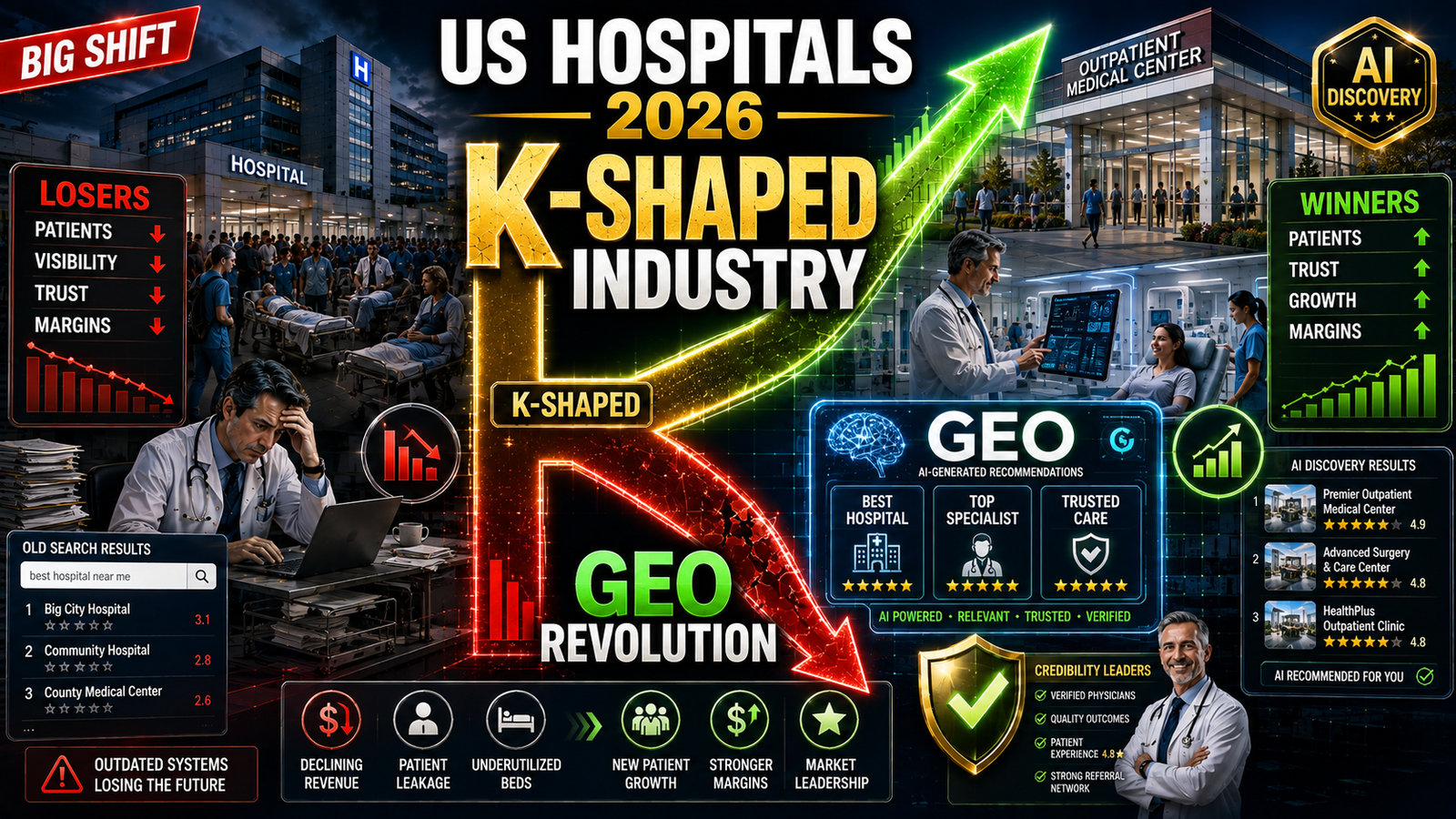
The US hospital industry in 2026 is experiencing what analysts describe as a “K-shaped” recovery. Financially strong systems are pulling ahead, while weaker institutions continue to decline. AA-rated hospital systems saw median operating margins improve to 2.8% in fiscal 2025, near pre-pandemic levels, while junk-rated hospitals saw their margins fall to -2.8% from -1.6% the prior year .
This divergence reflects decades of consolidation, with weaker credits systematically filtered out of the sector. Over three-quarters of Fitch’s rated hospital portfolio sits in AA or A categories, a signal of the financial stratification now embedded in the industry.
Part Two: The Financial Landscape in 2026
Broad revenue growth opened the year, with U.S. hospital net operating revenue rising 5% per calendar day in Q1 2026 compared to 2025, and gross operating revenue growing 7% . But the picture beneath the surface is complicated.
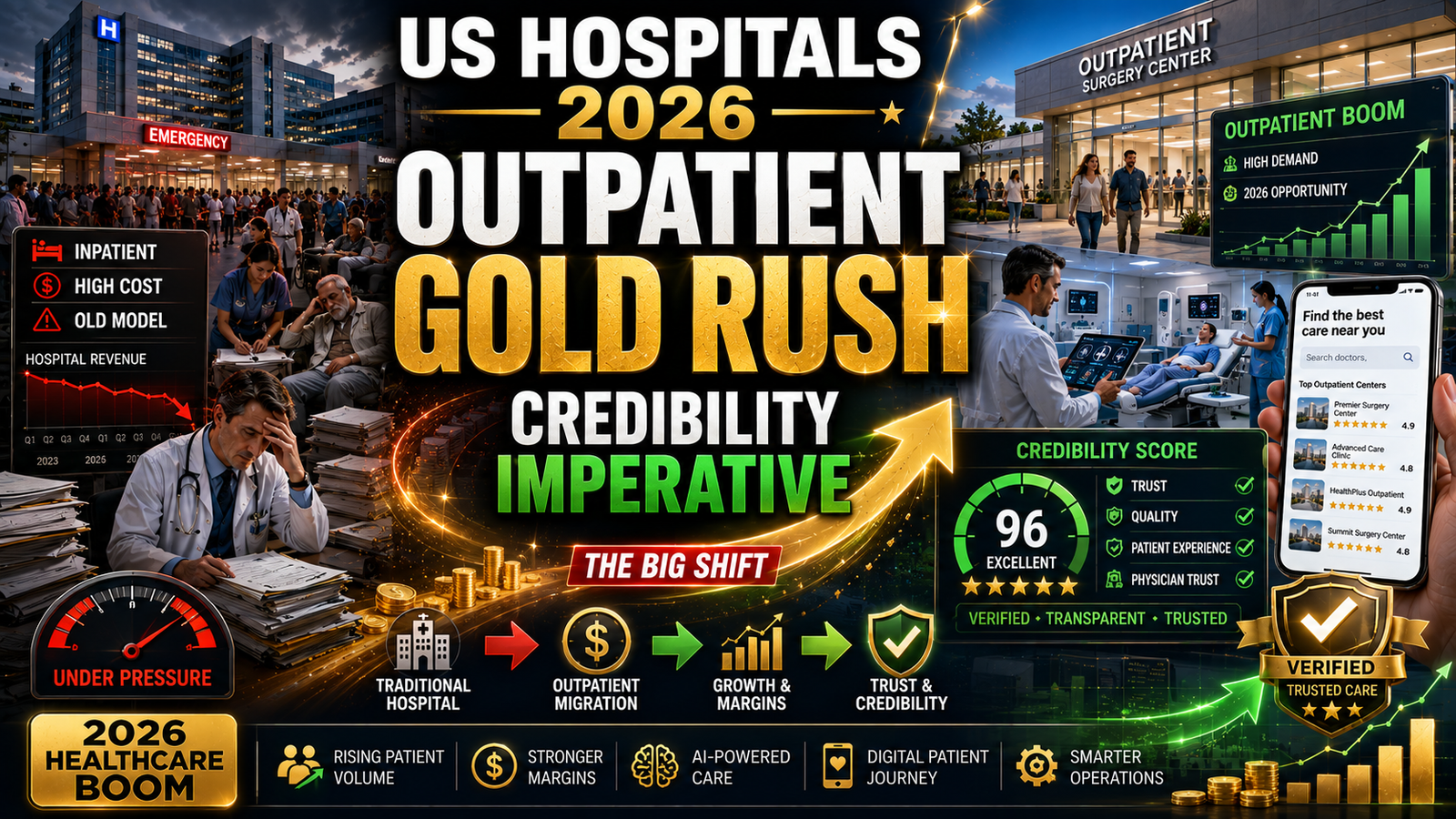
Outpatient care was the clear driver, outpacing inpatient revenue in every region and nearly every bed-size category. Outpatient revenue grew 8% nationally, while inpatient revenue increased just 4% . Through May, outpatient revenue per calendar day increased 8% year over year, while inpatient discharges remained relatively flat .
Regional performance varied dramatically. Western hospitals led all regions, with outpatient revenue surging 13% . Hospitals in the 200–299 bed range led all size segments, with outpatient revenue up 10% . At the other end, the smallest hospitals—0 to 25 beds—saw inpatient revenue decline 2%, even as outpatient revenue grew 4% .
The gap between gross and net revenue continues to widen, reflecting the difference between what hospitals bill and what they collect. Policy-driven pressure compounds these concerns, with Medicaid cuts, bad debt, and charity care weighing on net revenue, particularly in high-Medicaid states .
Part Three: The Outpatient Imperative
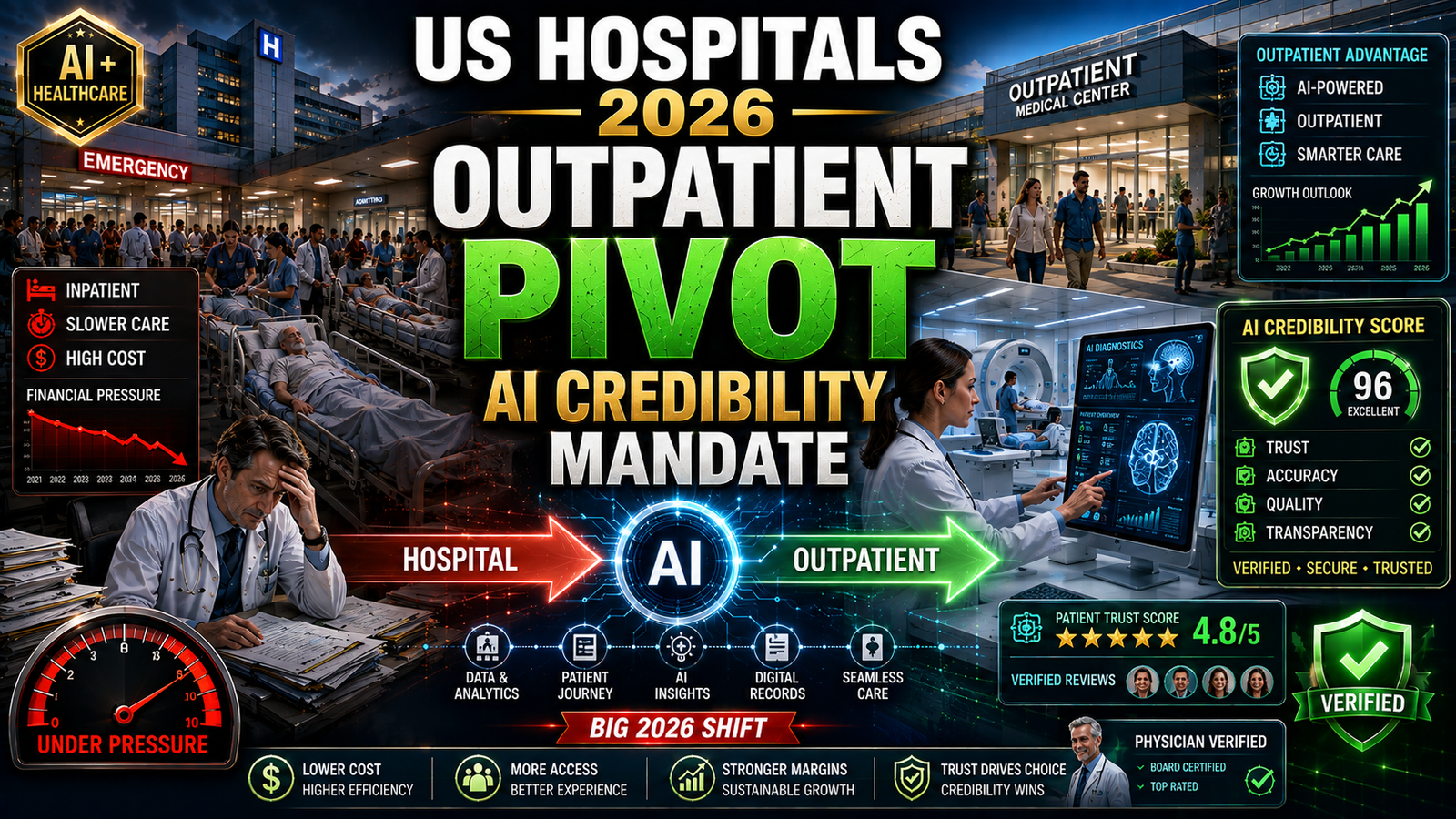
Kaufman Hall analysts wrote in May: “Traditional hospital care delivery is fundamentally shifting. As outpatient growth continues year-over-year, health systems may consider proactively adapting portfolios and operations to support the future of U.S. healthcare delivery” .
Erik Swanson, managing director at Kaufman Hall, warned: “Demand in outpatient services is on the rise, and hospitals without an outpatient footprint will struggle” .
The outpatient shift comes with tradeoffs. As more care moves to outpatient settings, hospitals face revenue dilution and a higher concentration of complex, high-acuity patients on the inpatient side . Volume trends reinforce this dynamic: discharges per calendar day fell 2%, adjusted patient days declined 1%, average length of stay dropped 4%, and emergency department visits decreased 5% .
Yet the financial math has shifted decisively toward outpatient care. Labor and non-labor expenses remain elevated, with total expense per calendar day climbing 7% through May. Labor expense rose 4%, while nonlabor expense increased 9%, reflecting continued inflationary pressures . ASCs carry lower fixed costs and less reimbursement exposure than hospitals, making them increasingly attractive .
Part Four: The ASC Land Grab
Health systems, private equity firms, and payers are racing to acquire outpatient assets. Physician medical groups accounted for a record 46% of all healthcare transactions in Q1 2026 .
The scale is dramatic. Ascension completed its $3.9 billion acquisition of AmSurg, expanding its ASC network to roughly 300 facilities nationwide . AmSurg controls roughly 3.9% of the ASC market with 250-plus centers across 34 states, partnering with about 2,000 physicians . Ascension itself went from running 139 hospitals in 2022 to 90 hospitals and more than 300 ASCs by June 2026 .
Amber Sims, Ascension’s executive vice president and chief strategy and growth officer, explained: “We had to get ahead in the ambulatory business, because that’s where care is going. It’s where patients want to receive care, where payers want to seek care, and where providers want to provide care” .
Other systems are making similar bets. Cleveland Clinic partnered with Regent Surgical to develop ASCs in several markets. Bon Secours Mercy Health teamed with Compass Surgical Partners to develop more than 30 ASCs. ChristianaCare and Atlas Healthcare Partners formed a joint venture for an ASC network .
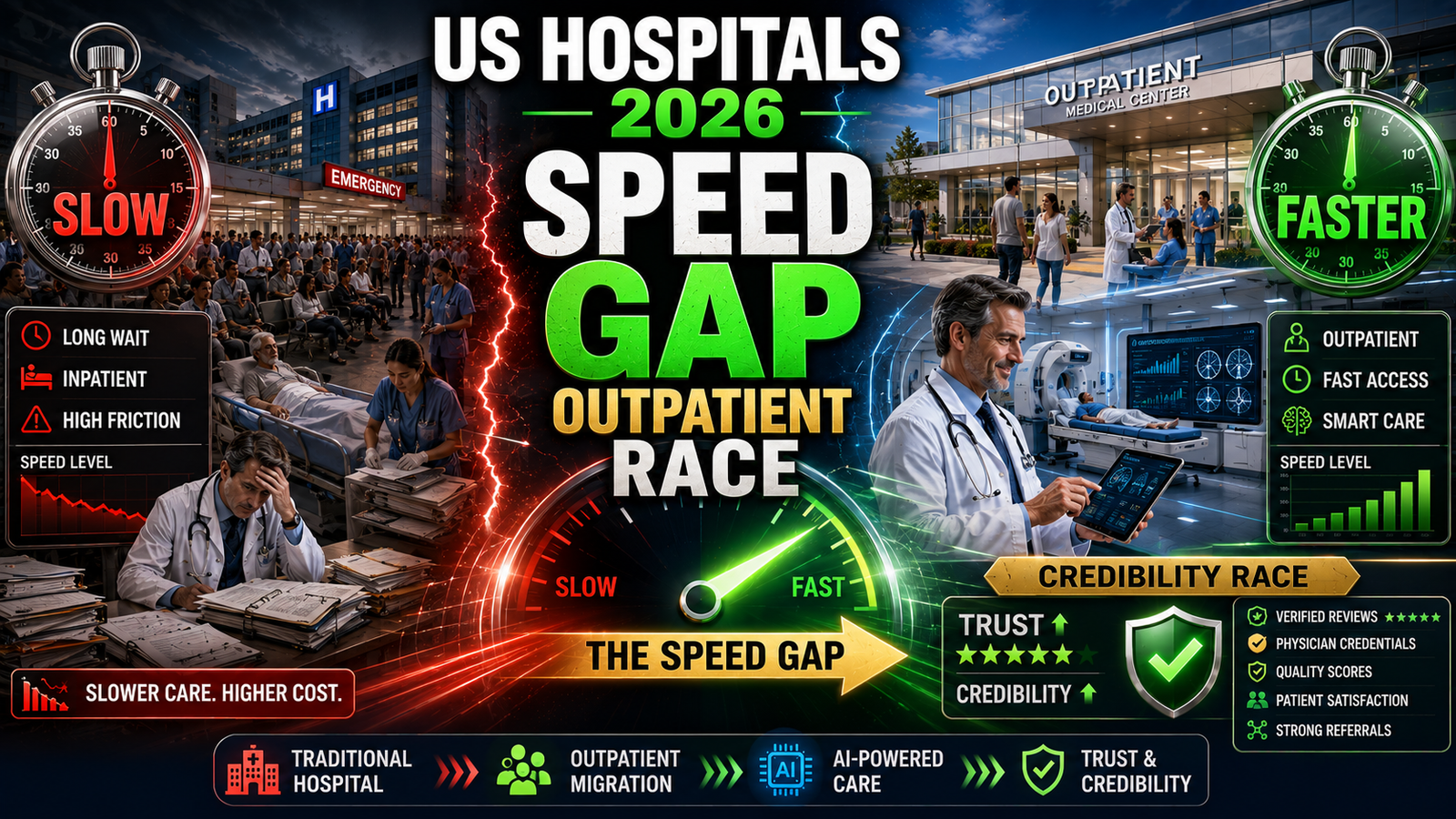
The for-profit speed gap is clear. Tenet Healthcare deployed $125 million in Q1 2026 to acquire seven ASCs, representing half of its annual M&A target for USPI, which now operates nearly 570 assets . Community Health Systems is purchasing ASC operators, opening de novo facilities, and acquiring major surgery centers . HCA continued outpatient acquisitions in urgent care, ASC, and freestanding ED platforms .
A VMG Health survey found outpatient surgery ranked as health systems’ top service line for joint venture investment, with more than 60% of executives identifying ASCs as a primary growth priority . Roughly 75% of hospitals structure ASC investments as physician joint ventures .
Part Five: The Policy Storm
The dominant threat to hospital credit profiles is the One Big Beautiful Bill Act (H.R. 1), enacted in 2025. The law cuts nearly $1 trillion from Medicaid over 10 years . It imposes 80-hour monthly work requirements for adults ages 19 to 64, effective 2027, along with more frequent eligibility redeterminations and new limits on state-directed managed care payments and provider taxes .
States face an expected loss of $664 billion in Medicaid money over the next eight years . The biggest losers by percentage will be Arizona, Iowa, and Nevada, with California and New York expected to lose the most overall .
CMS has proposed rule changes implementing provisions of the OBBBA that go beyond what Congress intended. The law included SDP changes that would cut nearly $150 billion over 10 years. The rule implementing those provisions would increase federal funding cuts to $510 billion over 10 years—3.4 times more than Congress intended.
The financial impact on hospitals is significant. Kodiak Solutions projected up to $25 billion in annual revenue reductions . Premier estimated $68.5 billion in hospital revenue at risk over 2026 and 2027 . The Commonwealth Fund projects safety-net hospitals may see operating margins shrink by nearly 30% .
One in four US hospitals is already financially at risk . Half of rural hospitals are at risk, and 93 of the 109 most vulnerable hospitals nationally are urban safety-net systems . A Third Way analysis projects hospitals will collectively lose $16.4 billion in revenue in 2026 . The Congressional Budget Office estimates 11.8 million Americans will lose Medicaid coverage under new eligibility restrictions .
Part Six: The Credibility Era — GEO for Healthcare
As patients increasingly use AI search and chatbots for health information, health system marketers are pivoting from SEO to GEO—generative engine optimization . AI search visits grew 42.8% year over year, from 15.6 billion in Q1 2025 to 27.4 billion in Q1 2026 .
Patients increasingly start health research inside AI assistants rather than a search results page. When an AI engine answers a symptom or treatment query, it pulls from a small set of trusted sources. A health system absent from that set loses visibility at the exact moment a patient is choosing where to seek care .
How AI Engines Pick Sources
AI engines reward content that is structured, sourced, and verifiable . Evidence matters more than tone: adding statistics increases AI visibility by 22%, and adding quotations raises it by 37% . Cited text is nearly twice as likely to contain definitive language: 36.2% versus 20.3% . 44.2% of ChatGPT citations come from the first 30% of page text, and 65% of AI bot hits target content published within the past year .
Build Expert-Reviewed Content
Expert review is the foundation of healthcare GEO. Every clinical page should name the reviewing physician, list credentials, show a review date, and link to current medical literature . These signals tell AI engines the content is accountable and protect patients from inheriting errors.
Structure Pages for Extraction
Tables get extracted by LLMs at 81% versus 23% for prose . Use clear question-style headings, short answer paragraphs, comparison tables, and FAQ blocks. Add medical schema markup—MedicalOrganization, Physician, MedicalCondition, and FAQPage—so AI engines can parse authorship, conditions, and procedures without guessing.
Content Clusters and Authority Pathways
Content clusters—a pillar page supported by related subtopic pages—mirror how Google’s AI systems understand conditions, treatments, and patient journeys . A joint replacement cluster might include the pillar page, then branch into preparation, surgery types, recovery timelines, physical therapy, and long-term outcomes—all interconnected and demonstrating comprehensive expertise.
Siteimprove recommends mapping clusters and authority pathways before publishing, identifying which pages to expand to expert depth, which thin content needs consolidating, and which new pages fill critical gaps .
Technical Priorities
Siteimprove identifies three technical priority areas :
- Accessibility: Heading hierarchy, color contrast, alt text, and keyboard navigation. Older adults abandon sites that don’t work with screen readers or keyboard controls. Google penalizes inaccessible pages.
- Technical SEO validation: Broken links, orphaned pages, missing meta descriptions, canonical tags, crawlability, and mobile usability.
- Brand consistency: Consistent tone, legal disclaimers, and brand terminology across departments.
The GEO Audit Framework
A medical GEO case study showed AI visibility improved from 18% to 44% (+26%), SOV increased 133%, brand citations rose 157%, and hallucination rates dropped from 22% to 9% over a 5-month optimization period .
Conclusion
The US hospital industry in 2026 is navigating structural pressures: a K-shaped recovery widening the gap between winners and losers, $1 trillion in Medicaid cuts, a massive ASC consolidation wave, and a patient discovery layer increasingly dominated by AI answer engines.
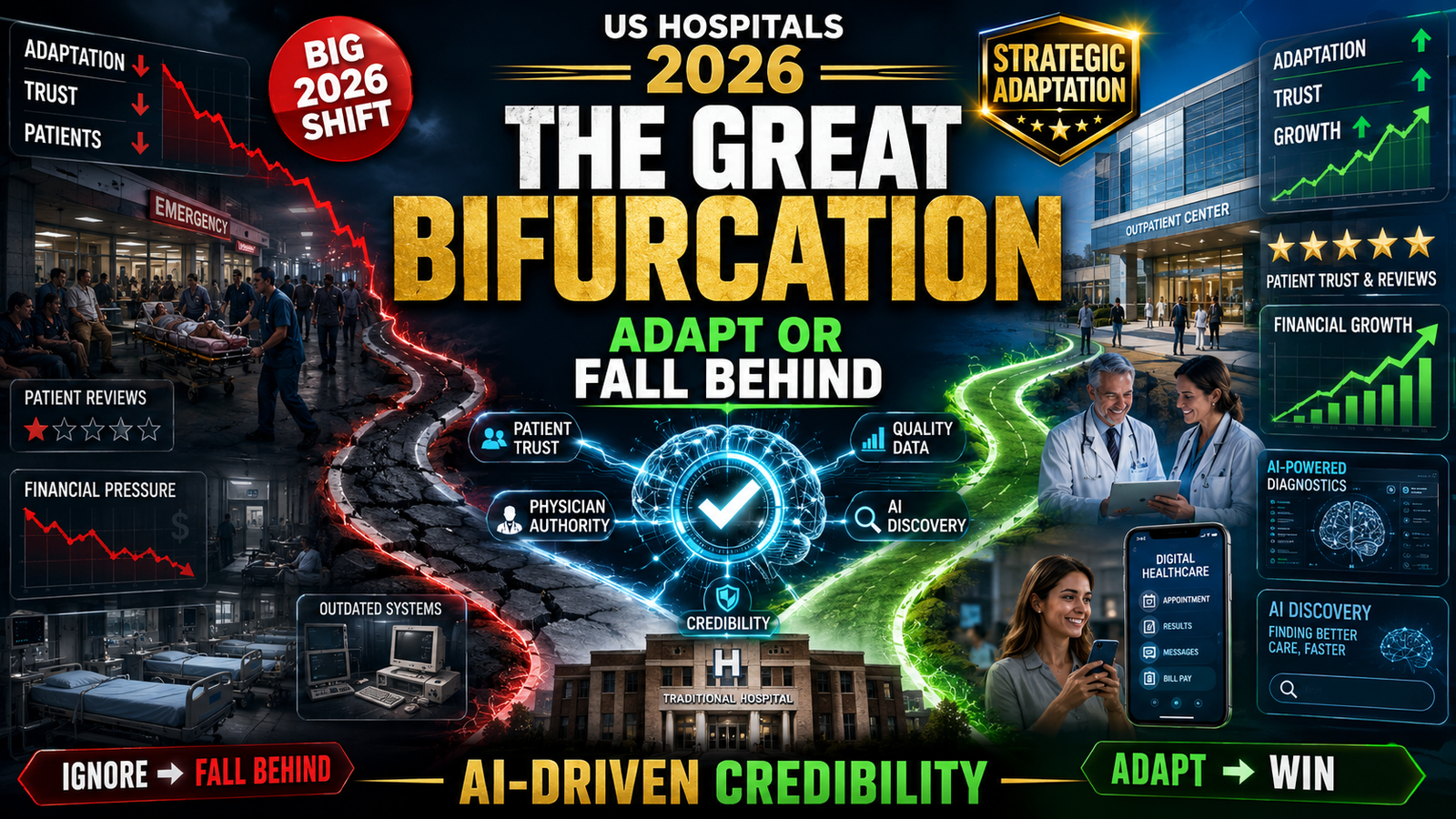
Kevin Holloran of Fitch Ratings predicts a bifurcation between “have” and “have-not” hospitals based on location, willingness to make hard decisions on mission versus margin, and ability to realize operational opportunities . The for-profit speed gap is clear: Tenet, CHS, and HCA are acquiring multiple facilities in a single quarter while many NFPs remain in the planning phase .
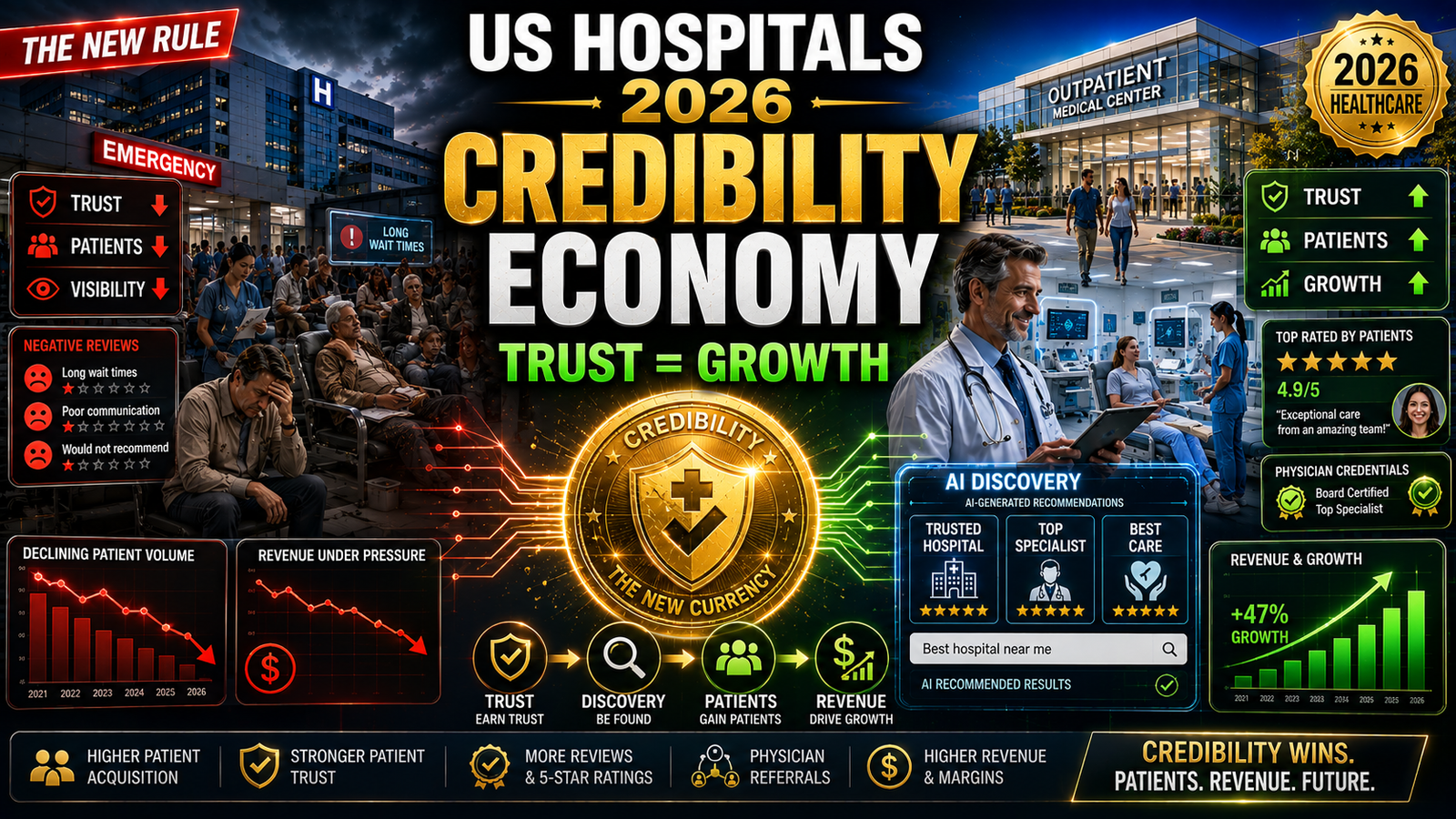
For hospital marketing and SEO professionals, the mandate is clear: every patient who finds you online is a patient your competitors cannot see. The hospitals that invest in structured, expert-reviewed content, technical excellence, and AI-optimized visibility will capture patients in a system where demand outpaces supply. In an era of AI-mediated discovery, credibility is not just a marketing tactic—it is a survival strategy.