sharmaanubhav6660@gmail.com
The “K-Shaped” Recovery: A Tale of Two Hospital Systems
The US hospital sector in 2026 is experiencing what analysts describe as a “K-shaped” recovery—a divergence where financially strong hospitals thrive while weaker institutions decline. This split has profound implications for how hospitals approach marketing and SEO.
After years of gradual financial improvement following the pandemic, “the tone for the sector has turned more cautious,” according to a Fitch Ratings analysis of 222 not-for-profit hospitals and health systems. “The current operational recovery may be at or very near a transition point.”
The data reveals a widening gap: AA-rated systems saw median operating margins improve to 2.8% in fiscal 2025, near pre-pandemic levels, while junk-rated hospitals saw margins fall to -2.8% from -1.6% the year prior. Similarly, strong gains in investment portfolios drove record cash-to-debt ratios, but “the gain was almost entirely an upper-tier phenomenon.”
For hospital marketers, this divergence means the stakes are higher than ever. Every patient acquired through digital channels is a patient that struggling competitors cannot capture. The competitive advantage of SEO has shifted from a growth tactic to a survival imperative for weaker systems.
The Policy Pressure: Medicaid Cuts and Financial Headwinds
The dominant near-term threat to hospital credit profiles is the One Big Beautiful Bill Act (H.R. 1), which became law in 2025. The law imposes new work requirements for Medicaid recipients, limits hospital funding sources like state-directed payments, and could result in more than 10 million individuals losing insurance coverage.
Projected federal Medicaid funding reductions of nearly $1 trillion over the next decade represent one of the most significant proposed reductions to the program in decades. According to FTI Consulting’s 2026 Hospital Operations Outlook Survey, 92% of hospital leaders anticipate major or moderate effects on financial performance from these cuts. Stricter Medicaid eligibility requirements and changes affecting Medicare Advantage reimbursement are the most frequently cited policy concerns, each identified by 61% of respondents.
The financial exposure is concentrated and severe. Medicaid accounts for roughly one-fifth of all hospital spending nationally and an even greater share for hospitals serving rural and safety-net populations. For these institutions, the simultaneous changes to coverage, eligibility, and reimbursement create a level of financial exposure that is both broader and more immediate than in prior periods.
The Outpatient Surge: Where Revenue Is Growing
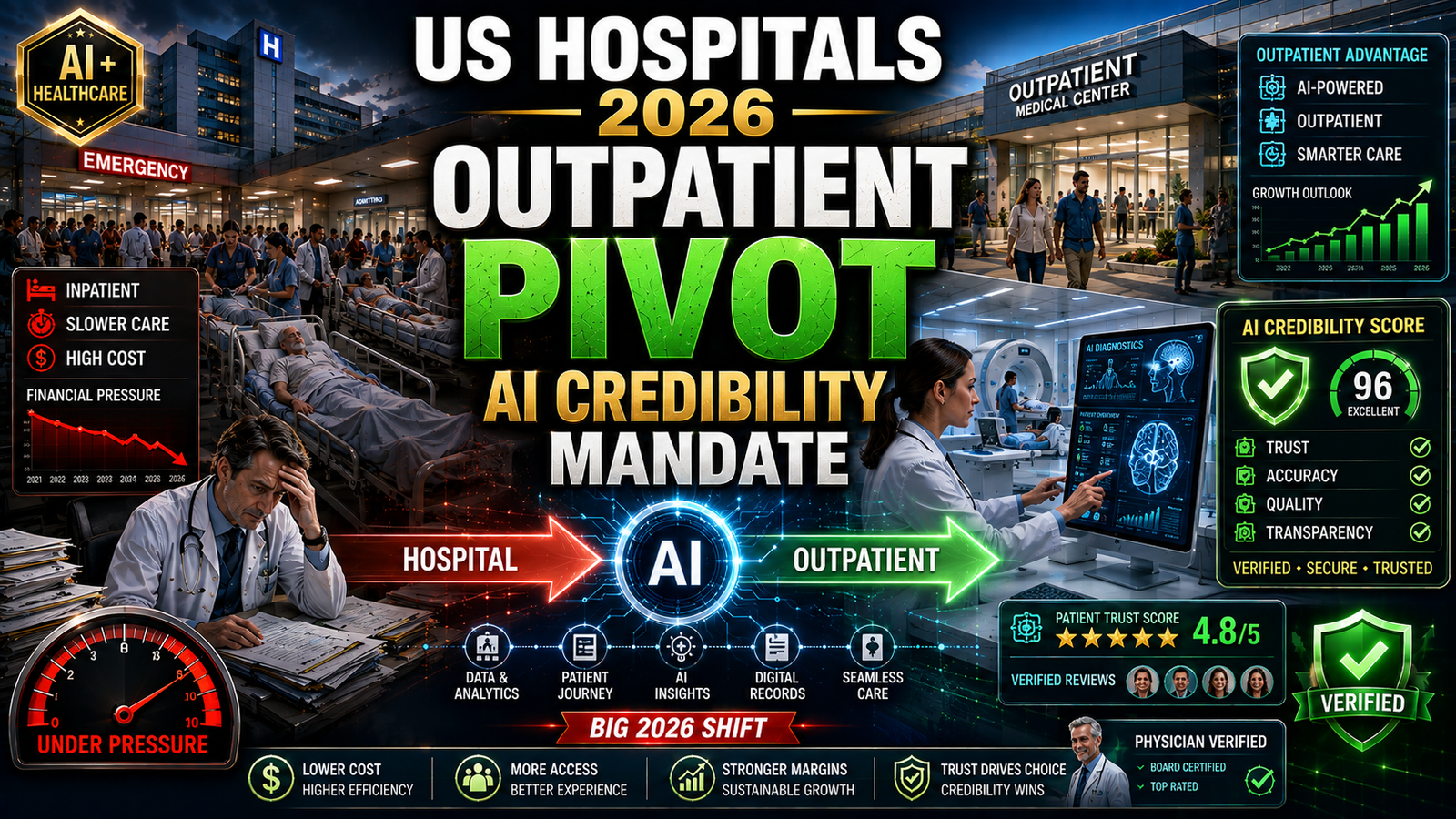
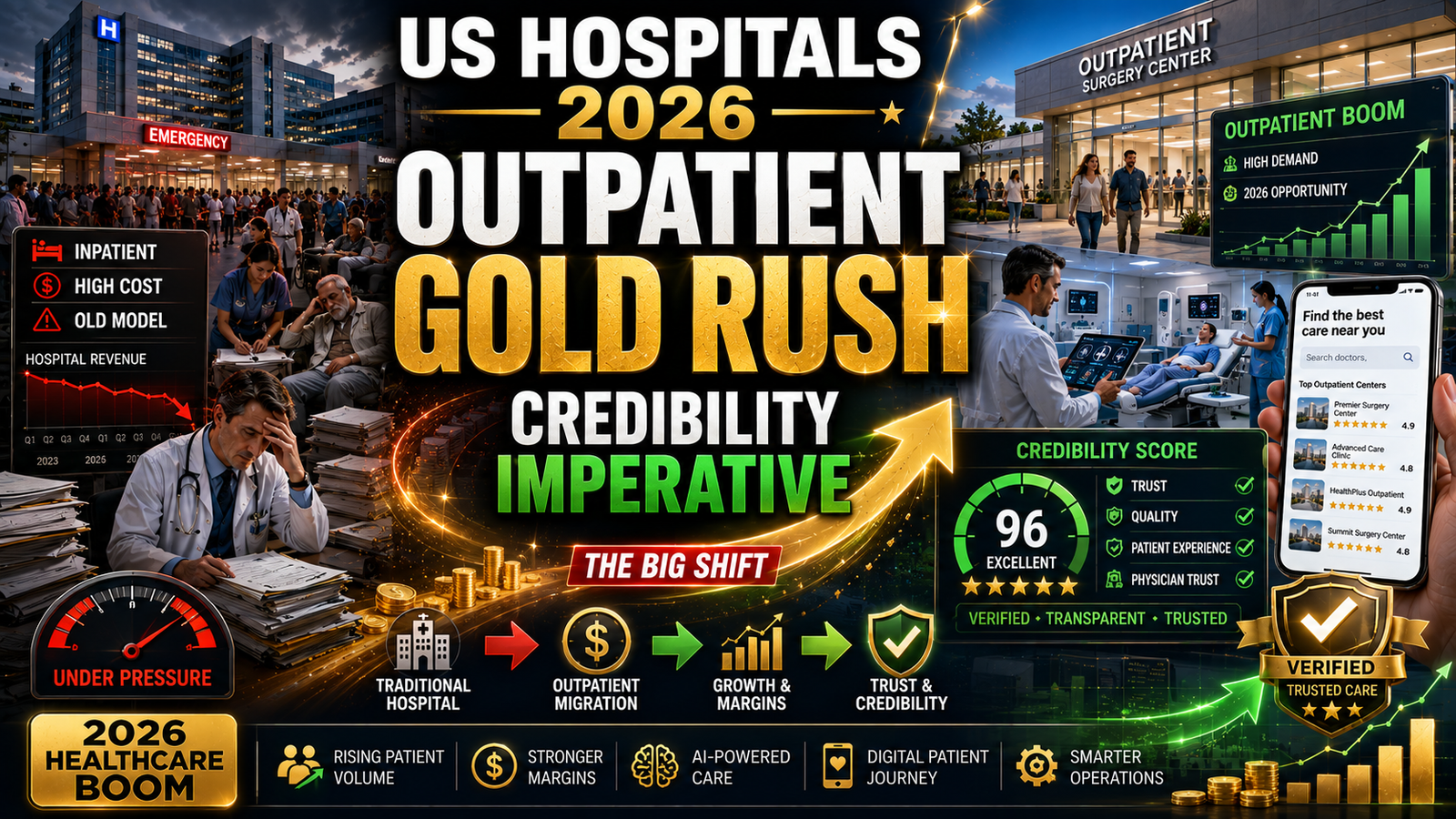
Despite policy headwinds, revenue growth in the hospital sector remained robust in early 2026. U.S. hospital net operating revenue rose 5% per calendar day in the first quarter compared to the prior year, with gross operating revenue growing 7% over the same period.
The clear driver of this growth is outpatient care. Outpatient revenue grew 8% nationally, outpacing inpatient revenue (4%) in every region and every bed-size category except hospitals with 0–25 beds.
Regional leaders included Western hospitals, which posted net operating revenue up 7%, gross operating revenue up 10%, and outpatient revenue surging 13%—the highest outpatient figure of any region. Hospitals in the 200–299 bed range led all size segments, with net operating revenue up 8%, inpatient revenue up 7%, and outpatient revenue up 10%.
The Strategy Shift: “Asset-Light, Return-Rich”
Hospital executives are increasingly asking: “Where can I get the best return when I invest my capital?” According to industry analysts, the answer is the ambulatory and outpatient space because “it’s far cheaper to build and operate there, with a much better return.”
This structural shift is reshaping the healthcare transaction market. Physician medical groups accounted for a record 46% of all healthcare transactions in early 2026, and ASCs (Ambulatory Surgery Centers) are the crown jewels of this acquisition spree.
At Cleveland Clinic, the strategy is clear: “We are aggressively investing in the shift toward ambulatory and outpatient care, and we already have a sizable outpatient footprint, as more than half of our patient care revenue already comes from outpatient services.” At the same time, the health system continues to invest in inpatient services for complex care—a balanced portfolio approach that reflects the reality that inpatient care remains essential for complex conditions.
SEO for the Outpatient Era: Content Clusters and Authority Pathways
The outpatient shift creates a clear SEO mandate: every location, provider, and service line needs a robust digital presence. Siteimprove’s 2026 analysis emphasizes that content clusters—a pillar page supported by related subtopic pages—mirror how Google’s AI systems understand conditions, treatments, and patient journeys.
Department-Level Content Requirements
Cardiology: 15–20 Pages Minimum
- Department overview
- 5–8 procedure pages (catheterization, stenting, bypass, ablation, pacemaker, stress testing, echocardiography)
- 4–6 condition pages (AFib, heart failure, coronary artery disease, valve disease)
- Individual cardiologist/cardiac surgeon profiles
Oncology: 25+ Pages Minimum
- 8+ cancer-type pages (breast, lung, colon, prostate, blood, skin)
- 5+ treatment modality pages (chemotherapy, radiation, immunotherapy, targeted therapy, surgery)
- Clinical trials listing, support services, survivorship programs, second-opinion pages
- Individual oncologist profiles
Orthopedics: 20+ Pages Minimum
- Joint replacement sub-pages (knee, hip, shoulder)
- Sports medicine pages (3+)
- Spine surgery, hand surgery, foot and ankle, trauma
- Recovery guides for each major procedure
- Individual surgeon profiles
Neurology/Neurosciences: 15–25 Pages
- Stroke center designation and rapid response protocols
- Brain tumor programs, epilepsy center, movement disorders (Parkinson’s), MS center, headache/migraine clinic
Maternity: 10–15 Pages
- Birthing suite descriptions, NICU level, birth class schedules
- OB-GYN directory, high-risk pregnancy programs
- Virtual tour content
Emergency: 5–8 Pages
- Trauma designation, stroke and chest pain center certification
- Pediatric ER capability
- “ER vs. urgent care” guide, wait time transparency
Gastroenterology: 10–15 Pages
- Colonoscopy screening (“Colonoscopy near me” has 9,900 monthly searches)
- Endoscopy, ERCP, IBD programs, liver disease, celiac, GI cancer screening
Urology: 10–15 Pages
- Prostate health, kidney stones, bladder conditions
- Robotic surgery (da Vinci) content
- Prostate cancer screening programs
Technical SEO: The Non-Negotiable Foundation
Siteimprove emphasizes three technical priority areas:
1. Speed and Core Web Vitals. Pages must load fast on mobile devices. Most health searches happen on mobile devices, and Google penalizes slow-loading pages. Compress images and clean up code.
2. Healthcare Schema Markup. Schema is structured data that tells search engines what your content means. It also helps AI engines quote you correctly. Add MedicalOrganization, Physician, and FAQPage schema to the right pages. This directly increases your chances of appearing in rich results, featured snippets, and knowledge panels.
3. Web Accessibility (WCAG 2.1 AA). Federal rules now push covered entities toward WCAG 2.1 AA standards, with deadlines starting in May 2026 for larger organizations. Accessible sites rank better and serve more patients. Add alt text, clear labels, and keyboard navigation. Google penalizes inaccessible pages.
GEO: The AI Search Imperative
As more patient journeys begin and end inside AI-generated results, healthcare marketing teams face a new reality: it’s no longer enough to rank. Brands also need to be referenced, summarized, and recommended accurately by the tools patients are using to narrow options before they ever click a website.
Relevance’s 2026 Healthcare SEO & GEO Playbook recommends focusing on entity and authority signals—strengthening brand, clinician, and location entities so answer engines pull the right facts and attribute them to you.
Key GEO tactics include:
- Expert-reviewed content: Every clinical page should name the reviewing physician, list credentials, show a review date, and link to current medical literature.
- Place answers high on the page: AI engines prioritize information found in the first 30% of content.
- Use structured tables: Tables get extracted by LLMs at significantly higher rates than prose.
- Cover real patient questions: Symptoms, treatment options, recovery timelines, costs, insurance coverage.
- Freshness matters: AI bots target content published within the past year.
The Trust Imperative in Healthcare Marketing
In 2026, trust is emerging as the primary KPI for healthcare brands. Healthline Media’s 2026 analysis notes that “consumers are now curating their own paths through telehealth platforms, wellness apps, connected devices, and digital communities. They want to learn, compare, and act on their terms—often within a single, seamless experience.”
For health marketers, this shift is both an opportunity and a test. DTC channels allow for deeper engagement and clearer attribution, but they also demand greater responsibility. “When every interaction happens closer to the consumer, trust becomes the differentiator, and it must be earned continuously.”
What this means for hospital SEO:
- Every clinical page needs named clinical review
- Provider bios must be comprehensive and verifiable
- Location data must be consistent across all platforms
- Patient reviews must be managed and responded to
- Content must be medically accurate and clearly sourced
Multi-Location Local SEO: The Scaling Challenge
For multi-location healthcare brands, local SEO presents a unique challenge. Birdeye’s 2026 analysis identifies four key priorities:
1. Standardize your data first. Before touching content or keywords, lock in a single source of truth for hours, phone numbers, services offered at each site, insurance accepted, and provider rosters per location.
2. Give each location its own “identity.” Every clinic needs a unique location page, providers tied only to that location, local details (parking, neighborhood cues), and services available there. No duplication. No copy-paste pages.
3. Create a solid SOP for updates. People join, leave, and transfer—and every change impacts rankings. Remove old bios within 48 hours, update listings the same week, redirect old provider URLs when they move, and add new providers to the correct location pages immediately. Slow updates = lost visibility.
4. Don’t over-create pages. Use this rule: if it has its own entrance, hours, or phone line → it gets its own page and Google Business Profile. If not → keep it consolidated.
Conclusion: Visibility Is Survival
The US hospital industry in 2026 is defined by structural pressures that are reshaping the competitive landscape. Policy cuts are squeezing margins, demographic shifts are driving demand, and the K-shaped recovery means the gap between winners and losers is widening.
For hospital marketing and SEO professionals, the mandate is clear: every patient who finds you online is a patient your competitors cannot see. The hospitals that invest in comprehensive content clusters, technical excellence, local SEO, and AI search visibility will capture patients in a system where demand outstrips supply. In a K-shaped world, visibility is not just a growth tactic—it is a survival strategy.