sharmaanubhav6660@gmail.com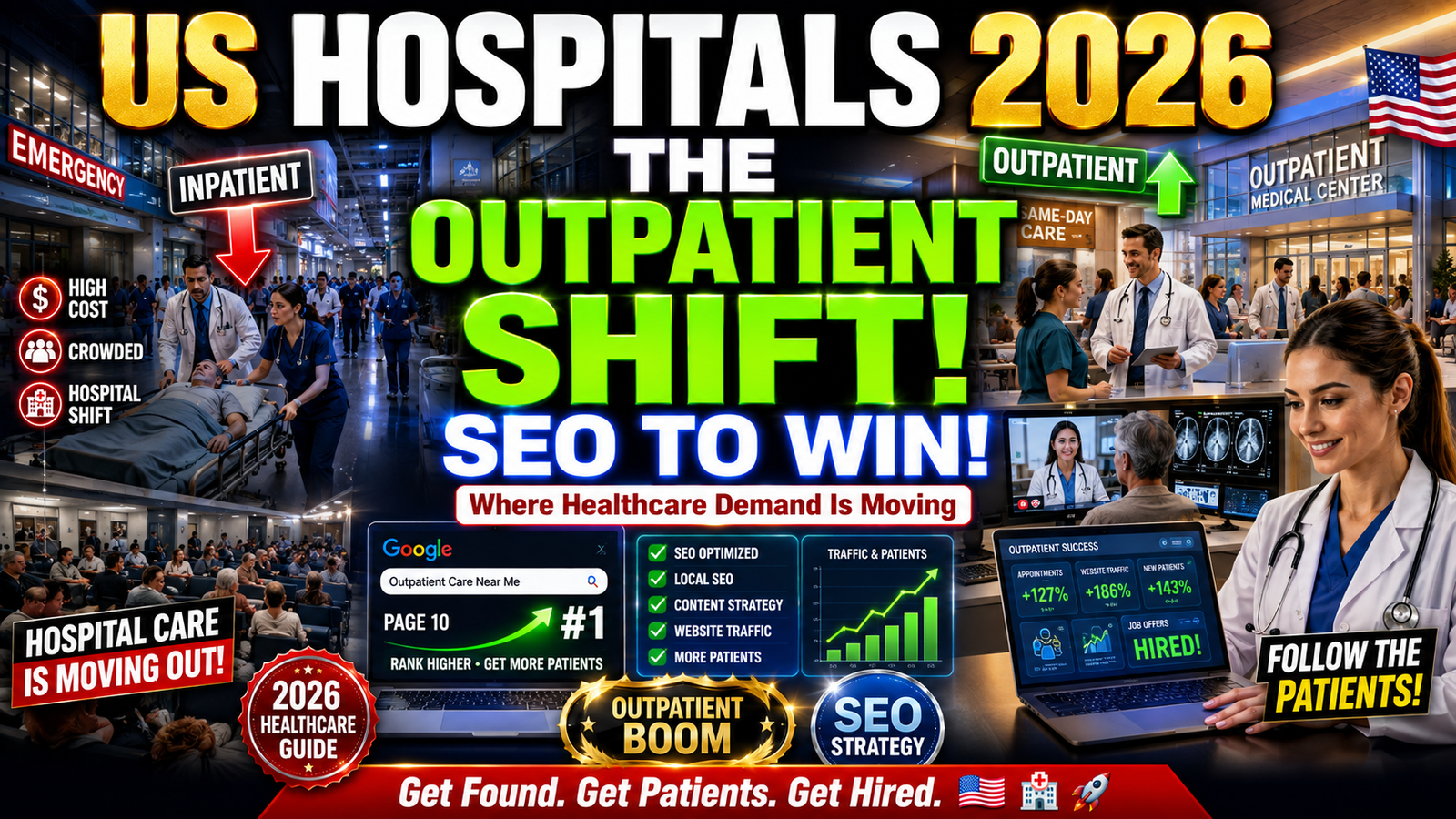
A System in Transition: Where the Money Is Moving
The US hospital industry in 2026 is navigating a fundamental transition. While the overall market is valued at approximately $1.93 trillion and projected to reach $2.8 trillion by 2031, the where and how of care delivery are changing faster than many organizations can adapt.
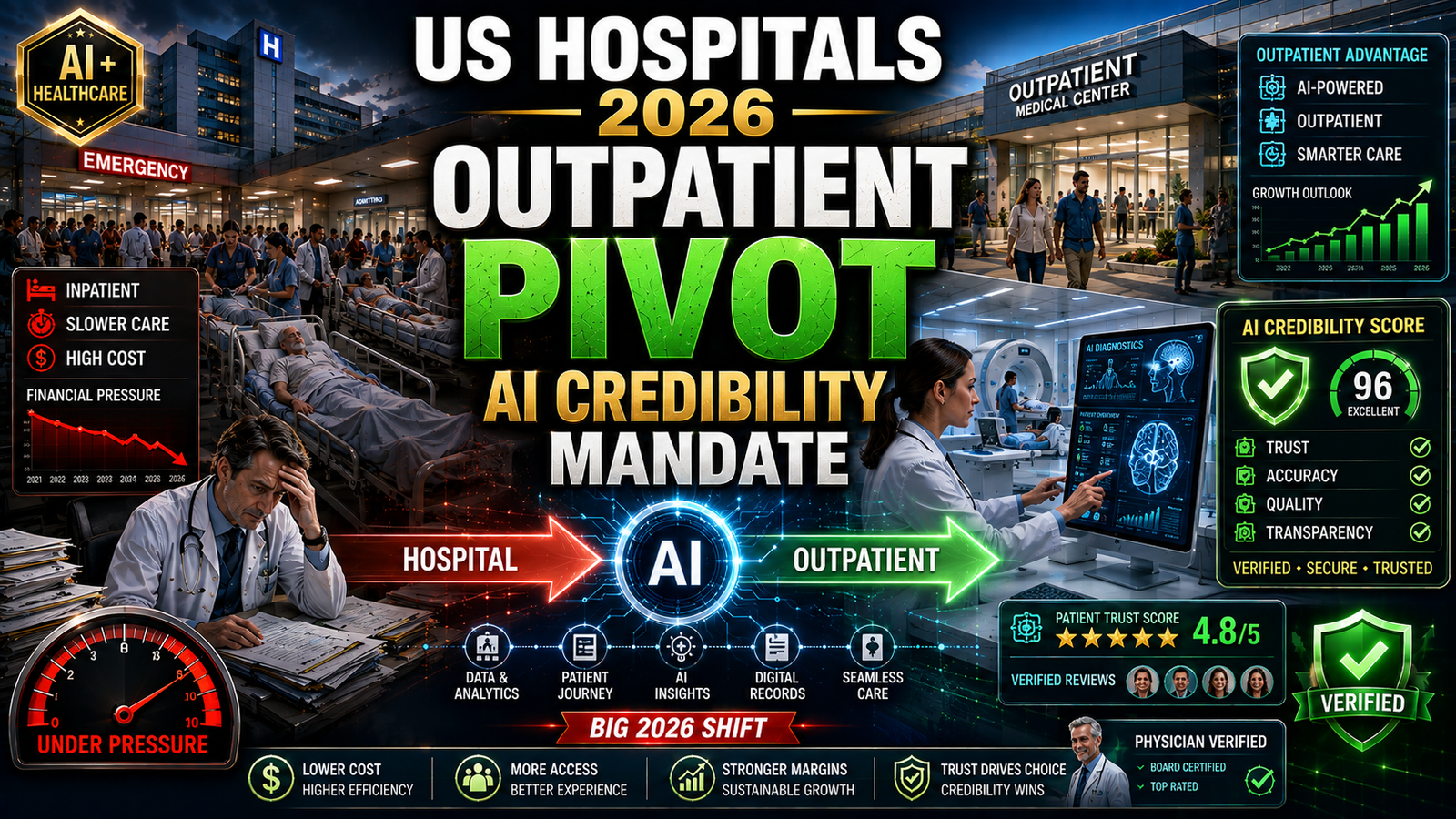
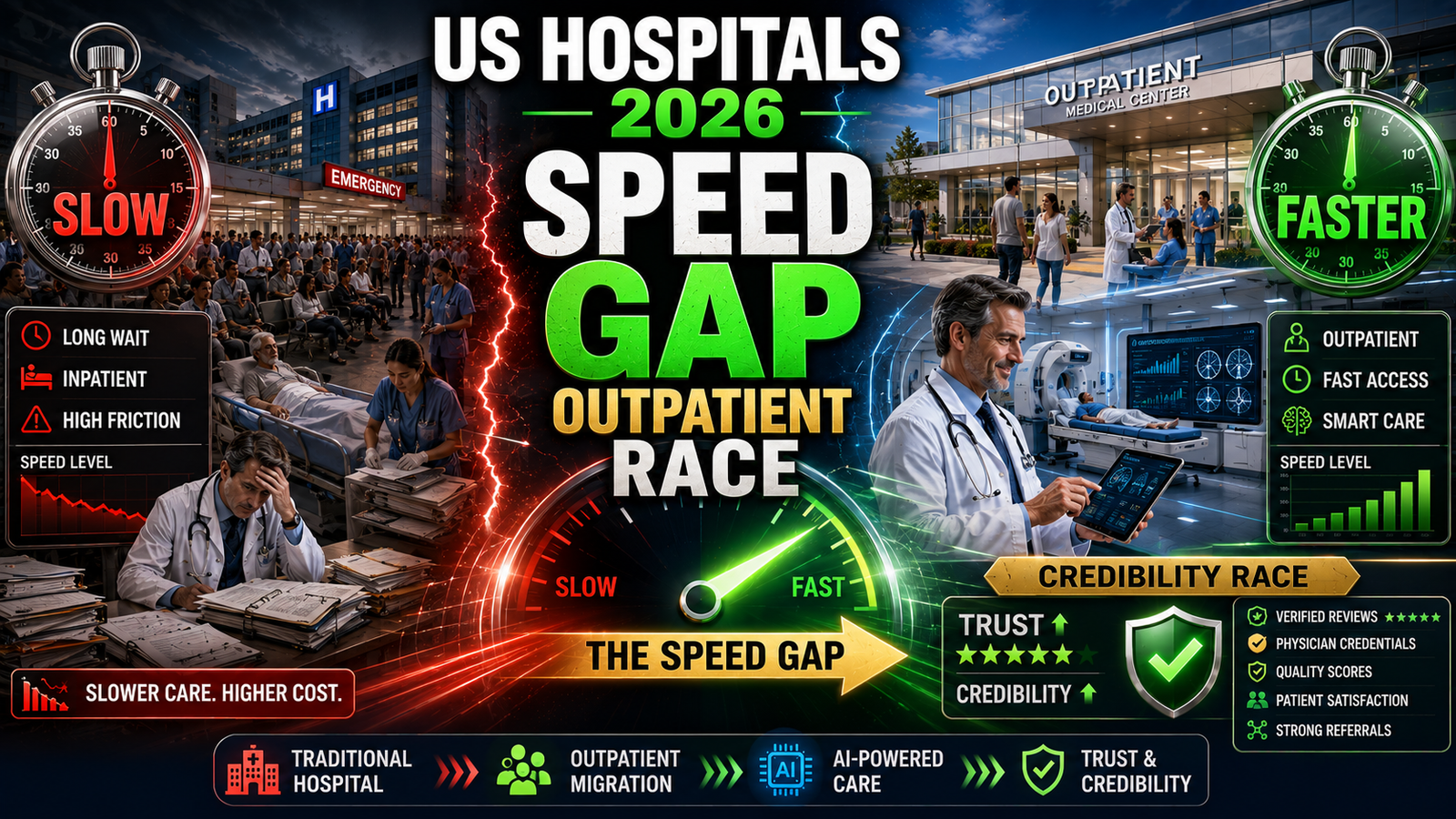
The data is unambiguous: outpatient care is the engine of hospital revenue growth. Nationally, outpatient revenue grew 8% year-over-year in the first quarter of 2026, compared to just 4% growth in inpatient revenue. The gap is even wider in some regions—Western hospitals posted 13% outpatient growth, and the 200–299 bed hospitals led all size segments with 10% outpatient growth.
Kaufman Hall analysts put it plainly: “Traditional hospital care delivery is fundamentally shifting. As outpatient growth continues year-over-year, health systems may consider proactively adapting portfolios and operations to support the future of U.S. healthcare delivery”.
This shift is not temporary. Vizient’s 2026 Impact of Change forecast projects outpatient volumes will grow 20% between 2026 and 2036, while inpatient discharges grow just 7% over the same period. Office and clinic visits are projected to reach 2.87 billion by 2036, and hospital outpatient departments and ambulatory surgery centers are expected to grow to 803 million visits.
The implications for hospital marketing and SEO are equally clear: hospitals without a strong outpatient presence will struggle. As Erik Swanson, managing director at Kaufman Hall, warned: “Demand in outpatient services is on the rise, and hospitals without an outpatient footprint will struggle”.
The Workforce Reality: Demand Without Supply
Revenue growth tells only half the story. The other half is the physician workforce—and the numbers are sobering.
The Health Resources and Services Administration (HRSA) projects a shortage of 96,430 FTE physicians in 2026. The specialties facing the largest supply-demand gaps include:
- Hospital Medicine: -5,350 FTEs
- Anesthesiology: -3,720 FTEs
- Cardiology: -3,010 FTEs
- Vascular Surgery: -2,170 FTEs
- General Surgery: -2,020 FTEs
- Radiology: -1,900 FTEs
The 2026 Residency Match results reveal a system struggling to keep up. While 41,482 positions were filled—the largest Match in history—programs added capacity faster than applicants grew. The unfilled rate increased 15.7% year-over-year, leaving 2,862 positions unfilled on Match Day.
Primary care is the clearest example of the disconnect. Family Medicine filled just 83.6% of its 5,491 positions, leaving 899 unfilled before the Supplemental Offer and Acceptance Program. The National Resident Matching Program announced a Blue Ribbon Panel to examine the structural factors driving declining interest in Family Medicine—a crisis that has direct implications for patient access in underserved communities.
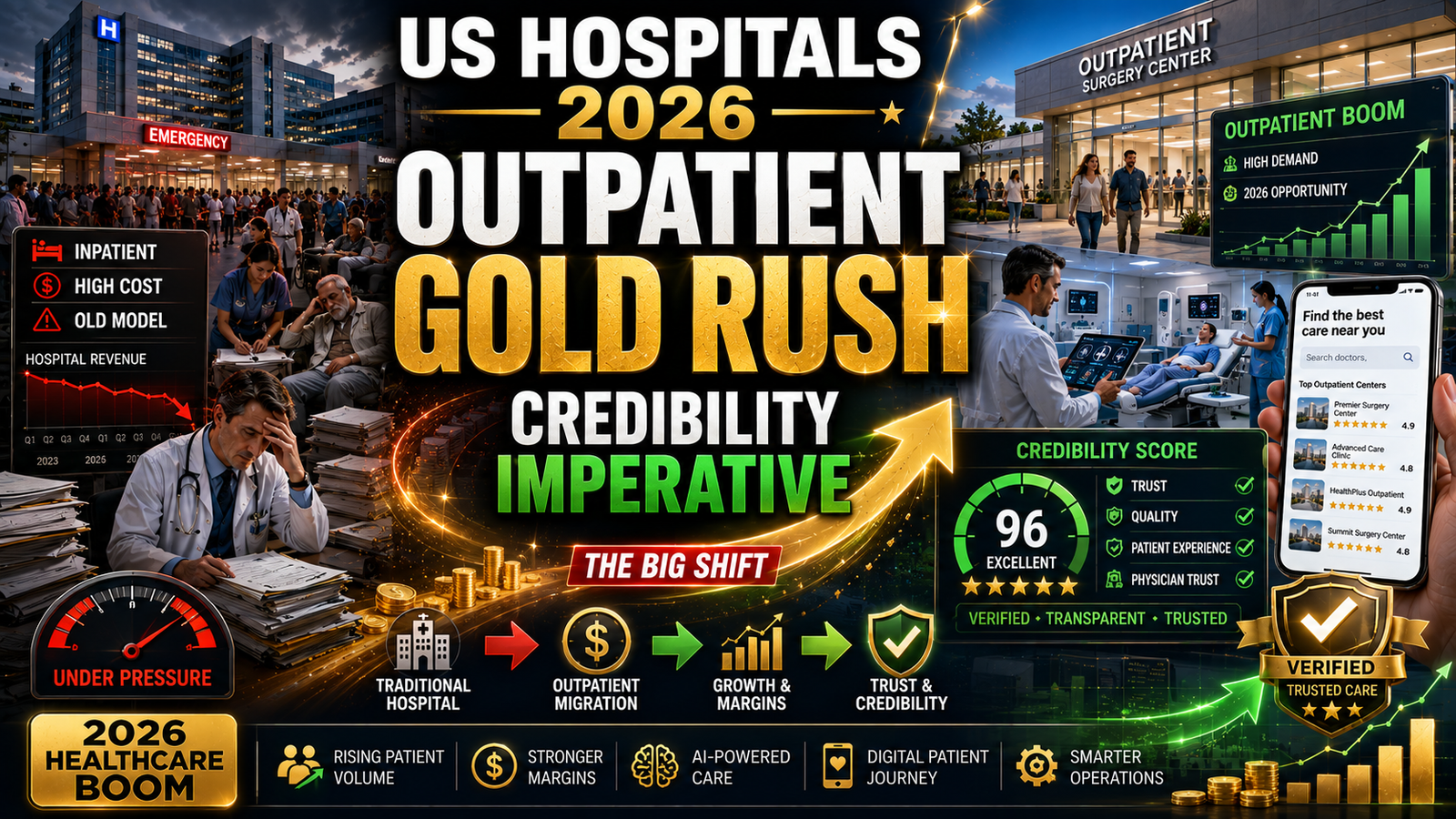
The ASC Gold Rush: Health Systems Race to Build Outpatient Networks
Against this backdrop, the healthcare transaction market is being reshaped by a race to acquire outpatient assets. Physician medical groups accounted for a record 46% of all healthcare transactions in the first quarter of 2026—nearly three times as many deals as any other healthcare subsector.
ASCs (Ambulatory Surgery Centers) are the crown jewels of this acquisition spree. A VMG Health survey found that more than 60% of health system executives identify ASCs as a primary growth priority, and roughly 75% of hospitals structure ASC investments as physician joint ventures.
The numbers tell the story:
- Ascension completed its $3.9 billion acquisition of Amsurg, expanding its ASC network to roughly 300 facilities nationwide.
- Cleveland Clinic partnered with Regent Surgical to develop ASCs in multiple markets.
- Bon Secours Mercy Health teamed with Compass Surgical Partners to develop more than 30 ASCs across several states.
- Parkview Health aligned with Surgery Partners to develop and acquire surgery centers across Indiana.
Amber Sims, Ascension’s executive vice president and chief strategy and growth officer, explained the strategy: “We had to get ahead in the ambulatory business, because that’s where care is going. It’s where patients want to receive care, where payers want to seek care, and where providers want to provide care”.
The financial logic is compelling. Owning or partnering with ASCs can increase reimbursement rates, strengthen physician alignment, capture downstream referrals, and shift procedures into lower-cost settings. As operating costs continue to rise—labor expense up 4% and nonlabor expense up 9% year-over-year—the margin advantage of outpatient care becomes increasingly attractive.
SEO Strategy for the Outpatient Era
For hospital marketing leaders, the outpatient shift creates a clear mandate: every outpatient location needs a robust content strategy.
1. Location-Based Content: Your Secret Weapon
Each hospital, clinic, ASC, and practice location needs a dedicated, content-rich landing page. Northeast Medical Group grew traffic 893% year-over-year by creating dedicated pages for each of their 130+ practices, including specific services, local phone numbers, embedded Google Maps, and parking information.
The SEO principle is straightforward: “Dr. [Name] [city]” and “[specialty] near me” are high-intent searches from referred patients. If you don’t have a page for each location and physician, you’re invisible to those patients.
2. Department-Level Content Requirements
Different hospital departments require vastly different content investments to compete:
Cardiology: 15–20 Pages Minimum
- Department overview
- 5–8 procedure pages (catheterization, stenting, bypass, ablation, pacemaker, stress testing, echocardiography)
- 4–6 condition pages (AFib, heart failure, coronary artery disease, valve disease)
- Individual cardiologist/cardiac surgeon profiles
Oncology: 25+ Pages Minimum
- 8+ cancer-type pages (breast, lung, colon, prostate, blood, skin)
- 5+ treatment modality pages (chemotherapy, radiation, immunotherapy, targeted therapy, surgery)
- Clinical trials listing, support services, survivorship programs, second-opinion pages
- Individual oncologist profiles
Orthopedics: 20+ Pages Minimum
- Joint replacement sub-pages (knee, hip, shoulder)
- Sports medicine pages (3+)
- Spine surgery, hand surgery, foot and ankle, trauma
- Recovery guides for each major procedure
- Individual surgeon profiles
Neurology/Neurosciences: 15–25 Pages
- Stroke center designation and rapid response protocols
- Brain tumor programs, epilepsy center, movement disorders (Parkinson’s), MS center, headache/migraine clinic
Maternity: 10–15 Pages
- Birthing suite descriptions, NICU level, birth class schedules
- OB-GYN directory, high-risk pregnancy programs
- Virtual tour content
Emergency: 5–8 Pages
- Trauma designation, stroke and chest pain center certification
- Pediatric ER capability
- “ER vs. urgent care” guide, wait time transparency
Gastroenterology: 10–15 Pages
- Colonoscopy screening (“Colonoscopy near me” has 9,900 monthly searches)
- Endoscopy, ERCP, IBD programs, liver disease, celiac, GI cancer screening
Urology: 10–15 Pages
- Prostate health, kidney stones, bladder conditions
- Robotic surgery (da Vinci) content
- Prostate cancer screening programs
3. The Physician Directory Asset
Your physician directory is either your biggest asset or your biggest liability. Each physician needs an individual, indexable page with specialty, training, credentials, patient reviews, and appointment scheduling. “Dr. [Name] [city]” is a high-intent search—treating physician pages as an afterthought means losing patients to competitors.
4. Content Clusters and Authority Pathways
Content clusters—a pillar page supported by related subtopic pages—mirror how Google’s AI systems understand conditions, treatments, and patient journeys. A joint replacement cluster might include the pillar page, then branch into preparation, surgery types, recovery timelines, physical therapy, and long-term outcomes—all interconnected and demonstrating comprehensive expertise.
5. Technical SEO: The Foundation
Siteimprove recommends prioritizing:
- Accessibility checks: Heading hierarchy, color contrast, alt text on images, keyboard navigation. Google penalizes inaccessible pages.
- Technical SEO validation: Broken links, orphaned pages, meta descriptions, canonical tags.
- Brand consistency: Consistent tone, legal disclaimers, and brand terminology across departments.
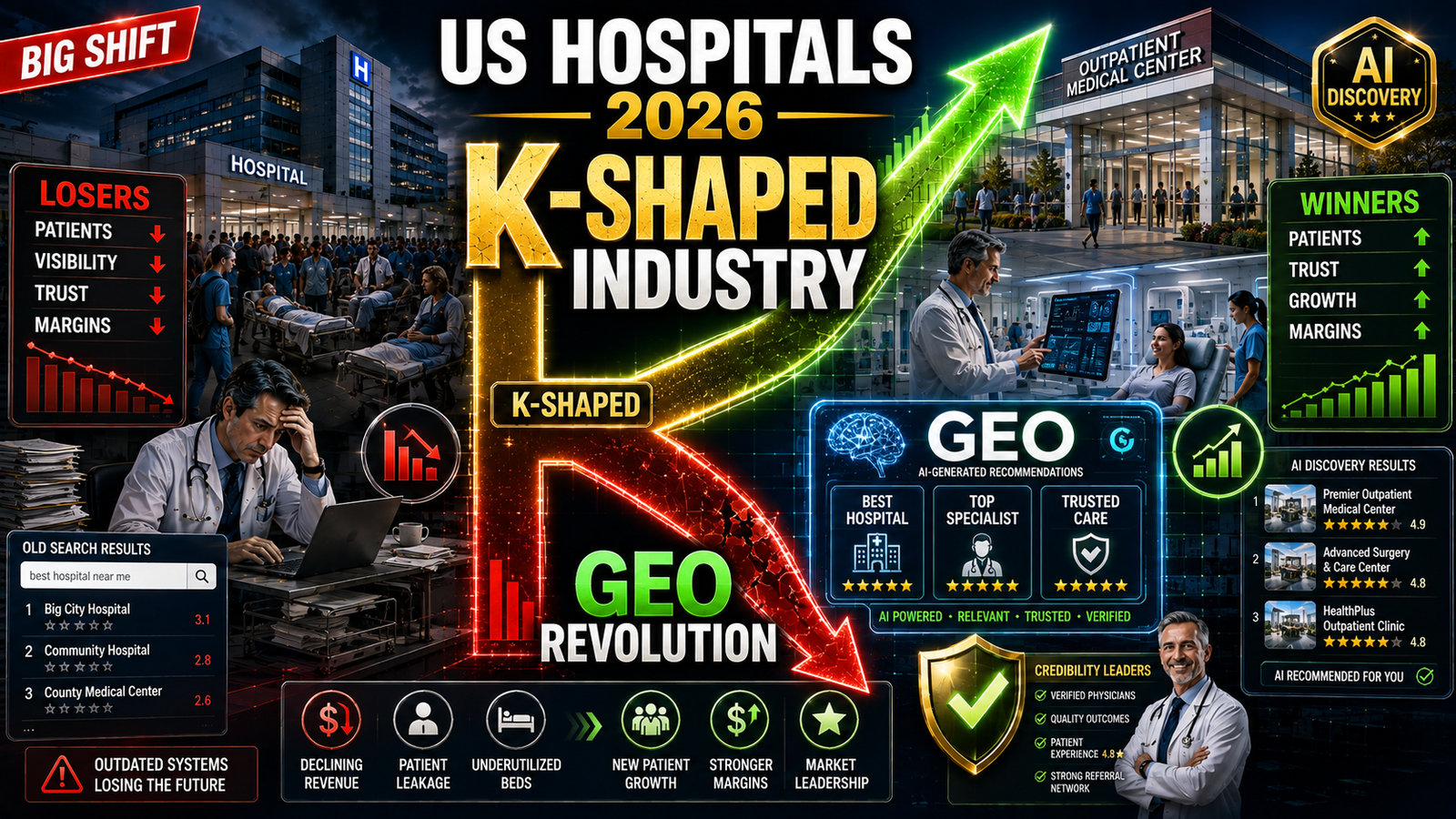
6. GEO (Generative Engine Optimization)
AI search visits grew 42.8% year-over-year, rising from 15.6 billion in Q1 2025 to 27.4 billion in Q1 2026. Healthcare brands need to be referenced, summarized, and recommended accurately by the tools patients are using to narrow options before they ever click a website.
Key GEO tactics:
- Expert-reviewed content: Every clinical page should name the reviewing physician, list credentials, show a review date, and link to current medical literature.
- Place answers high on the page: 44.2% of ChatGPT citations come from the first 30% of page text.
- Use structured tables: Tables get extracted by LLMs at 81% versus 23% for prose.
- Cover real patient questions: Symptoms, treatment options, recovery timelines, costs, insurance coverage.
- Freshness matters: 65% of AI bot hits target content published within the past year.
Conclusion: The Opportunity Is Clear
The US hospital industry in 2026 is defined by two powerful forces: the shift to outpatient care and severe physician shortages. Outpatient revenue is growing three times faster than inpatient revenue, and health systems are racing to acquire ASCs and outpatient facilities. At the same time, workforce shortages mean that every patient who finds you online is a patient your competitors cannot see.
For hospital marketing and SEO professionals, the opportunity is clear:
- Build comprehensive content clusters around high-demand specialties—cardiology, oncology, orthopedics, and gastroenterology need 15-25+ pages each.
- Optimize every location and physician page—patients search for “Dr. Name City” and “[specialty] near me.”
- Invest in technical SEO—accessibility, structured data, and internal linking are non-negotiable.
- Prepare for GEO—your content must be referenced and summarized accurately by AI answer engines.
- Diversify your content portfolio—don’t rely on one high-performing article. Build multiple traffic drivers.
The hospitals that invest in robust, patient-centered content will capture the patients that their competitors cannot see. In a system defined by demand that outstrips supply, visibility is everything.