sharmaanubhav6660@gmail.com
A Fragile Recovery Approaches a Transition Point
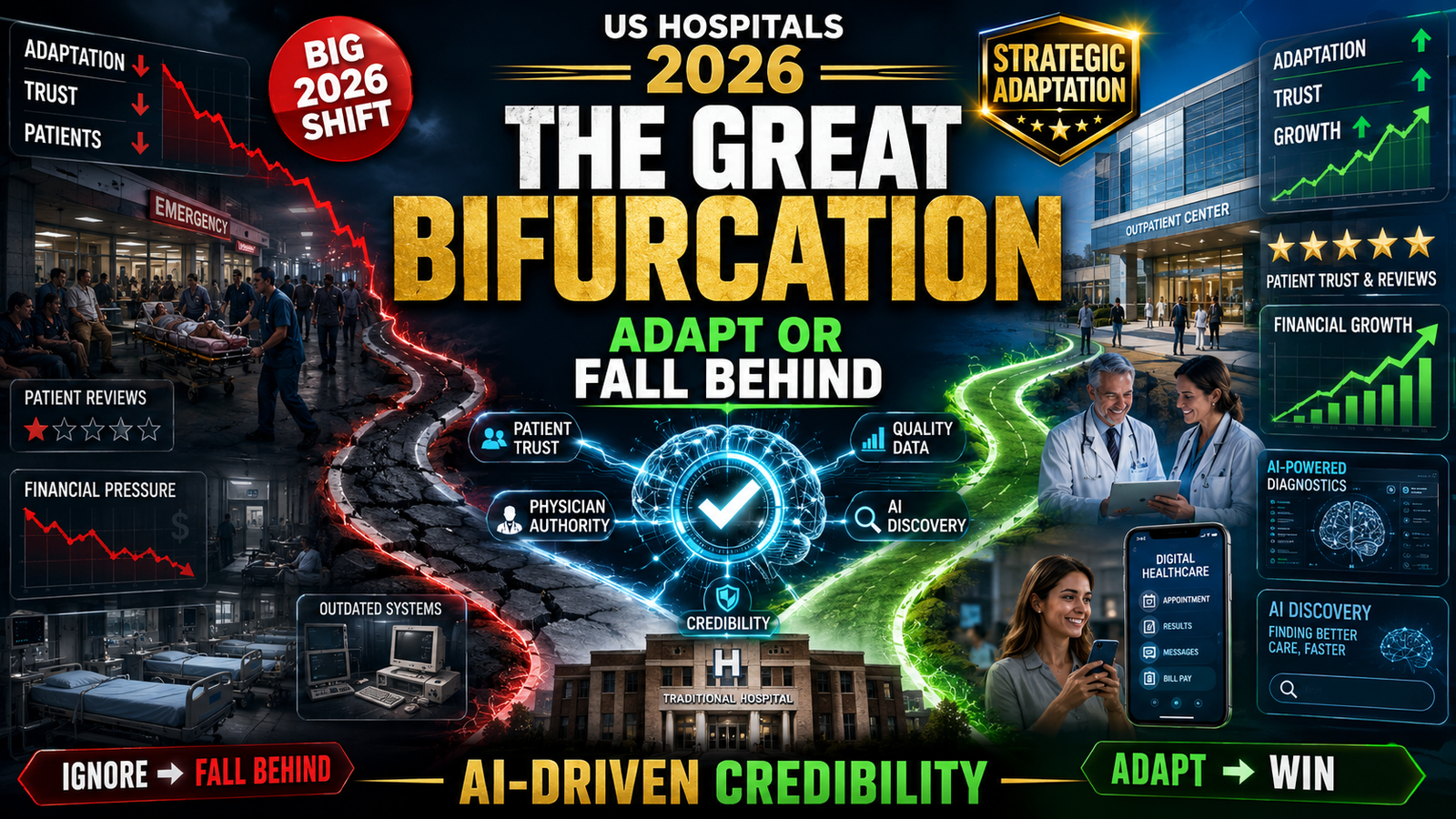
The US hospital industry is at a critical juncture. After years of gradual financial improvement, “the tone for the sector has turned more cautious,” according to a Fitch Ratings analysis of 222 not-for-profit hospitals. “The current operational recovery may be at or very near a transition point” as healthcare systems brace for the full force of federal policy changes.
The evidence of a fragile recovery is measurable. According to Strata Decision Technology data from more than 1,900 hospitals, the average health system margin hit 0.4% in March 2026 after two months in negative territory. “While margins were narrow, the past two months of improvements suggest the beginning of a possible fragile recovery,” the report noted. Hospital operating margins reached 2.5% on average in March, nearly a percentage point increase from February’s figures.
The K-Shaped Divergence Deepens
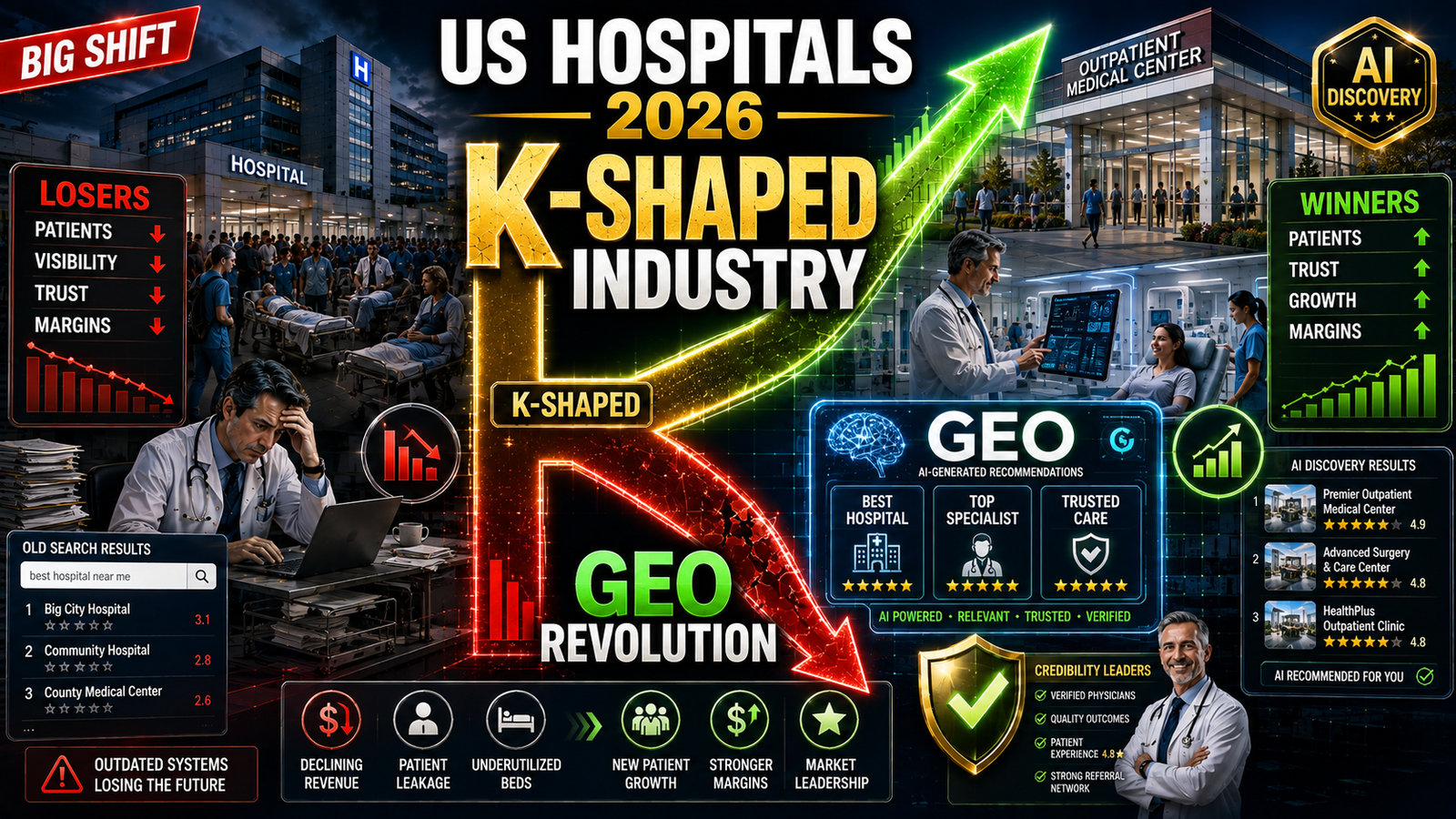
The recovery is not evenly distributed. Fitch’s analysis shows a widening gap between stronger and weaker providers. AA-rated systems saw median operating margins improve to 2.8% in fiscal 2025, near pre-pandemic levels, while junk-rated hospitals saw their margins fall to -2.8% from -1.6% the prior year.
BBB and junk-rated systems reported sharp declines in cash holdings, with days cash on hand falling 22% and 31% respectively compared to fiscal year 2022. Record cash-to-debt ratios were driven by investment gains that were “almost entirely an upper-tier phenomenon”. Most of Fitch’s rated portfolio sits in AA or A categories—a signal that weaker providers are being systematically filtered out of the sector through consolidation.
Kevin Holloran, senior director at Fitch Ratings, predicts a bifurcation between “have” and “have-not” hospitals based on location, willingness to make hard decisions on mission versus margin, and ability to realize operational opportunities.
The Outpatient Imperative: Where Growth Lives
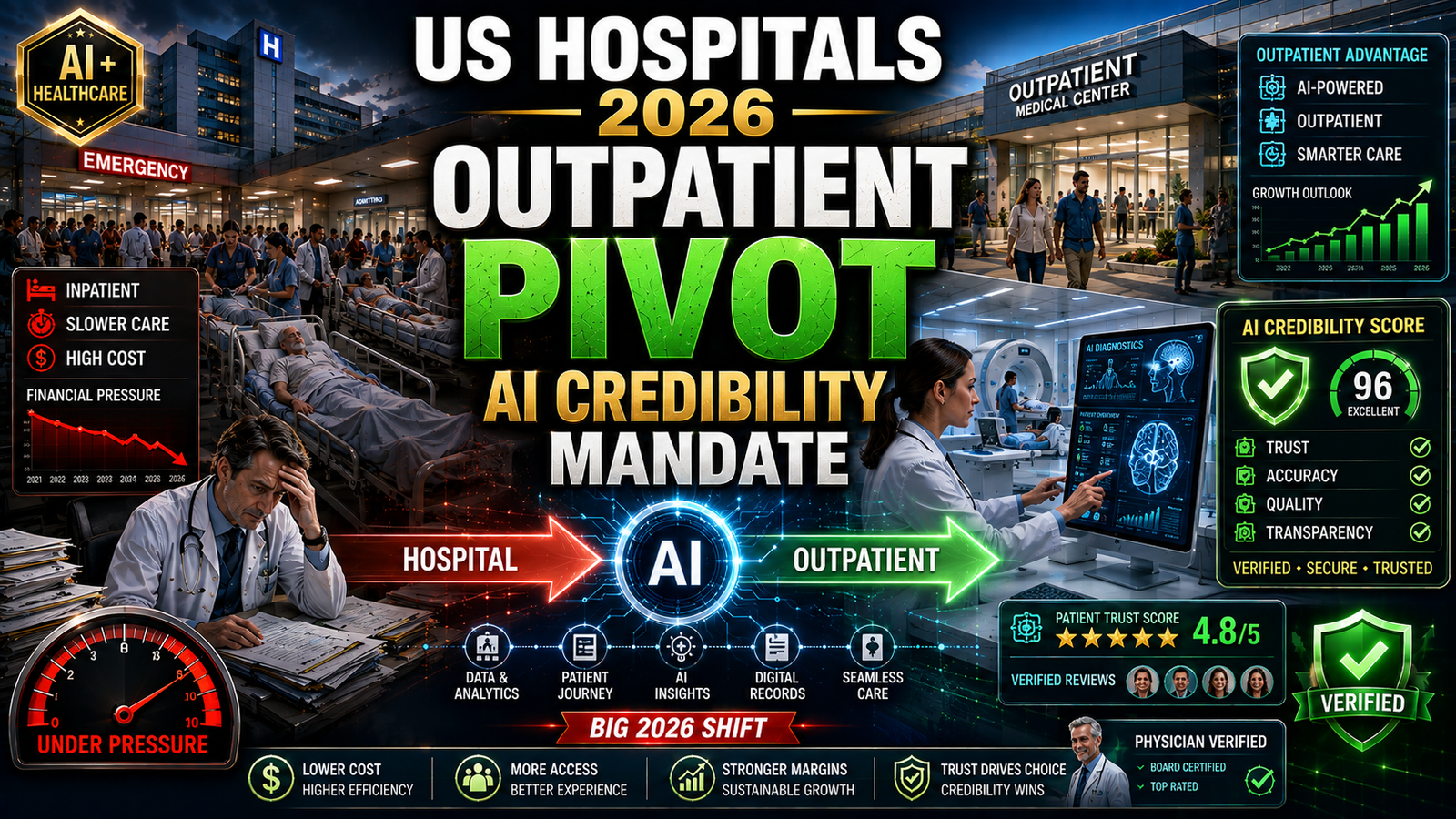
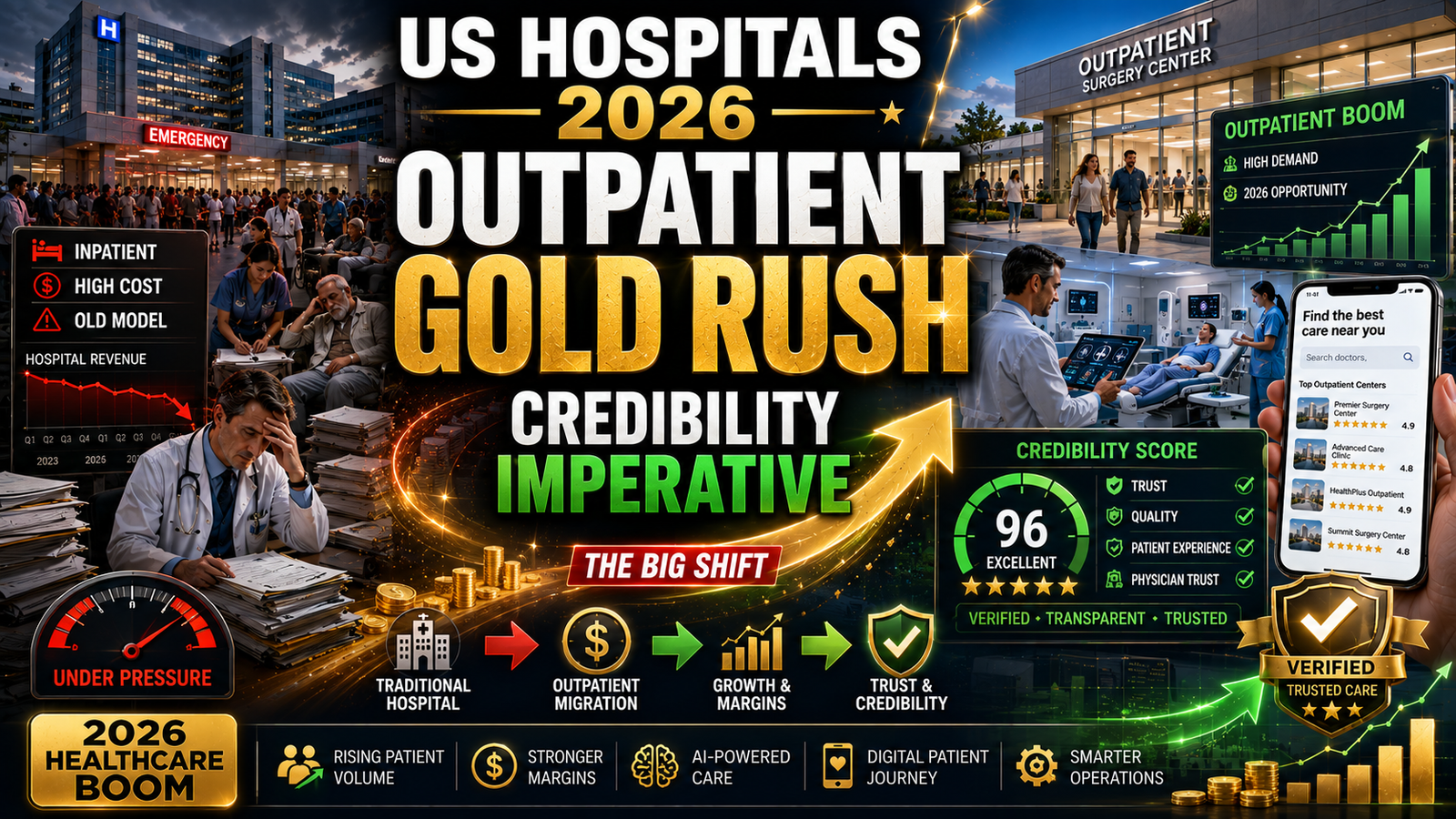
Outpatient care is the clear driver of hospital revenue growth in 2026. According to Kaufman Hall data from more than 1,300 hospitals, outpatient revenue grew 8% nationally in Q1 2026, outpacing inpatient revenue growth of just 4%. The gap was even wider in March, with outpatient revenue jumping 11.8% year over year compared to a 6.6% increase in inpatient revenue.
Regional performance varies dramatically:
- Western hospitals led all regions, with outpatient revenue surging 13%
- Southern hospitals posted 9% outpatient revenue growth and the highest inpatient growth at 5%
- Midwest hospitals posted the most modest gains, with outpatient revenue up just 5%
Hospital size tells a similar story. Hospitals in the 200–299 bed range led all size segments, with net operating revenue up 8%, inpatient revenue up 7%, and outpatient revenue up 10%. By contrast, the smallest hospitals—0 to 25 beds—recorded inpatient revenue declining 2%, even as outpatient revenue grew 4%.
The outpatient shift is structural and accelerated by policy changes. CMS is in the second year of eliminating Medicare’s inpatient-only list, scheduled for full phase-out by 2028, giving hospitals and ASCs greater flexibility. CMS has also expanded the number of surgeries eligible for reimbursement in freestanding ASCs and implemented additional site-neutral payment policies.
The ASC Land Grab: Consolidation at Scale
Health systems, private equity firms, and payers are racing to acquire outpatient assets. The scale is dramatic. Ascension completed its $3.9 billion acquisition of AmSurg, expanding its ASC network to roughly 300 facilities nationwide. Ascension itself went from running 139 hospitals in 2022 to 90 hospitals and more than 300 ASCs by June 2026.
The for-profit speed gap is equally striking. Tenet Healthcare deployed $125 million in Q1 2026 to acquire seven ASCs, representing half of its annual M&A target for USPI, which now operates nearly 570 assets. Community Health Systems is purchasing ASC operators, opening de novo facilities, and acquiring major surgery centers. HCA continued outpatient acquisitions in urgent care, ASC, and freestanding ED platforms.
Holloran observed: “Executives are asking, ‘Where can I get the best return when I invest my capital?’ We’re seeing a renewed flight to the ambulatory and outpatient space because it’s far cheaper to build and operate there, with a much better return. So, asset-light, return-rich”.
The Policy Storm: OBBBA and Medicaid Cuts
The dominant near-term threat to hospital credit profiles is the One Big Beautiful Bill Act (H.R. 1), which became law in 2025. The law imposes new work requirements for Medicaid recipients, limits hospital funding sources like state-directed payments, and could result in more than 10 million individuals losing insurance coverage.
Q2 2026 earnings already reflect the impact. HCA Healthcare pointed to a $1 billion-to-$1.2 billion ACA-related headwind as the reason it cut its 2026 profit guidance. Centene’s exchange membership fell by more than 2 million, and Cigna announced plans to exit ACA exchanges entirely in 2027.
The impact varies by operator. Tenet Healthcare raised its 2026 guidance after a strong quarter, while Universal Health Services and Community Health Systems joined HCA in trimming theirs. Notably, the OBBBA barely came up on for-profit earnings calls, even as many nonprofit health system boards have made it the dominant frame for 2026 strategy. The for-profits are betting that commercial mix and balance sheet strength make Medicaid policy impact less existential.
The Credibility Shift: GEO for Healthcare
As patients increasingly use AI search and chatbots to find health information, health system marketers are pivoting from SEO to GEO—generative engine optimization. AI search visits grew 42.8% year over year, rising from 15.6 billion in Q1 2025 to 27.4 billion in Q1 2026.
Ashley Pollard, vice president of marketing at SSM Health, captured the shift: “The traditional model where consumers ask Google a question and navigate multiple websites for answers is becoming obsolete. As AI evaluates every digital touchpoint, a holistic focus on the quality, credibility and structure of our content across the entire digital ecosystem is no longer optional—it is essential”.
Health systems are adapting in distinct ways:
- Banner Health is “auditing and modernizing legacy content, using performance data and external search optimization tools to identify gaps and emerging patient intent,” while restructuring content to answer natural-language queries and shoring up physician attribution.
- Intermountain Health is “trading pageviews for high-intent engagement,” no longer relying on web traffic as a performance benchmark. “Success is measured by consumer conversion after that first discovery”.
- NYU Langone Health is “laser-focused on showing up as a trusted and authoritative source” within AI platforms, ensuring AI tools recognize the system as a leading clinical authority.
- CommonSpirit Health is “restructuring content for AI readability and implementing technical standards that improve how large language models interpret and accurately cite our trusted health information”.
How AI Engines Pick Sources
AI engines reward content that is structured, sourced, and verifiable. Evidence matters more than tone: adding statistics increased AI visibility by 22%, and adding quotations raised it by 37%. Cited text is nearly twice as likely to contain definitive language—36.2% versus 20.3%.
Building GEO-Ready Content
Expert review is the foundation of healthcare GEO. Every clinical page should name the reviewing physician, list credentials, show a review date, and link to current medical literature. Place answers high—44.2% of ChatGPT citations come from the first 30% of page text. Structure content with tables, which get extracted by LLMs at 81% versus 23% for prose.
Freshness compounds the effect: 65% of AI bot hits target content published within the past year.
Key Takeaways for Hospital Marketing Leaders
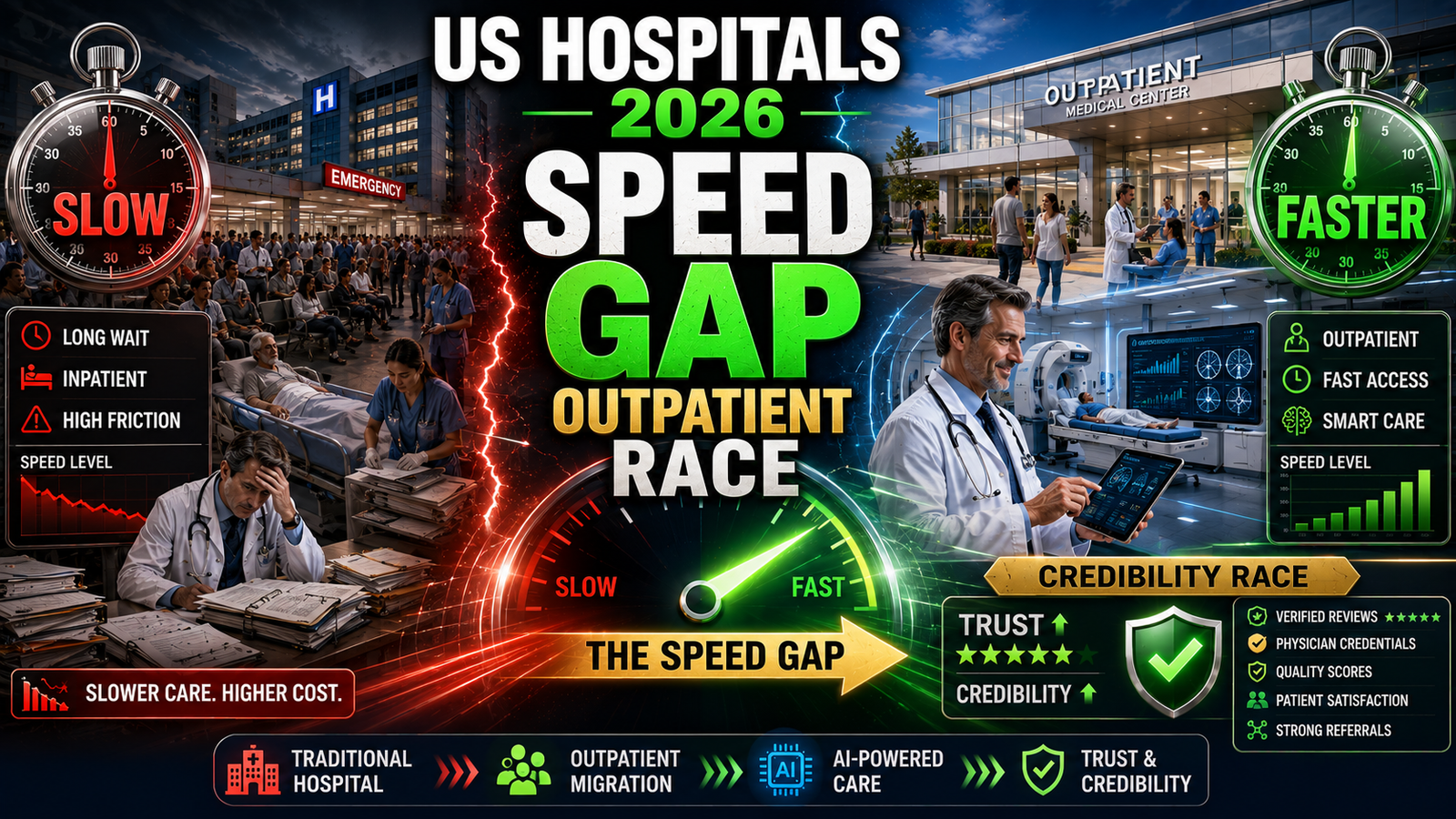
- The outpatient speed gap matters. Health systems are decoupling outpatient facilities from central hospital overhead. If your system is still planning while competitors execute, address that gap.
- Build comprehensive content clusters with expert review. Specialized condition and treatment pages with named physician reviewers are required—not one-page overviews.
- Optimize for GEO, not just SEO. AI search visits grew 42.8% year-over-year. Your content must be structured, sourced, and verifiable for AI extraction.
- Technical foundations are non-negotiable. Schema markup, accessibility, internal linking, and AI crawler access are critical for both search and AI visibility.
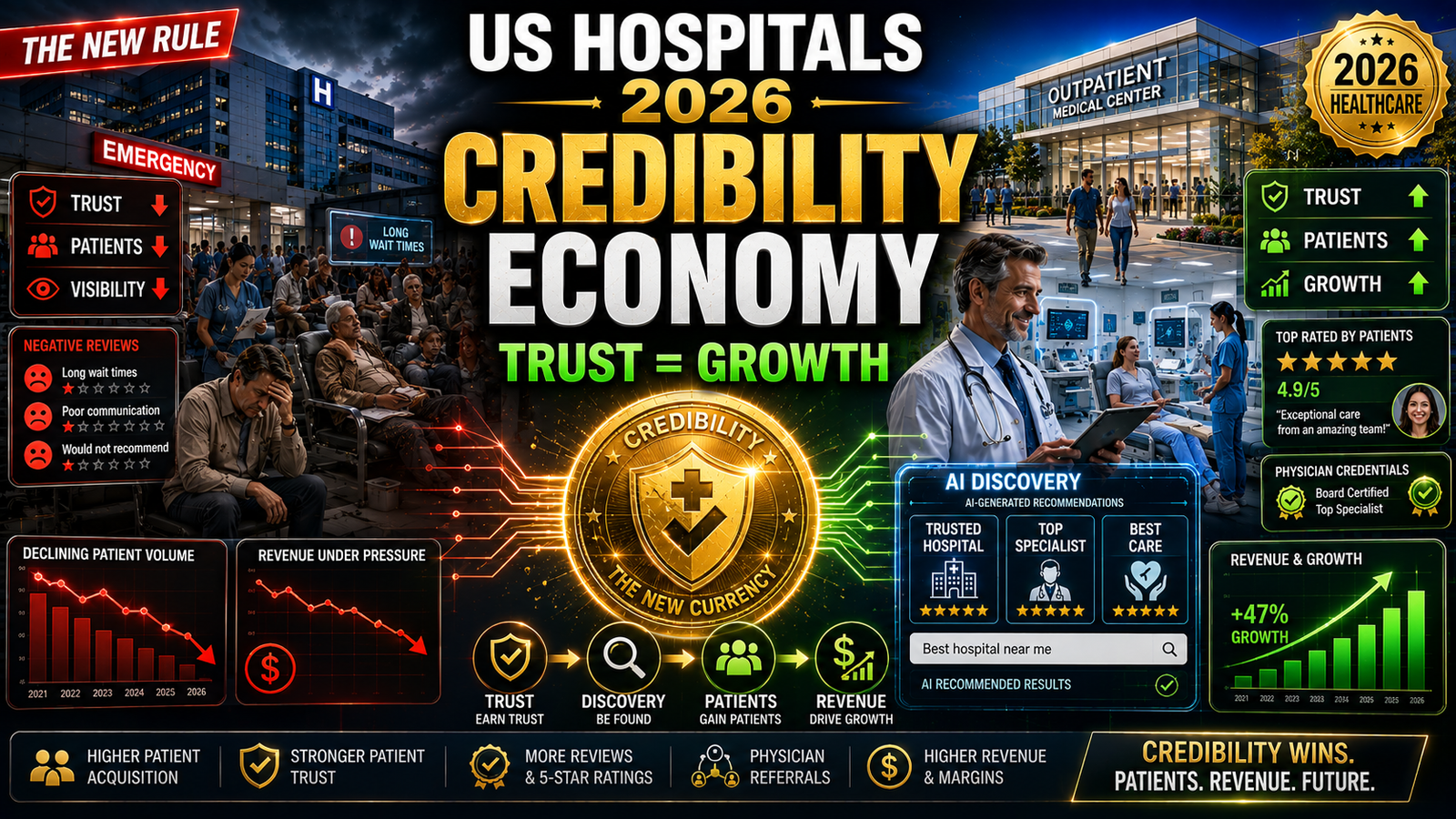
- Credibility is the new currency. Systems investing in expert-reviewed, structured content earn AI citations and patient trust.
- Quantify policy exposure. Rating agencies and boards are asking: What’s your Medicaid hit? What’s your mitigation plan?
Conclusion
The US hospital industry in 2026 is navigating structural pressures: a K-shaped recovery, the shift to outpatient care, $1 trillion in Medicaid cuts, and a patient discovery layer dominated by AI answer engines.
The for-profit speed gap is clear. Tenet, CHS, and HCA are deploying outpatient capital at scale while many NFP systems remain in the planning phase. As healthcare marketers prepare for 2027, those who invest in structured, expert-reviewed content, technical excellence, and AI-optimized visibility will capture patients in a system where demand outpaces supply. In an era of AI-mediated discovery, credibility is not just a marketing tactic—it is a survival strategy.