sharmaanubhav6660@gmail.com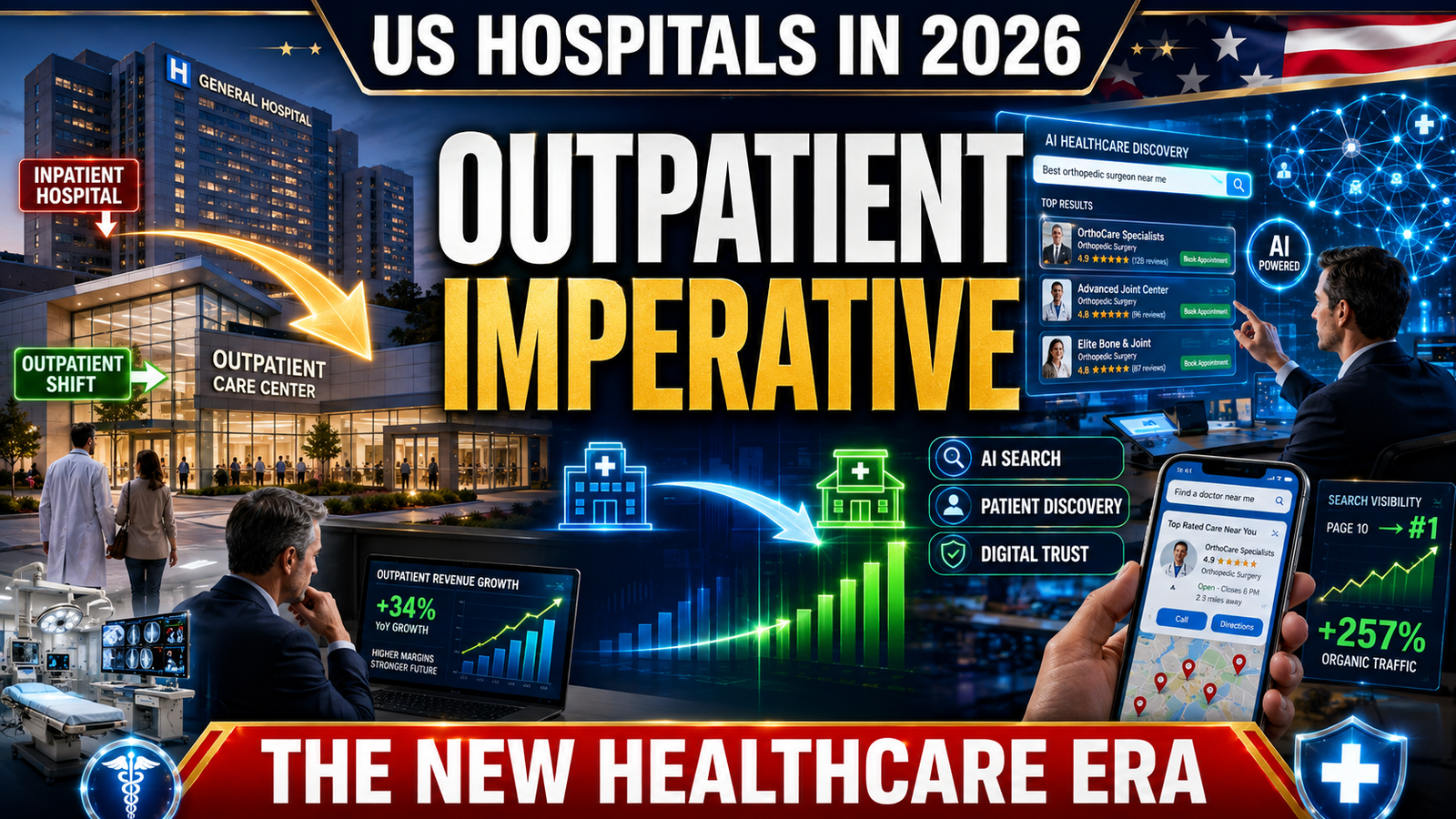
The K-Shaped Financial Reality
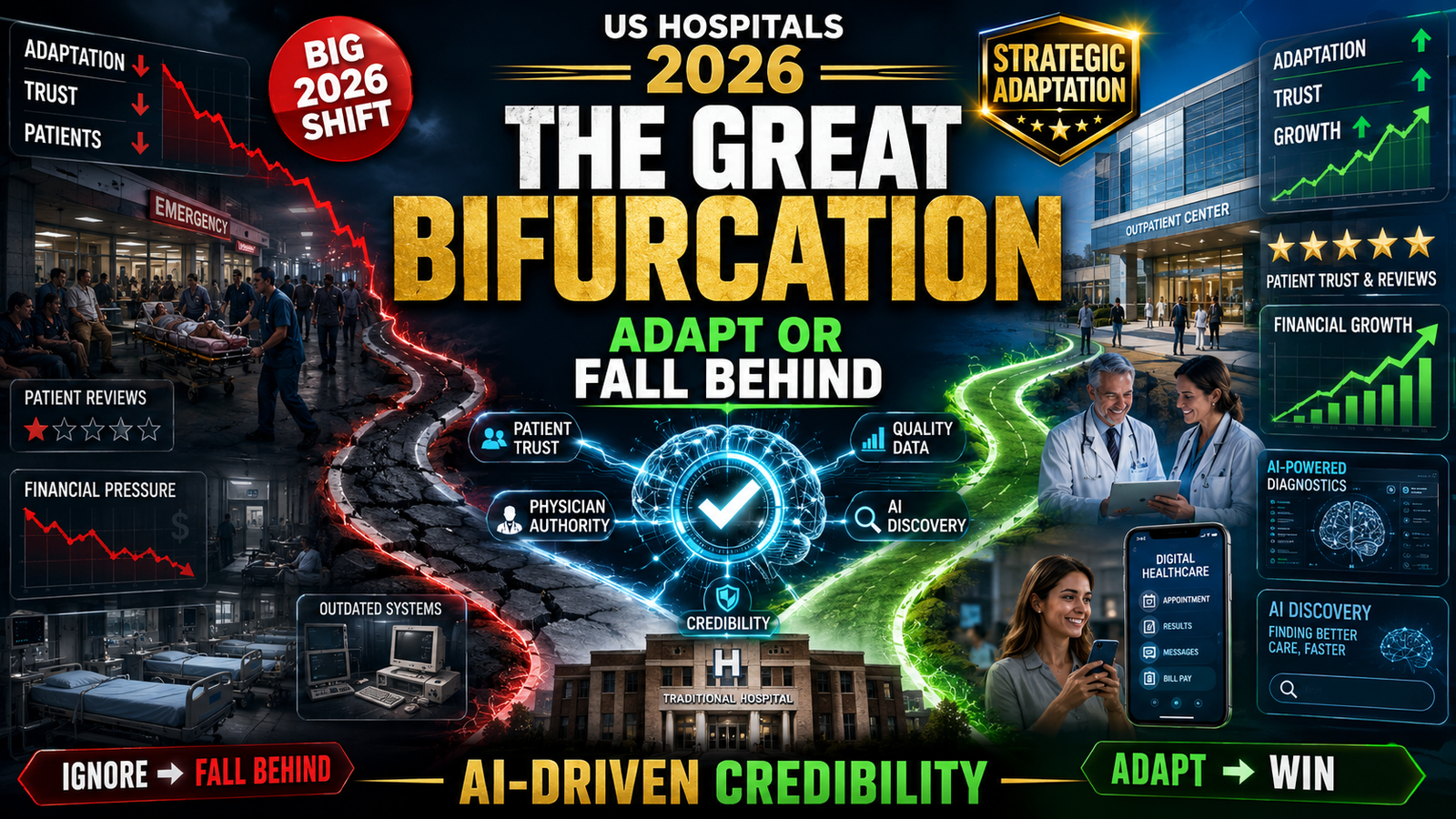
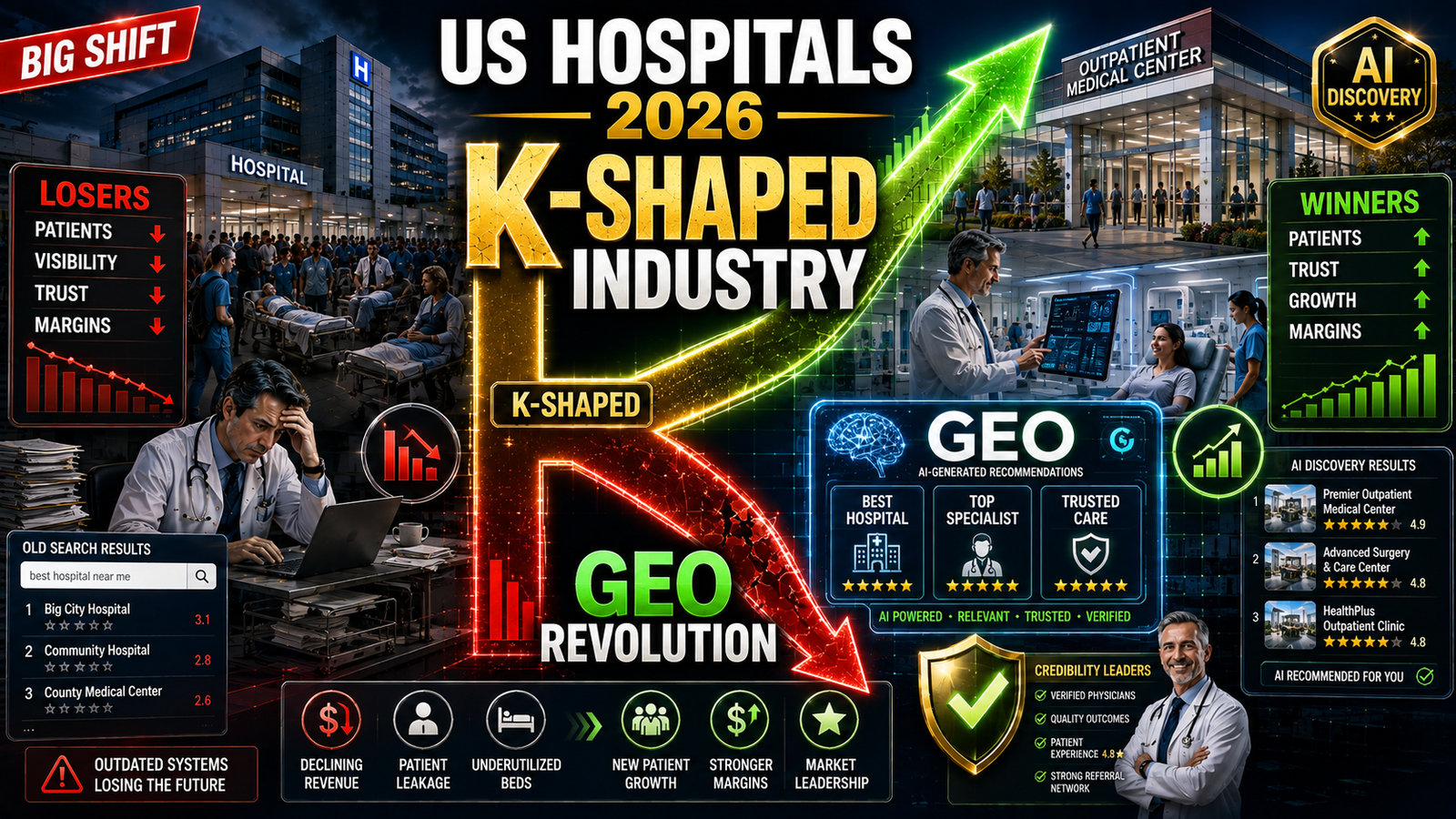
The US hospital sector in 2026 is experiencing what analysts describe as a “K-shaped” recovery—where financially strong systems pull ahead while weaker institutions decline. Hospital finances began stabilizing in February after a weak start to the year, but the year-to-date operating margin index stands at 1.9%, considerably below the 3.7% margin posted at the end of 2025 . Non-labor expenses jumped 7% monthly and yearly on a per-calendar-day basis, with supply costs up 5% and purchased service expenses up 9% .
The divergence is stark. AA-rated hospital systems saw median operating margins improve to 2.8% in fiscal 2025, while junk-rated hospitals saw margins fall to -2.8% from -1.6% the prior year. Fitch’s rated portfolio is concentrated at the higher end, with over three-quarters in AA or A categories—a signal that weaker providers are being systematically filtered out of the sector.
The Outpatient Surge: The Clear Driver of Revenue Growth
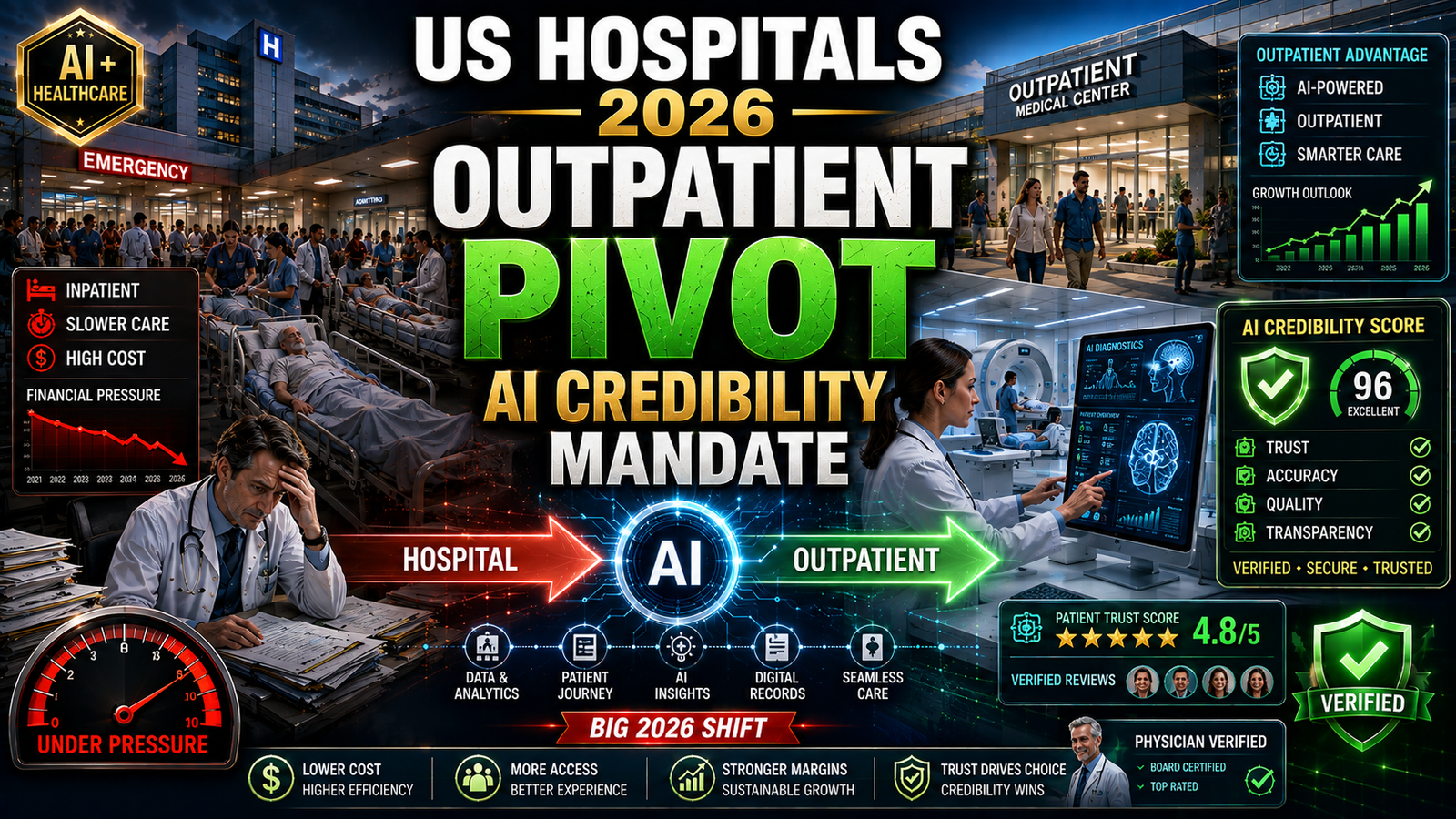
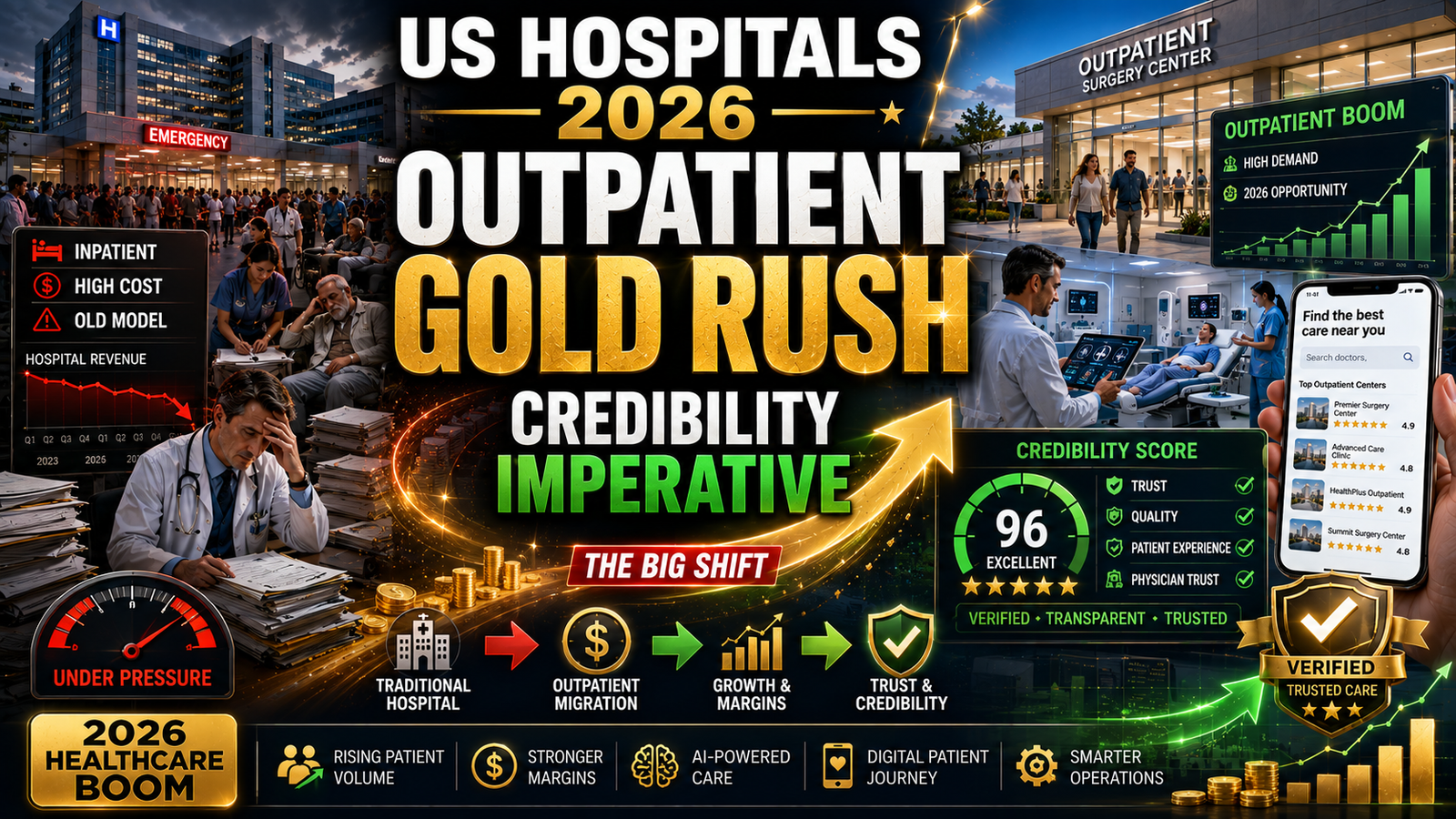
Outpatient care is the dominant revenue story of 2026. U.S. hospital net operating revenue rose 5% per calendar day in the first quarter compared to the previous year, with gross operating revenue growing 7% . Outpatient revenue grew 8% nationally, outpacing inpatient revenue (4%) in every region and nearly every bed-size category nationwide .
Regional performance varies dramatically:
- Western hospitals led all regions, with outpatient revenue surging 13%
- Southern hospitals posted 9% outpatient revenue growth and the highest inpatient growth at 5%
- Midwest hospitals posted the most modest gains, with outpatient revenue up just 5%
Hospitals in the 200–299 bed range led all size segments: net operating revenue up 8%, inpatient revenue up 7%, and outpatient revenue up 10%. The smallest hospitals (0–25 beds) recorded inpatient revenue declining 2%, even as outpatient revenue grew 4% . The data points to a two-speed hospital economy: mid-size facilities in growth regions are accelerating, while the smallest hospitals face inpatient contraction.
Outpatient revenue increased 11.8% year-over-year in March 2026, outpacing inpatient revenue growth of 6.6% . Outpatient visits rose 7.3% compared to a 3.1% increase in inpatient admissions .
The Outpatient Shift Tradeoff: Revenue Dilution and Higher Acuity
While outpatient growth helps offset some financial headwinds, it comes with tradeoffs. As more care moves to outpatient settings, hospitals face revenue dilution and a higher concentration of complex, high-acuity patients on the inpatient side . Volume trends reinforce this dynamic: discharges per calendar day fell 2%, adjusted patient days declined 1%, average length of stay dropped 4%, and emergency department visits decreased 5% .
Erik Swanson, managing director at Kaufman Hall, summarized the predicament: “Hospitals are off to a relatively soft start in 2026. Outpatient care strategies offer a potential path forward, though hospitals must manage both revenue dilution and a greater concentration of high-acuity patients as a result” .
The ASC Land Grab: Health Systems Race to Build Outpatient Networks
Health systems, private equity firms, and payers are racing to acquire outpatient assets, particularly ASCs . Physician medical groups accounted for a record 46% of all healthcare transactions in the first quarter of 2026, generating nearly three times as many deals as any other healthcare subsector .
The scale of consolidation is dramatic. Ascension completed its $3.9 billion acquisition of AmSurg on June 4, 2026, expanding its ASC network to roughly 300 facilities nationwide . The FTC required seven divestitures before approving the transaction—the first time regulators applied that level of scrutiny to an ASC-specific deal . Ascension itself went from running 139 hospitals in 2022 to operating 90 hospitals and more than 300 ASCs by June 2026 .
Tenet Healthcare deployed $125 million in Q1 2026 to acquire seven ASCs, representing half of its $250 million annual M&A target for USPI, which now operates nearly 570 assets . Community Health Systems is purchasing a majority stake in an ASC operator in Anchorage, opening de novo ASCs in Alabama, and acquiring the Surgical Institute of Alabama . HCA continued outpatient acquisitions in urgent care, ASC, and freestanding ED platforms .
Amber Sims, Ascension’s executive vice president and chief strategy and growth officer, explained: “We had to get ahead in the ambulatory business, because that’s where care is going. It’s where patients want to receive care, where payers want to seek care, and where providers want to provide care” .
446 Hospitals at Risk: The Medicaid Crisis
The dominant near-term threat to hospital credit profiles is the One Big Beautiful Bill Act (H.R. 1), which became law in 2025. Projected federal Medicaid funding reductions of nearly $1 trillion over the next decade represent one of the most significant proposed reductions to the program in decades .
Public Citizen identified 446 at-risk hospitals—those heavily dependent on Medicaid revenue and operating at a loss in recent years—with at least one facility affected in 44 states and Washington, D.C. . About 60% of at-risk hospitals are in urban areas, with Black and Latino communities likely to be hardest hit .
The specific impacts are devastating:
- Alameda Health System will lose more than $100 million annually by 2030 and has laid off nearly 300 employees
- Trinity Health projects $1.5 billion in losses and has already cut 10.5% of its billing staff, closing the maternity unit at one of its Georgia hospitals
The Credibility Era: GEO in Healthcare
As patients increasingly use AI search and chatbots to find health information, health system marketers are pivoting from chasing clicks to cultivating credibility. The American Hospital Association’s 2026 Annual Meeting features a session titled “Winning the AI Recommendation: Connecting Hospital Brands and Doctors in the GEO Era” . The session emphasizes that for decades, the “Digital Front Door” was your website. In 2026, that door has moved to the AI interface .
The Mississippi Hospital Association also hosted a 2026 workshop on “The New Rules of Search: How AI is Changing Patient Discovery,” noting that “if your organization isn’t part of that answer, you may already be invisible to the next generation of healthcare consumers” .
Key Takeaways for Hospital Marketing Leaders
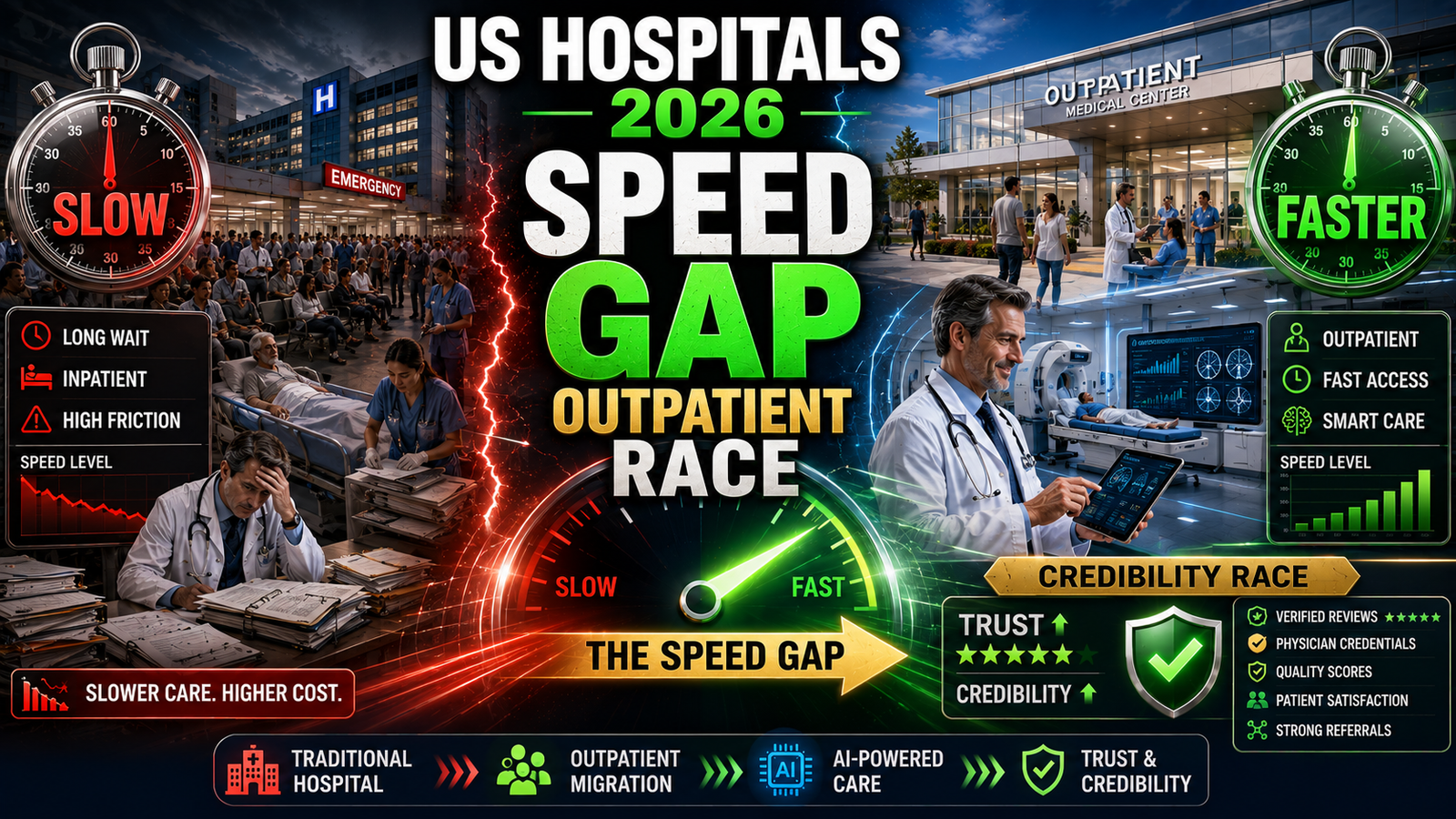
- The outpatient speed gap matters. Health systems are decoupling outpatient facilities and ASCs from central hospital overhead . If your system is still planning while competitors execute, your strategy must address that gap.
- Build comprehensive outpatient content. Each location needs a dedicated landing page with local phone numbers, embedded Google Maps, services offered, and parking information.
- Optimize for GEO, not just SEO. In 2026, “as AI evaluates every digital touchpoint, a holistic focus on the quality, credibility and structure of our content across the entire digital ecosystem is no longer optional—it is essential” .
- Technical SEO and schema are non-negotiable. AI platforms gather and synthesize information about hospitals, physicians, and services based on structured data.
- Quantify policy exposure. Rating agencies and boards are asking: What’s your Medicaid hit? What’s your mitigation plan?
- Credibility is the new currency. Systems investing in expert-reviewed, structured content earn AI citations and patient trust.
Conclusion
The US hospital industry in 2026 is navigating structural pressures: a K-shaped recovery widening the gap between winners and losers, a $3.9 billion ASC consolidation wave, $1 trillion in Medicaid cuts putting 446 hospitals at risk, and a patient discovery layer increasingly dominated by AI answer engines .
As Kaufman Hall analysts wrote: “Traditional hospital care delivery is fundamentally shifting. As outpatient growth continues, health systems may consider proactively adapting portfolios and operations to support the future of U.S. healthcare delivery” . The hospitals that invest in structured, expert-reviewed content, technical excellence, and AI-optimized visibility will capture patients in a system where demand outpaces supply.