sharmaanubhav6660@gmail.com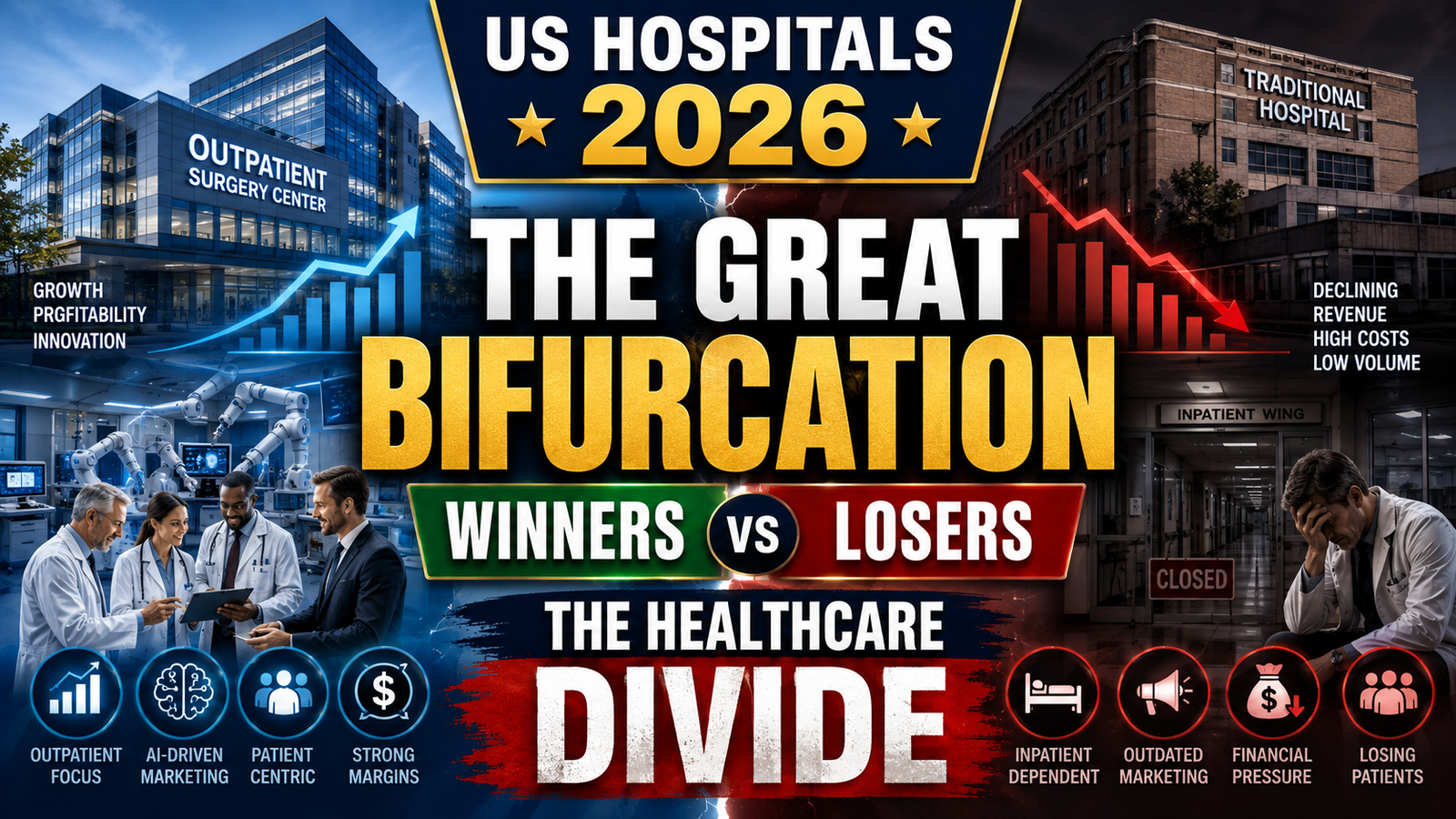
A New Era of “Have” and “Have-Not” Hospitals
The US hospital sector is entering what analysts describe as a “K-shaped” recovery, where financially strong institutions thrive while weaker ones decline. AA-rated hospital systems saw median operating margins improve to 2.8% in fiscal 2025, near pre-pandemic levels, while junk-rated hospitals saw their margins fall to -2.8% from -1.6% the prior year . The current operational recovery “may be at or very near a transition point,” according to Fitch Ratings analysis .
This divergence reflects decades of consolidation. Fitch’s rated portfolio is concentrated at the higher end, with over three-quarters in AA or A categories—a signal that weaker providers are being systematically filtered out of the sector .
Kevin Holloran, senior director at Fitch Ratings, predicts a bifurcation between “have” and “have-not” hospitals based on three factors: location, willingness to make hard decisions on mission versus margin, and ability to realize operational opportunities . “It’s recognizing you can’t be all things to all people in all places,” he said .
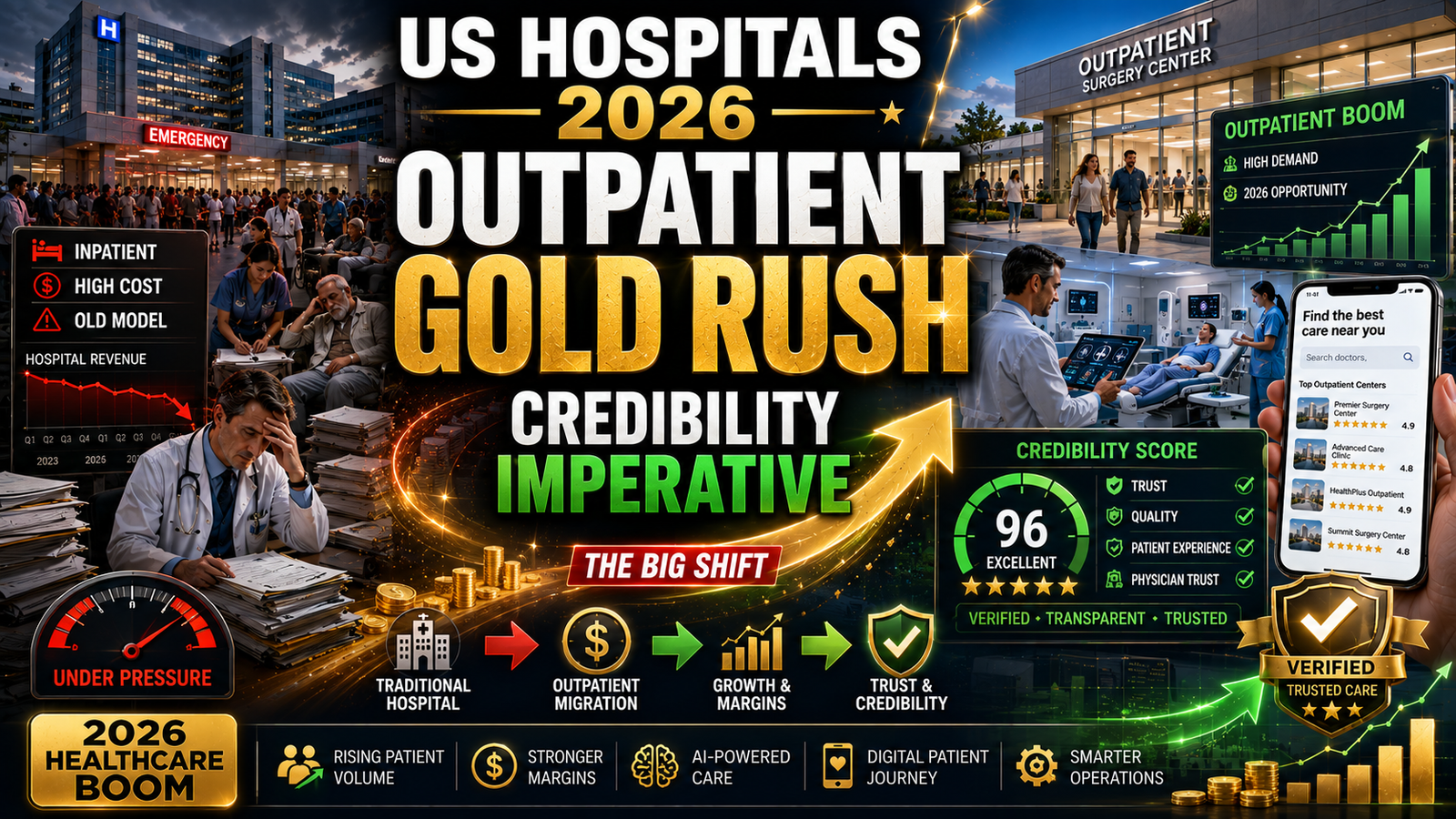
The Outpatient Imperative
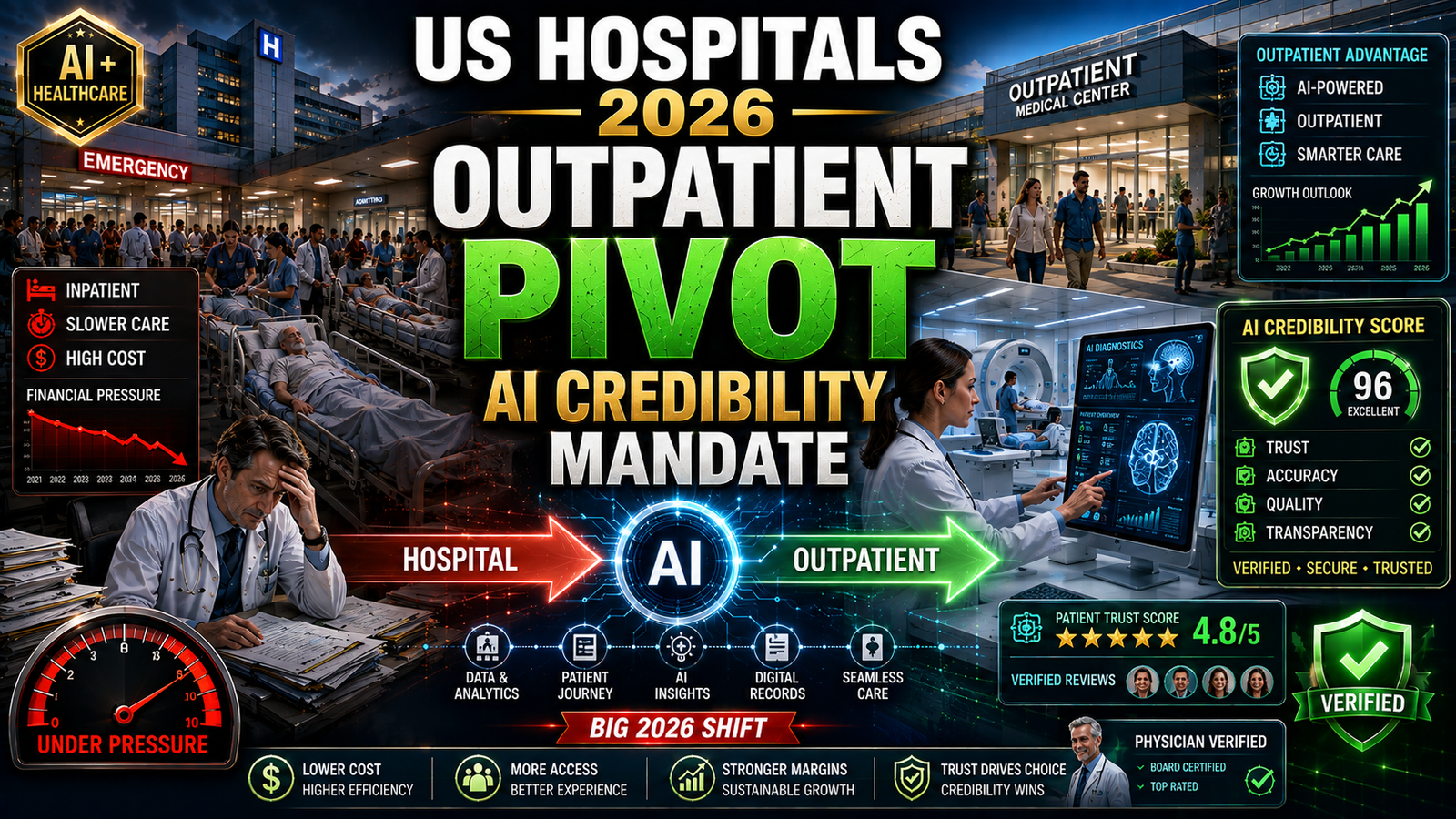
Outpatient care is now the dominant revenue story. Through May 2026, outpatient revenue per calendar day increased 8% year over year, outpacing the 5% growth in inpatient revenue . At the same time, inpatient discharges remained relatively flat, underscoring the industry’s steady shift away from traditional inpatient care .
The financial backdrop is challenging. Through May, operating revenue per calendar day increased 6%, but total expense climbed 7%, with labor expense rising 4% and nonlabor expense increasing 9% . Kaufman Hall analysts note: “As more care shifts to outpatient settings, health systems should evaluate how they strategically plan, align and deploy resources to maximize effectiveness” .
Erik Swanson of Kaufman Hall warned: “Demand in outpatient services is on the rise, and hospitals without an outpatient footprint will struggle” .
The ASC Land Grab
Health systems, private equity firms, and payers are racing to acquire outpatient assets. Physician medical groups accounted for a record 46% of all healthcare transactions in the first quarter of 2026 .
The scale is dramatic. Ascension completed its $3.9 billion acquisition of AmSurg, expanding its ASC network to roughly 300 facilities nationwide . The FTC required seven divestitures before approving the transaction—the first time regulators applied that level of scrutiny to an ASC-specific deal .
Amber Sims, Ascension’s chief strategy officer, explained: “We had to get ahead in the ambulatory business, because that’s where care is going. It’s where patients want to receive care, where payers want to seek care, and where providers want to provide care” .
A VMG Health survey found outpatient surgery ranked as health systems’ top service line for joint venture investment, with more than 60% of executives identifying ASCs as a primary growth priority .
The Asset-Light, Return-Rich Strategy
Hospital executives are shifting capital strategy toward outpatient settings because “it’s far cheaper to build and operate there, with a much better return” . Holloran observes: “They want a light investment for good-sized returns. We’re seeing a renewed flight to the ambulatory and outpatient space” .
At Cleveland Clinic, more than half of patient care revenue already comes from outpatient services . Yet the system continues to invest in inpatient services for complex care, recognizing that people look to the Cleveland Clinic for complex care often still delivered in an inpatient setting .
This balanced portfolio approach reflects a fundamental reality: the industry is moving from trifurcation to bifurcation, with hospitals increasingly needing to decide where they can compete effectively and where they cannot .
The Policy Storm
The One Big Beautiful Bill Act (H.R. 1) imposes new work requirements for Medicaid recipients, limits hospital funding sources like state-directed payments, and could result in more than 10 million individuals losing coverage . The law is expected to reduce Medicaid spending by nearly $1 trillion over the next decade .
Adding to these pressures are demographic challenges. Approximately 11,000 baby boomers will turn 65 each day over the next four years, simultaneously driving up demand for care and drawing skilled labor out of the workforce .
The Marketing Response: GEO for Healthcare
As patients increasingly use AI search and chatbots to find health information, healthcare marketers are pivoting from SEO to GEO—generative engine optimization. The shift is measurable: AI search visits grew 42.8% year over year, rising from 15.6 billion in Q1 2025 to 27.4 billion in Q1 2026 .
For healthcare organizations, GEO means publishing authoritative, expert-reviewed content that ChatGPT, Perplexity, and Google AI Overviews can quote without introducing clinical error . A health system absent from AI-generated answers loses visibility at the exact moment a patient is choosing where to seek care .
How AI Engines Pick Sources
AI engines reward content that is structured, sourced, and verifiable . Adding statistics increases AI visibility by 22%, and adding quotations raises it by 37% . Cited text is nearly twice as likely to contain definitive language: 36.2% versus 20.3% . 44.2% of ChatGPT citations come from the first 30% of page text .
Building GEO-Ready Content
Expert review is the foundation. Every clinical page should name the reviewing physician, list credentials, show a review date, and link to current medical literature .
Structured pages perform better. Tables get extracted by LLMs at 81% versus 23% for prose . Use clear question-style headings, short answer paragraphs, comparison tables, and FAQ blocks.
Schema markup is non-negotiable. Mark up locations, providers, services, insurance accepted, and FAQs to help AI recognize relationships between clinics, departments, and medical professionals .
Local SEO for Healthcare in 2026
Multi-location healthcare groups don’t lose rankings because of “bad SEO”—they lose because location data drifts, provider info becomes outdated, and pages start competing with each other . Birdeye’s 2026 best practices for healthcare local SEO include :
- Standardize data first: Lock in a single source of truth for hours, phone numbers, services, insurance, and provider rosters.
- Give each location identity: Each clinic needs a unique location page, providers tied only to that location, and local details. No duplication.
- Create an SOP for updates: Remove old bios within 48 hours, update listings the same week, redirect old provider URLs, and add new providers immediately.
- Don’t over-create pages: If it has its own entrance, hours, or phone line → it gets its own page and Google Business Profile.
Content Clusters and Authority Pathways
Content clusters—a pillar page supported by related subtopic pages—mirror how Google’s AI systems understand conditions, treatments, and patient journeys . A joint replacement cluster might include the pillar page, then branch into preparation, surgery types, recovery timelines, physical therapy, and long-term outcomes—all interconnected .
Siteimprove recommends mapping clusters and authority pathways before publishing, identifying which pages to expand to expert depth, which thin content needs consolidating, and which new pages fill critical gaps .
Conclusion
The US hospital industry in 2026 is navigating structural pressures: a K-shaped recovery widening the gap between winners and losers, the continued shift to outpatient care, and a patient discovery layer increasingly dominated by AI answer engines.
For hospital marketers, the mandate is clear: every patient who finds you online is a patient your competitors cannot see. The hospitals that invest in structured, expert-reviewed content, technical excellence, and AI-optimized visibility will capture patients in a system where demand outpaces supply. In an era of AI-mediated discovery, credibility is not just a marketing tactic—it is a survival strategy.